Hello 👋
In Hothouse we are building up to a big June topic - Systems and Processes. Perhaps not the sexiest subject, but one designed to save you from the overwork that comes from a lack of structure.
When every client inquiry is handled slightly differently. When the fee proposal process starts from scratch each time. When the follow-up after a project ends is done on instinct, or not at all. When the way you present yourself in a meeting depends on how you happen to feel that morning.
None of these are failures of effort. They are failures of system.
This week I’m introducing the subject of systems, not as a bureaucratic imposition on creative practice, but as the infrastructure that makes creative work possible. A well-designed system does not constrain your practice. It frees it. It means your energy goes to the work that actually requires your intelligence, rather than being spent on reinventing processes that could have been settled once.
It’s not optional, as the most forward-looking practices find new efficiencies via AI, we all have to adapt to stay competitive.
So, as part of today’s issue: the architecture of a great AI prompt. This is a form of design: it’s about the difference between a tool used well and a tool used vaguely.
1. This Week’s Blog - How Interior Design Practices Are Using AI Right Now
Read about what is actually happening in practices that are taking optimal advantage of AI in their back offices, and how you should be thinking about applying AI in your business.
2. This Week’s Webinar: Sales and Client Acquisition Part II - The System Behind the Sale
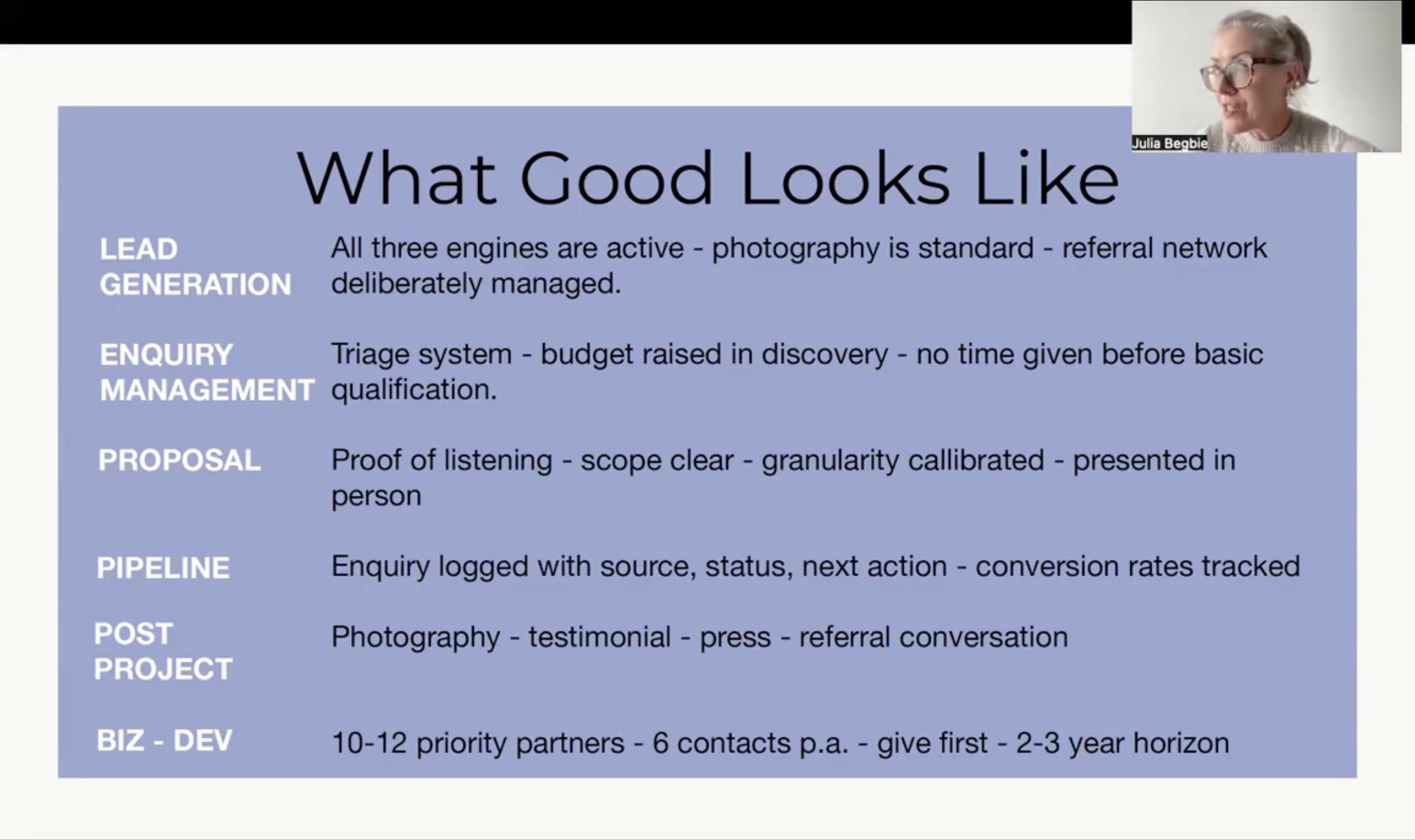
Last Tuesday's Hothouse webinar was the second in our April series on sales and client acquisition. Where the first session addressed the psychology of selling at the higher end of the market, this one was concerned with something more practical: the machinery that makes a sale possible before it happens.
The central argument was straightforward. The moment a client says yes (or no) is not where the sale is won or lost. It is the outcome of everything that preceded it: how the lead was generated, how the inquiry was handled, how the discovery call was conducted, how the proposal was constructed and delivered. A system that works means the actual point of decision feels, to both parties, like a natural conclusion rather than a high-stakes confrontation.
The webinar covered:
- Lead generation
- Enquiry management
- The discovery call
- Proposals
- Post Project & Business Development
If you missed it, you can watch the whole webinar again here.
3. The architecture of a great AI prompt
If you've tried AI and felt underwhelmed, try reviewing the brief you used - perhaps it was too vague? Prompt engineering is new to all of us and, before you get the hang of it, results can be disappointing. The structure of what you put in determines the quality of what comes out, and the gap between a vague prompt and a well-engineered one shares much with how you'd brief a competent freelancer in your business. The more context and direction provided, the better the results. A little time invested in advance reaps dividends.
As my AI webinars for the BIID approach, I'll be getting into this in more detail. To begin, here are the three layers of a successful AI prompt:
Layer one: Permanent context
Your studio's positioning, design philosophy, typical client profile, fee structure logic, and proposal voice and register. This is written once and lives in the prompt permanently. It is what makes every output sound like the studio, not like a generic document that could have come from anywhere. Most designers skip this entirely and wonder why the results feel impersonal.
Layer two: Project-variable inputs
What changes with each instruction. These should be as minimal and factual as possible, no writing required, just structured answers to structured questions about, for example, scope, client, site, budget parameters, any specific tone considerations for this particular project. The design of this layer matters (perhaps in the shape of a form or questionnaire you fill in each time), the simpler it is to complete, the more consistently it will be used.
Layer three: Output instructions
The exact format of what you want to receive, section by section, with guidance on tone, length, and what each part should comprise and accomplish. This is the difference between asking for "a fee proposal" and specifying precisely what a fee proposal in your practice looks like: its structure, its register, its proportions.
This is also a clarifying exercise for your business in its own right. To write the permanent context layer, you have to articulate things about your practice that many designers have never been asked to put into words: what your studio actually stands for, who your clients are, what your proposals are trying to do. The process of building a well-structured prompt is, in part, the process of understanding your own practice more precisely.
This is going to be the subject of an upcoming Hothouse resource. Keep tuned for more.
Hothouse is a free resource hub for residential interior designers - join here.
4. The Designed Self Retreat - Sunday 7 June
CLOSING DATE FOR SIGNING UP - THURSDAY 7 MAY
Visibility can feel like the most uncomfortable performance - exhausting, effortful, never quite right. But visibility can also be grounded, consistent, and quietly authoritative. The kind that does not require you to be louder, more polished, or more extroverted than you are.
In a founder-led practice, presence is not incidental to the business. It is a commercial asset. As AI continues to make inroads into human domains, founder presence is a moat you can create around your business.
Clients decide whether they trust you, whether they feel safe, reassured, and confident, long before they fully understand your services or your fees. That instinctive response is shaped by how you show up: in rooms, on site, in meetings, and increasingly, on camera.
The Designed Self Retreat is a one-day, in-person event for interior designers who want to develop a professional presence that is grounded in the body, emotionally contained, and consistent across every context in which they operate. It is not a presentation skills workshop. It is not about performing confidence. It is about designing - and physically inhabiting - the version of yourself your business most needs.
The day is led by me and by Nicky Herrington, voice coach and photographer. We work in two complementary registers: I hold the professional and commercial context; Nicky leads the embodied work, drawing on actor-informed practices that support presence, regulation, and expression without performance.
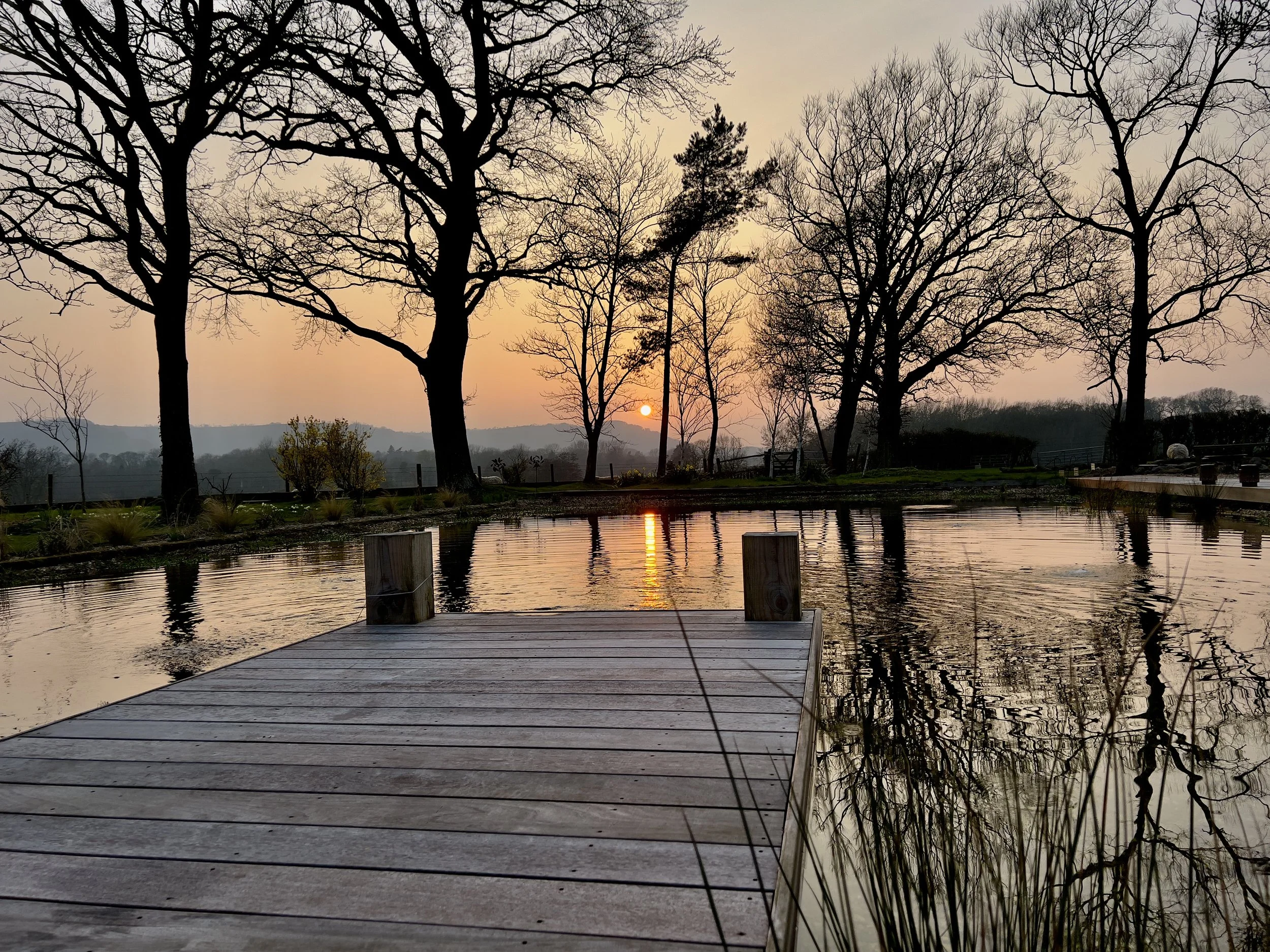
The day includes a retreat profile completed in advance, three sessions covering the nervous system and regulation, breath and authority, and the relationship with the camera, plus lunch, sauna, and the swimming pond.
Sunday 7 June. Arrival from 9.30am, 10am–5pm.
Places: minimum 5, maximum 10.
£395 - Book here before 7 May.
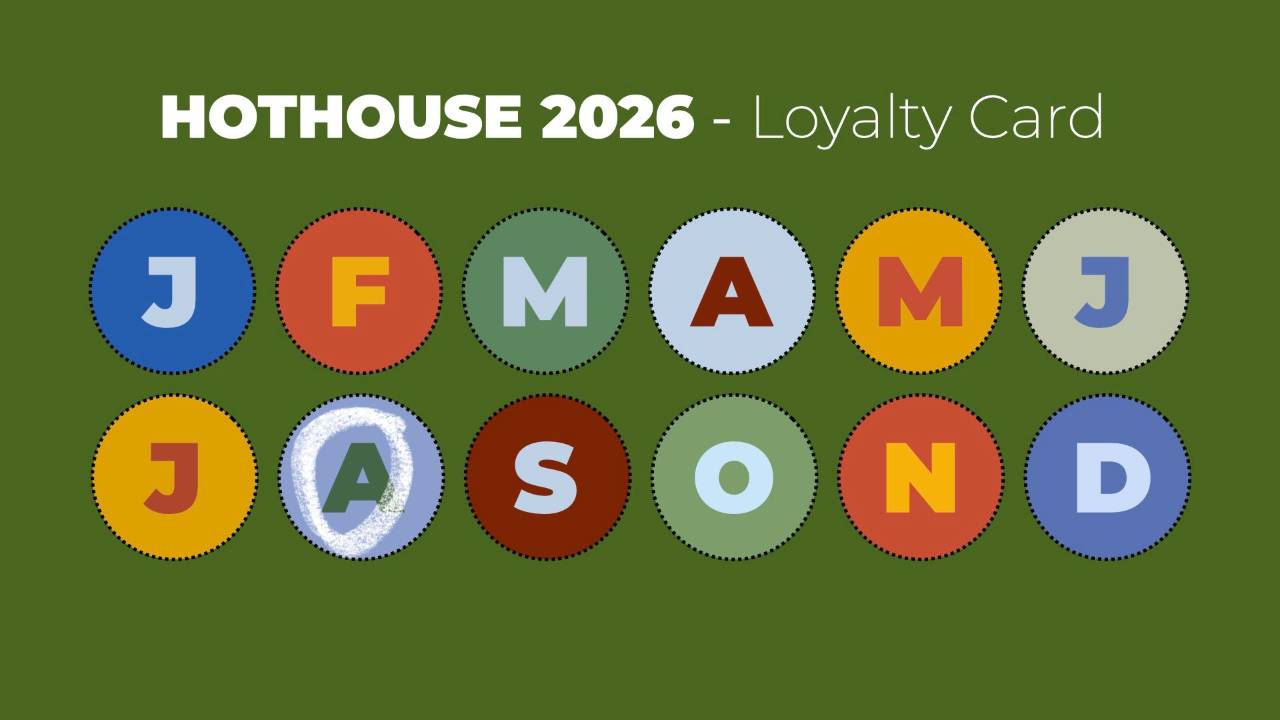
5. April is done. What did you notice?
The month has turned, and we are into May, which makes this a useful moment to pause before the next four weeks gather momentum.
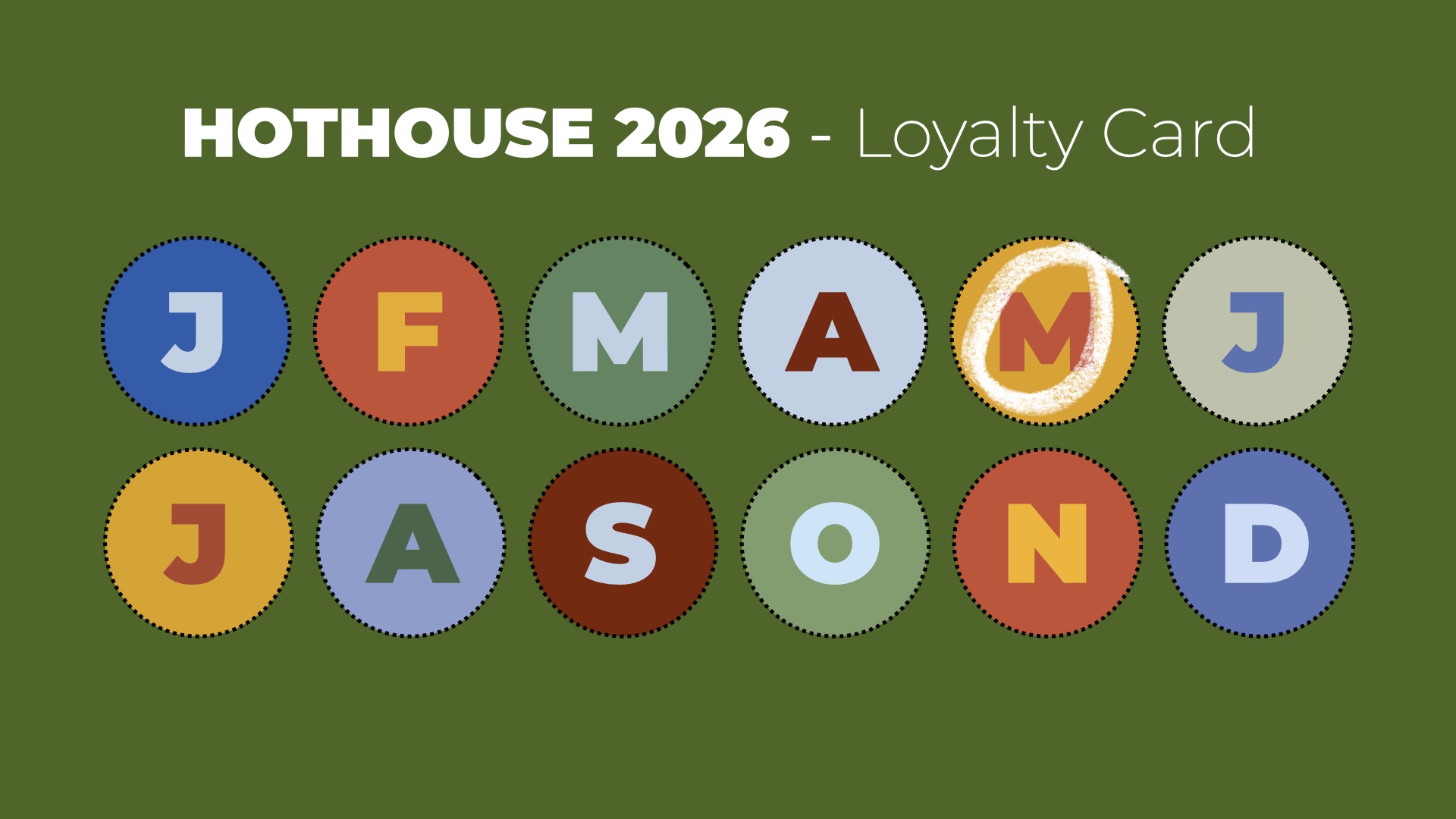
In Hothouse, we work to annual goals, translated into quarterly intentions, broken into monthly targets, and carried into the weekly to-do list.
The system only works if you actually stop at the joins and look.
So: April. What moved? What didn't? Where did you make progress you haven't fully acknowledged, and where did you let something slide that deserves a honest look?
Q2 runs until the end of June. There is still plenty of it left, enough for meaningful change, not so much that you can afford to drift into it without a plan.
The Hothouse method is simple: Design, Declare, Deliver.
Design the outcome you want - specifically, not aspirationally. Declare it somewhere it can be held to account. Then deliver the next small step, this week, before the planning energy dissipates.
What is the one thing you would like to be true of your business by the end of June that is not true today?
What steps can you take through May and June to make this happen?
6. BIID AI Webinars
In May and June, I'll be running a pair of webinars on behalf o the BIID, both are on the subject of using AI in an interior design practice.
Webinar one - 10.30 Thursday 21 May - assumes little or no prior experience and takes the subject from first principles - for any designer who feels behind the curve and wants to catch up.
Webinar two - 10.30 Thursday 18 June - is for designers who are comfortable using AI and want to know how is it being used most successfully within design practices at the moment.
Further information - along with booking links - is available from the BIID.
7. My Week in Hothouse
We hit the midpoint of Bootcamp this week. The designers have concluded the early stages of business planning and we turn now towards marketing strategy - always one of the more energising pivots in the five weeks.
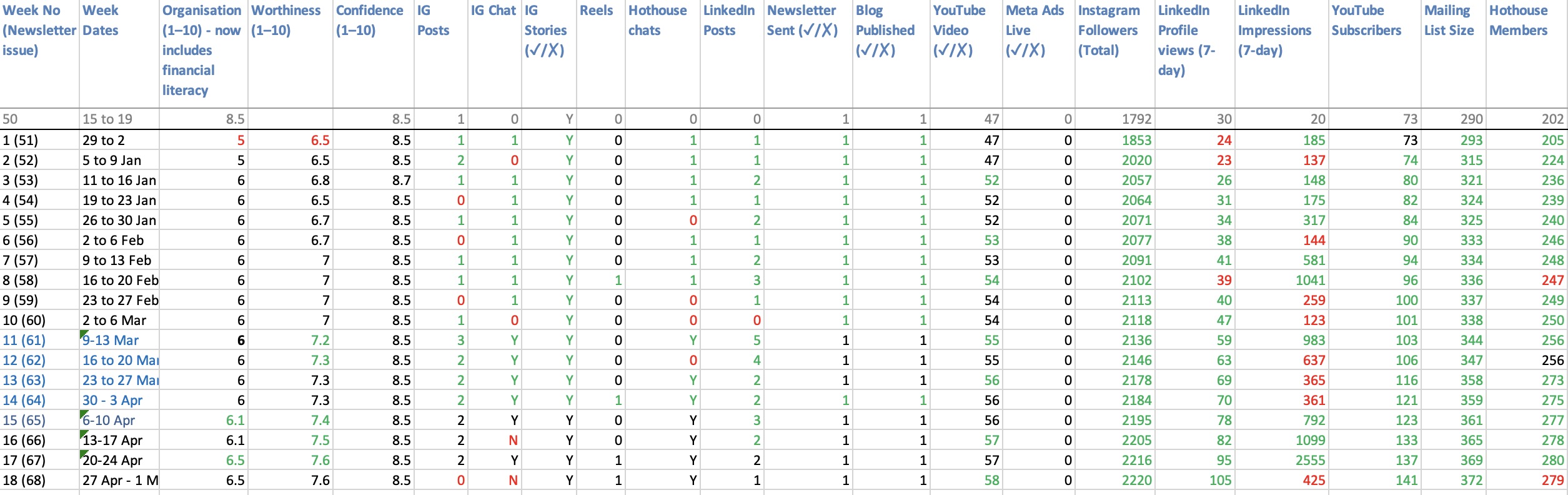
I've put my own marketing on 'minimum', there's some red in my numbers and I'm at peace with that. It will be rebuilt as soon as all my clients - both inside and outside of Bootcamp - have been properly attended to. Some things are more important than content calendars.
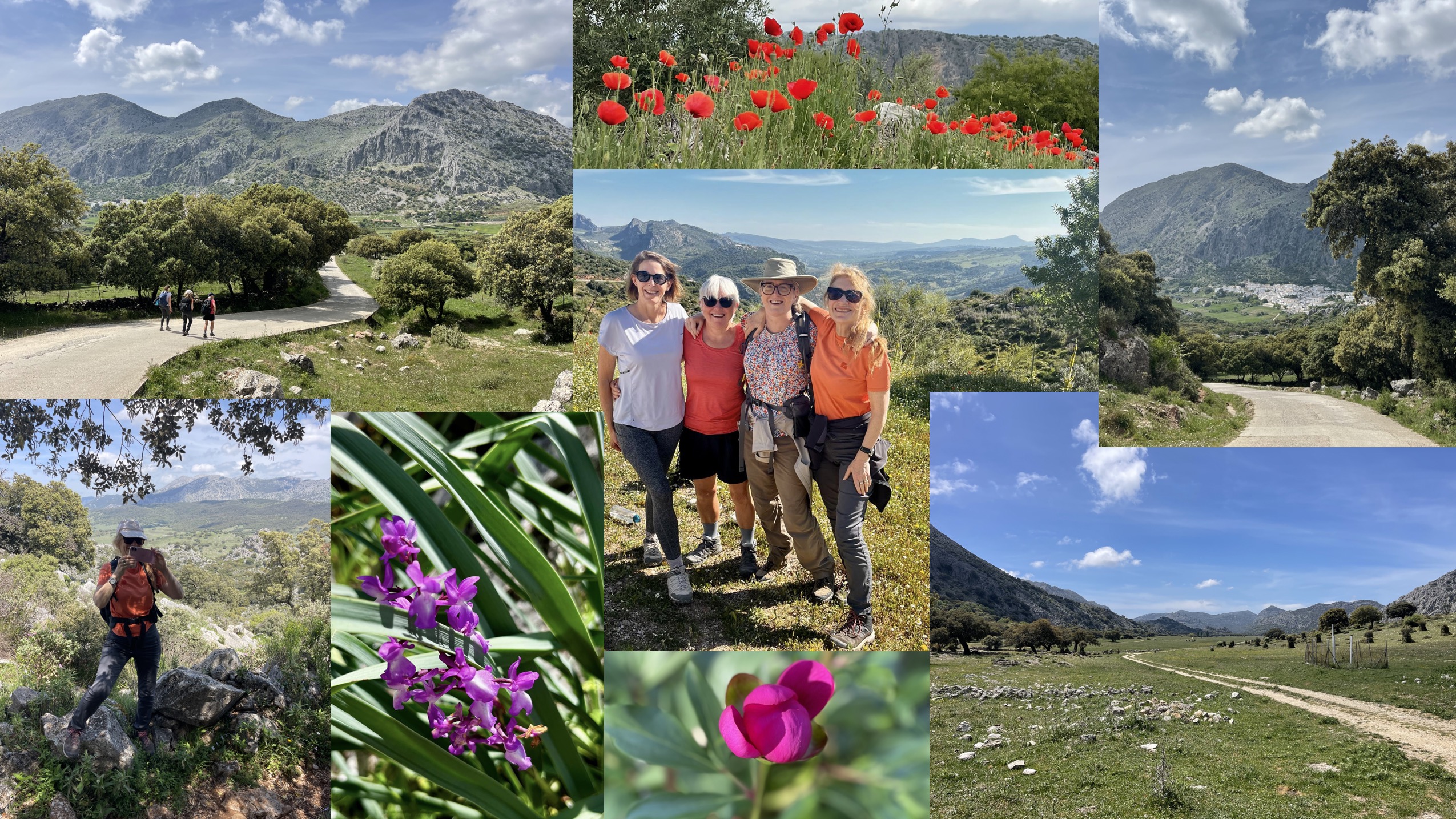
Friends are also more important than content calendars, and this week (a rare occasion, with my walking friends all present in the country at the same time) we took off for a hike, deep in the Andalusian mountains near Grazalema. We hoped to catch peak spring flower, but were about 10 days early. Nevertheless it was absolutely beautiful and the area is highly recommended.
Final Thought
A system provides a quiet backdrop against which creativity can flourish.
To do your best work consistently you need to remove the friction and decide, once, how the inquiry will be handled, how the proposal will be structured, how the client relationship will be managed after completion, so that your energy is reserved for the work you love, and that genuinely requires it.
So - there's good news for any designer who find themself rehashing standard business procedures for each new client: there are all kinds of time and effort savings to be found in improving systems and processes. This will be the work of Hothouse in June and I will share more in the coming weeks.
I look forward to working with you on this.
Have a great new month and a super BH weekend, I hope the sun shines on you,
Julia
Founder - Hothouse

Responses