
Hello 👋
June arrives this week, and with it the theme that will run through the month: systems and processes: the architecture underneath a well-run practice, the part that clients never see and that makes everything they do see possible.
This week's blog goes right to the heart of it. If you have ever assembled a document under pressure, sent it, and moved on without asking whether it was actually doing anything useful, this one is for you. The answer, in most practices, is that the documents exist but they could do more, and that more contributes to client conversion and smooth relations.
Below the blog link, I have pulled back the curtain a little further. The blog introduces the concept; in this issue I am going to show you the nine documents that sit at the centre of a well-constructed client communication suite. And, I’ll tell you exactly what each of them is there to do. Consider it the newsletter subscriber version.
I have also been running a social media experiment that has produced one of those unexpectedly clear results that makes you glad you bothered. More on that below.
1. This week's blog
Your client documents are staff. Are they doing their jobs?

Most designers produce their documents organically and reactively: under pressure, between other things, when the project demands it. This week's post introduces a different starting point: asking what a document is actually for before you build it. I call it the Intent Framework, and it changes every decision that follows: tone, length, timing, design.
2. LONG READ: The nine packs - a subscriber briefing
The blog names nine client-facing documents and describes them as nine members of staff, each with a specific assignment. Here, for subscribers, is what those nine documents actually are - and what each of them is genuinely there to do.
Every document has a primary function. That function governs everything else: tone, length, timing, design. A document can serve more than one purpose - the best ones do - but the primary purpose has to come first. Without it, every other decision is guesswork. White Label Studio highlights 30 practice-to-client interventions or actions: this subset of nine are the set-piece events - the showstopper, tour-de-force punctuation points that are the most memorable and meaningful parts of the client journey.
The nine key client-facing packs:
1. How We Work Primary intent: Inform. This document gives the prospective client a clear picture of the process before they have committed to anything - what will happen, in what order, what will be asked of them. Its secondary job is expectation management: get the picture right early, and it becomes the baseline against which the client measures everything that follows. There is also, quietly, a persuasion function at work. A beautifully produced How We Work document is itself an argument for the practice. “If this is how they communicate before we have even started…"
2. Fee Proposal Primary intent: Anchor. This document creates the legal and commercial foundation of the relationship, fixing scope, fee, terms, and procurement model in a form both parties can rely on. It is also still selling. The client has not yet signed, and how the proposal looks and feels is itself an argument for the practice's quality. The persuasion lives in the presentation; the anchoring lives in the precision of the content. Neither can be sacrificed for the other.
3. Onboarding Pack Primary intent: Manage - relationship management. The client has signed. They do not need more persuasion. What they need is to feel that they have arrived somewhere excellent. The onboarding pack is a welcome, not a manual - and that distinction matters enormously. It will also inform and manage expectations, but if the informing function takes over, the document reads like a process guide and fails at its primary job, regardless of how useful the content is.
4. Concept Presentation Primary intent: Persuade. This is the most significant sale in the entire project - not the initial appointment, but this moment. Everything built so far (relationship, trust, the brief-taking process) is now being tested against a set of boards and ideas. Without emotional commitment to a design direction, nothing downstream is secure. The presentation is also doing active change management: the client has imagined their own version of the project. The designer's job is to make the transition from that private vision to the designed one feel like discovery, not disappointment.
5. Indicative Budget Primary intent: Manage - expectations management. The indicative budget begins aligning the client's financial expectations with the reality of delivering what they have just approved. It is not a quotation, but it is an honest early signal of the order of magnitude involved. Its real job is to prevent the far more painful conversation when the full investment figure arrives at Stage 4. Some clients will need a recalibration of ambition at this point, which is delicate timing, immediately following the emotional high of the concept presentation.
6. Developed Design Presentation Primary intent: Inform. This marks a deliberate shift in register - from the emotional to the analytical. The concept stage was about winning feeling; this stage is about demonstrating rigour. The client needs to see how the concept has become a fully resolved, spatially coherent scheme. It is still selling - now selling competence as well as vision - but the tone must shift with the function. Precision is the argument here.
7. Materials & Finishes Presentation Primary intent: Manage - decision management. This is the most concentrated decision management moment in the project. The client is being asked to make consequential, largely irreversible choices, and the designer's job is to guide them to confident, stable decisions. A tightly edited selection of options, expertly explained, removes the burden of navigating an overwhelming world of possibilities. The work of editing has already been done on the client's behalf. That is not a small thing.
8. Full Project Investment Primary intent: Manage - expectations management. One of the most financially exposed moment in the entire client journey. The complete cost arrives in full for the first time, and even well-prepared clients may experience shock. The primary job is to manage that moment: to present the complete picture clearly, calmly, and in a way the client can actually absorb. A well-structured document explains what each element costs and why. Transparency transforms a frightening number into an understood one - a genuinely different psychological experience.
9. Handover Pack Primary intent: Anchor. The project passes formally from practice to client. The pack fixes the condition of the project at completion, records any outstanding items with named responsibilities and dates, and creates a shared, documented record of what has been finished. At this late stage of a long project, it also carries significant relationship weight. A poorly handled handover can undo months of goodwill; a well-handled one consolidates it at precisely the moment the client is most likely to be talking about their experience to people they know.
These nine documents, built with understood primary intents and calibrated tone, do something no individual document could do alone: they create a consistent, professionally managed client experience that earns trust progressively. Built reactively, one at a time, in response to whatever the project currently demands, they are nine missed opportunities.
My forthcoming programme - White Label Studio - supplies all nine (along with advice and simple copy for the remaining 21 client touchpoints) as beautifully designed templates, built from the ground up using the Intent Framework. I will tell you more during the June Hothouse webinars (see below).
White Label Studio will pre-launch in June. Join the waitlist here.
3. What 24 videos taught me
Earlier this year, working with a specialist on a digital marketing strategy, I recorded 24 short videos - what she calls wisdom videos: punchy, standalone observations about design practice, business, and the thinking that sits behind both. The brief was face-to-camera, direct, and deliberately varied in content. The idea was to generate enough material to seed multiple platforms and begin to understand what lands.
The videos have now been deployed across my accounts. And one of them has galloped - ok, perhaps trotted - off.
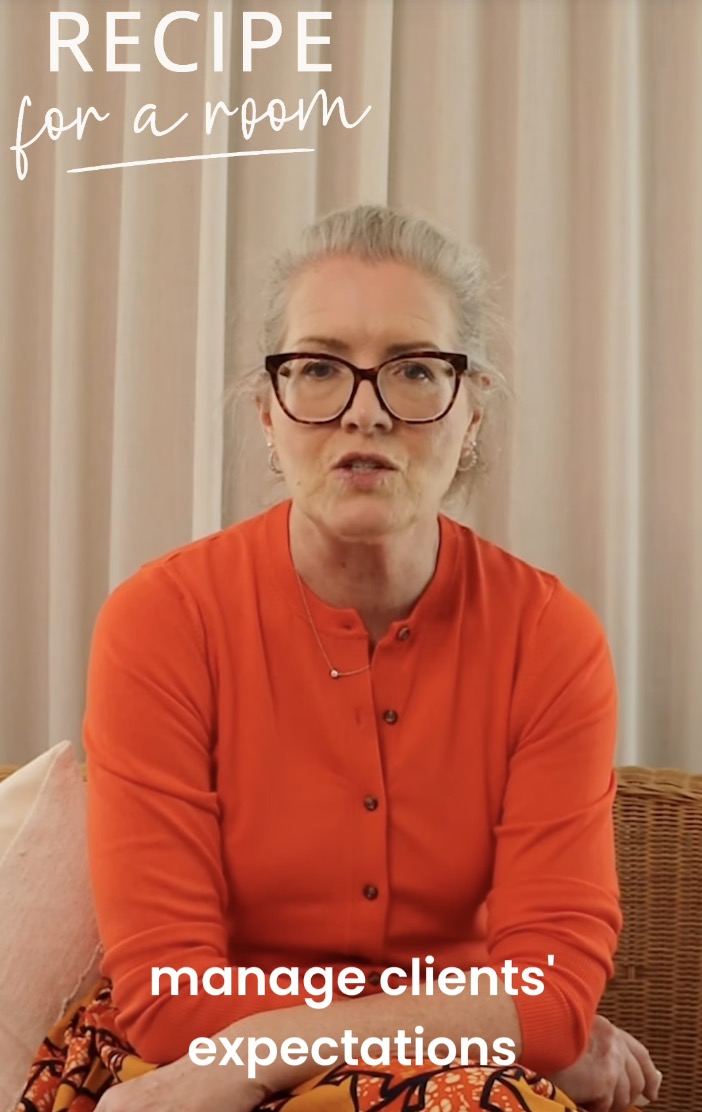
On Instagram, one video has achieved 10x the reach and engagement of the others, making the rest of the batch look like they're standing still. The others are doing fine. This one is doing something else entirely.
I didn’t get that this would happen, and I didn’t foresee the power of an A / B (C, D, E,…) trial. The exercise has turned out to be deliberately comparative - record enough material across enough territory that the audience tells you something, rather than the usual guesswork.
What the runaway video reveals is a specific degree of provocation, a particular angle on the subject matter, that my audience responds to strongly. That is more valuable than any amount of prior theorising about what might work. It is signal from the actual people, not a hypothesis about them.
The lesson I would draw out for your own practice - and your own marketing - is simple. Trialling is not a luxury for practices with large budgets and dedicated marketing teams. It is available to anyone willing to carve out time - on purpose - to create a handful of variations and then pay attention to the result, e.g., following marketing specialists encouragement to make trial reels. Many of us manage to post consistently but comparatively rarely test. We find something that feels right and repeat it. But deep down we know that "feels right" shouldn’t be doing the work that evidence should be doing.
Now I see why it's good to create some variation. Make a comparison. Let the response tell me something. Then do more of what works, and that’s what I’ll be doing, going forward.
4 Coming Up in Hothouse
June's theme is Systems and Processes, and I have a programme of webinars running through the month and into July to match. The link to join these free webinars is in the Hothouse group - please, don't forget to tell me a bit about yourself when you ask to join the group.
10 June @ 10am UK - Systems and Processes, Part 1 Introducing and mapping the full workflow of an interior design project and identifying where the structural pressure points are, and where AI can help. We’ll get about halfway through the client’s journey (not including procurement).
24 June @ 10am UK - Systems and Processes, Part 2 A continuation of the client’s journey through your practice: what they see, what you do. As in part 1, I will be flagging the specific tasks within a studio workflow that are particularly well-suited to AI assistance. Not as a technology discussion, but as a practical identification of where the tool earns its keep. (Again, not including procurement in detail, but pointing out where it sits).
And, in July - dates TBA - Procurement (and AI in the Workflow) The subject of procurement warrants dedicated time, so I am planning at least one further webinar in July to give procurement the space it needs. I’m also considering a second July session in which we’ll return to AI specifically: taking the instances we've flagged across the series and examining in depth how AI can be integrated into the workflow at those particular points. Concrete, applied, and grounded in the actual work.
Dates for the July sessions will be confirmed shortly.
5. My Week in Hothouse
Things are happening on the digital marketing front: 24 'wisdom', videos (branded with the refreshed logo) have been released...
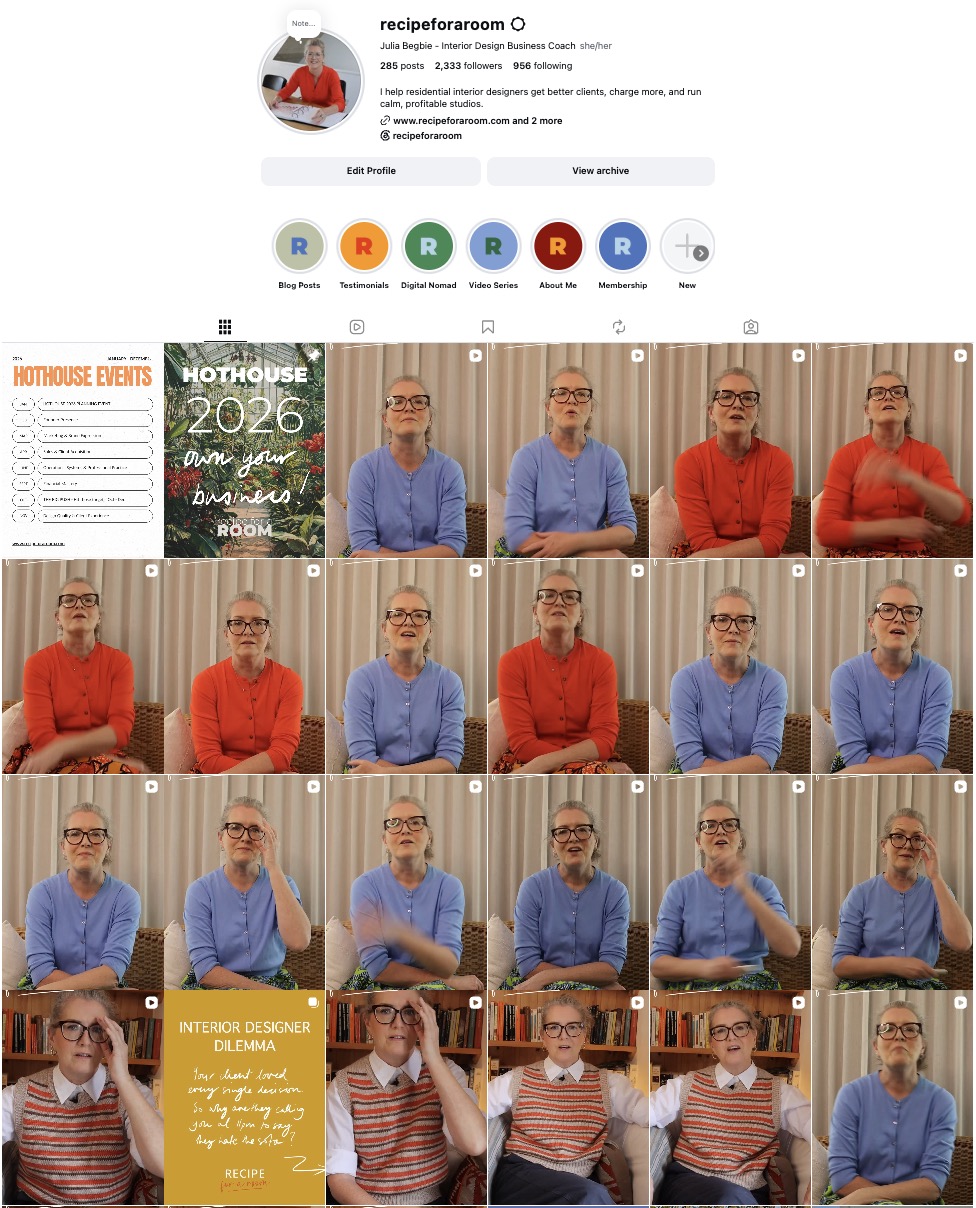
...now they are in the wild, some will be run as awareness-raising ads (I'm not sure if this will be boosted posts, or Meta ads as part of a campaign - TBC). And this coming week I will record 9 'benefits' videos - "Imagine performing this aspect of your role perfectly..." as the next stage in the marketing process. It's great to see this project out of the starting blocks - I began work on this in January.
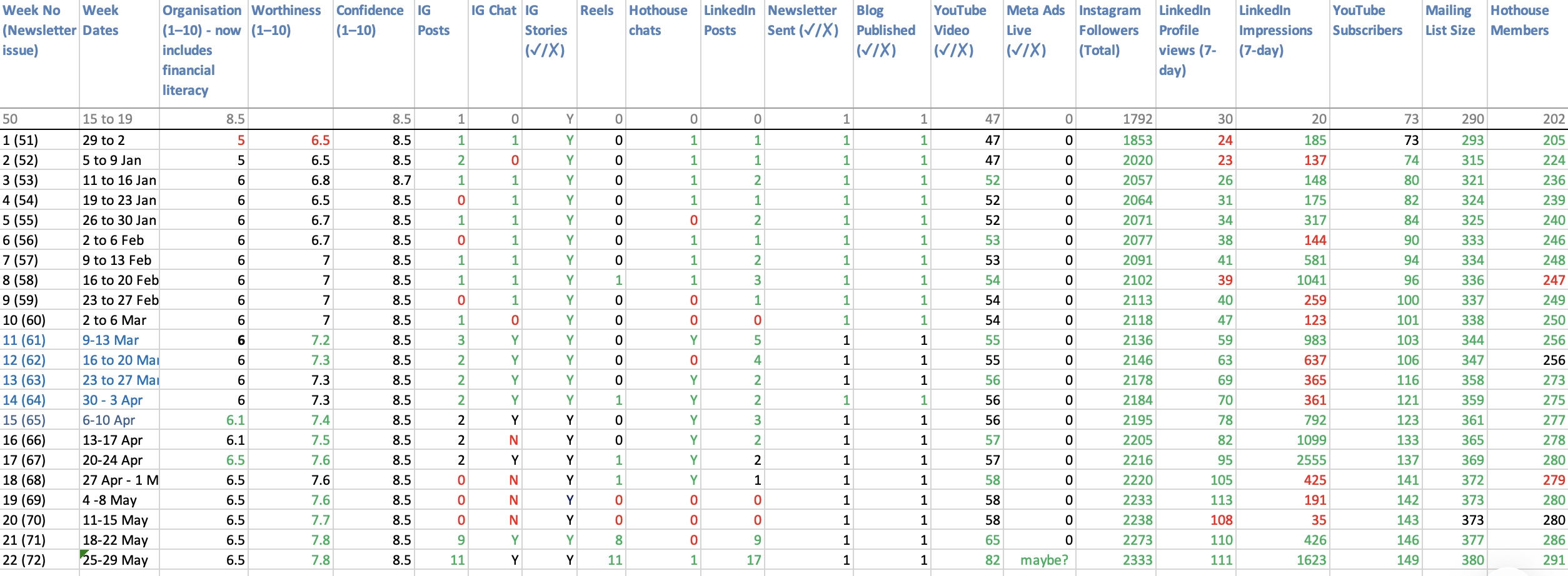
Flooding the feeds has skewed the data above - I can't keep up with 11 reels and 17 LinkedIn posts each week - but it has given a great bump to Instagram followers, and Hothouse joiners. I expect some red in the data next week as more normal activity levels resume.
In the coming week I'll be catching up with the designers I coach one-to-one: looking at business development, marketing, founder presence, specific points of practice, and helping draft fee proposals and pitches. And, in the time between these meetings, I am obsessively focused on the Systems and Processes project which has turned into my most ambitious R4R project yet.
Final Thought
The opposite of "on purpose" is not carelessness. Most of the designers I work with are not careless - they are busy, and under pressure, and working with the time they have. The documents get produced. The posts go out. The projects move forward.
What can get lost in that busyness is the prior question. The one that, if you asked it first, would make every subsequent decision faster, clearer, and more effective: what is this actually for?
Intentionality is that the core of everything we do in Hothouse - my free resource hub for interior designers. It sits in our rallying cry:
Design | Declare | Deliver
...where we recognise that the first steps towards the best outcome are research, analysis and strategy.
Please join Hothouse if you’d like to work in this way, and be held accountable.
I very much look forward to spending June with you, brace yourself!
Julia
Founder - Hothouse

Responses