
Hello 🤖
Question: What will be left once AI has taken what it can take?
This conversation is happening across every professional field right now, and interior design is not exempt from it. It’s a good question, and it deserves a thoughtful answer.
Some answers deal in denial: AI can't do what we do, it doesn't understand beauty, it has no taste. Other answers are complacent: it's just a tool, nothing to worry about.
The honest, clear-eyed answer is more specific, and more interesting. What current AI systems cannot do is navigate the interior of another human's experience. It cannot feel the room shift when a client's tone changes. It cannot recognise that the anxiety about the sofa is not about the sofa. It cannot hold someone through the disorientation of significant change and bring them out the other side feeling certain rather than settled-for.
The future-proofed design practice tackles AI head on, understands it, adopts it, and reorganises itself around both AI and human strengths and weaknesses. And it turns out - IMHO - that we humans get to keep all the best bits.
But, if you choose to compete in the areas where AI excels...you have been warned, read on.
This week's newsletter is about the human factor: what it is, why it matters more than ever, and how to build a practice that knows the difference between what a system can carry and what only you can.
1. This Week's Blog
Your Client Just Told You They Hate The New Sofa. They Don't.
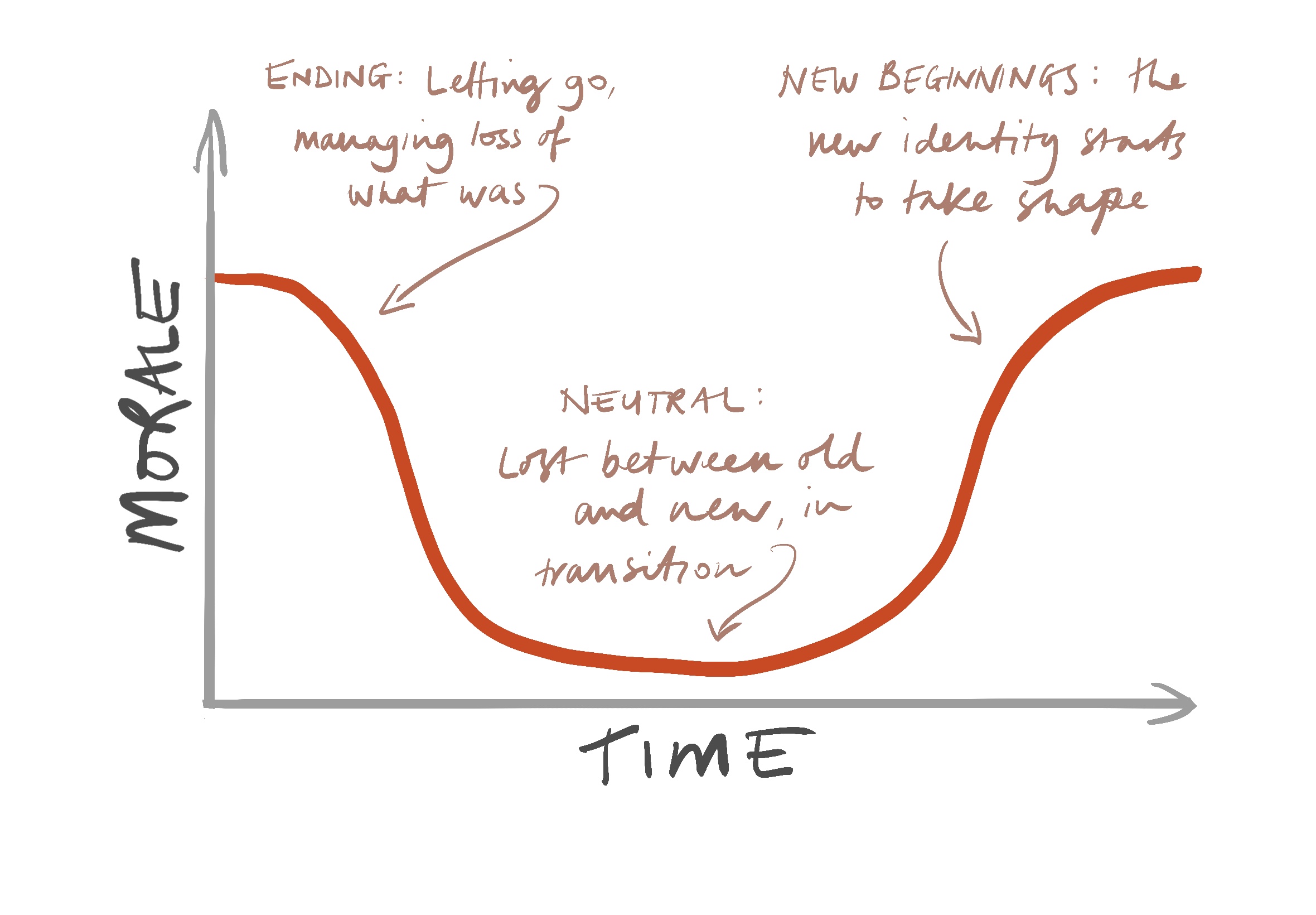
There is a discipline used by hospital systems, global banks, and Fortune 500 companies whose entire purpose is to stop people from sabotaging something they actually want. It is called change management. And if you have ever had a client ring you in a panic three weeks before handover because suddenly they are not sure about anything, you have experienced precisely the problem it was designed to solve.
This week's blog draws on the work of consultant William Bridges, whose distinction between change (an external event) and transition (the internal psychological process of coming to terms with it) reframes the difficult client conversation entirely. It is one of the most practically useful pieces of theory I have encountered for client management, and once you have it, you will see it everywhere.
2. Long-Read: Why Your Client Doesn't Like the Sofa
What is actually happening in their head when they tell you so?
Picture the scene: you’ve been engaged to specify and procure a new sofa for a family sitting room. You conduct spatial analysis, consider traffic flow, select materials carefully, visit showrooms to check comfort in person. The solution you alight on is excellent: different in shape, colour, and style from what was there before, but exactly right for the space and the brief. Everyone loves the proposal and agrees it’s perfect.
The old sofa - always the wrong size, imported from a previous home, bearing the memorable stains of a family's history - is removed. You install the new piece, dress and style the room. That evening, your phone rings.
They hate the sofa.
😱
Let’s look inside the client’s brain. Three things are happening simultaneously and none of them are aesthetic judgements.
Perceptual fluency. The brain processes familiar things with ease, and that ease registers as preference. A client whose nervous system has memorised a room for fifteen years, experiences its transformation as effort where it expected to coast. That effort surfaces as "something is wrong”, not "this is unfamiliar." The sofa is not the problem, it’s just that the brain has not yet built its new map.
Prediction error. The brain is a prediction machine. A client walking into their newly designed space carries a detailed internal model of how it is supposed to look. When reality doesn't match the model, a mismatch signal fires - and lands on whatever the eye is resting on. Which, in this case, is the sofa.
Loss aversion. Losses feel roughly twice as painful as equivalent gains feel pleasurable. Your client isn't comparing the new room to other new rooms. They're comparing it to the old room - something they owned, knew, and were comfortable in. The emotional arithmetic was loaded against you before you started the search.
All three resolve with time and re-exposure. Reliably, usually within a week or so.
TIP: What helps enormously is naming this in advance - clients who know this moment may come are far better equipped to sit with it rather than act on it.
THE ADJUSTMENT PROTOCOL
A few moments of cumulative conversation, distributed across four stages (perhaps even alluded to in onboarding materials) can prevent days of anxiety and defensive negotiation.
Intervention 1 - Design sign-off (2–3 minutes) Explain the mechanism. Give them the phrase to hold: "It isn't a design verdict; it's a neurological event."
Intervention 2 - Penultimate site visit (5 minutes) Shortly before things arrive and they start judging. Name what they may feel. Remind them that you previously told them. Set the timeframe: no opinions, no decisions for two weeks. Reframe the intensity of discomfort as evidence of real transformation.
Intervention 3 - Handover day Be present and unhurried. Walk slowly. Narrate their decisions back to them. If the adjustment response shows up, meet it calmly: "That's the brain doing exactly what we discussed. Give it two weeks." Name a specific date for your check-in - a defined moment at which concerns are permitted paradoxically reduces contact before it.
Intervention 4 - The check-in call (10–14 days post-completion) Call proactively. In most cases the space has become theirs. If something is still genuinely bothering them, this is the moment to hear it properly - and your agreed threshold for taking it seriously.
This is not client management as an afterthought. It is client management as a system.
3. Coming up in Hothouse in June: Systems, Processes...and the Client You Keep
Why a well-designed workflow does more than manage your projects
When designers think about systems and processes, they tend to think about fees, contracts, project management: the schedules, the procurement trackers, the specification documents, the handover checklist. The operational infrastructure that stops things falling through gaps. This is entirely valid, and entirely incomplete.
A well-designed, joined-up workflow does something else, something that rarely appears in the conversation about practice efficiency. It manages your clients.
Not in a manipulative sense. In the sense that a client moving through a thoughtfully designed process is a client who always knows where they are, what happens next, and what is expected of them. That client has less anxiety. They send fewer 11pm messages. They do not fill the silence with their own noise, because there is no silence to fill. The process itself is doing relational work - building trust, containing uncertainty, signalling competence - at every stage, including the stages when you are not in the room.
In June, Hothouse is running two webinars on exactly this. Not systems as administration. Systems as practice design: the deliberate construction of a client experience that is consistent, confidence-building, and, in the most important sense, human.
Wednesday 10 June - 10am - Systems and Processes, Part One
Wednesday 24 June - 10am - Systems and Processes, Part Two
Details and booking links in the Hothouse group.
If the idea that your process could be doing relational work while you are occupied elsewhere sounds like something worth exploring, these sessions are for you.
4. From the BIID: You Are Not Behind
Notes from this week's preliminary AI webinar for interior designers
This week I delivered a session for the BIID aimed at designers who are curious about AI but feel, as many do, that they have somehow missed the moment. That they are already behind, and catching up is its own problem.
I want to say clearly here what I said there: you are not behind. And the feeling that you are is itself worth examining.
The AI landscape is full of noise. ‘Game-changer’ apps, standalone systems that claim to do miraculous things. Many of them are clickbait, or ads to sell lead magnets that don’t deliver. Much of what you see does not reflect reality.
Here is a more useful frame. AI is not a collection of separate, complex systems each requiring its own intensive training. Using AI is more like learning to drive than learning to code: once you have understood how one tool works, you can get behind the wheel of most others. The underlying skill transfers. You are not starting from scratch each time.
To help clarify where AI genuinely adds value and where the human remains irreplaceable, I shared this slide in the session:
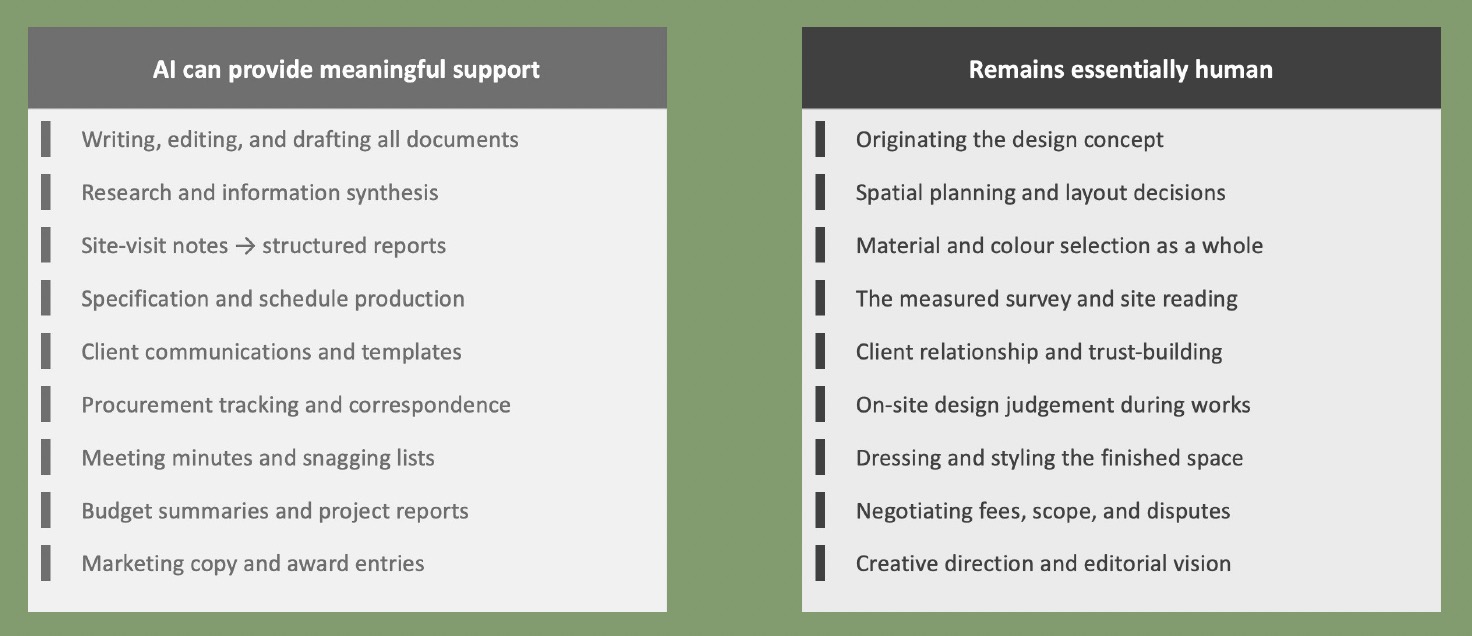
Look at those two lists carefully. The left-hand column is, broadly, the work that designers find time-consuming, administratively demanding, and creatively unrewarding. The right-hand column is the work that designers trained for, that clients pay premium fees for, and that no current tool can replicate, because it requires physical presence and embodiment, accumulated judgment, and genuine human relationship.
AI, used well, does not diminish the designer. It returns them to the work that only they can do - and that most of us would prefer to do.
One final note from the session: if you have questions about AI (how it works, what it can and cannot do, how to approach it with a specific task) ask Claude (or Gemini, or ChatGPT). AI is an excellent teacher of AI. If you feel uncertain about something, the tool itself is your first and often best resource for understanding it.
5. From Bootcamp - The Final Week
Five weeks ago, a cohort of designers arrived at the Recipe For Success Business Bootcamp carrying the particular mixture of ambition and uncertainty that most independent practitioners know well: clear on what they wanted their practice to become; looking for answers about the path between here and there.
What has happened in five weeks?
Every designer has clarified their positioning. They have recognised, often with some surprise, the exceptional quality of what they already do. And they have grown in confidence in a way that is measurable rather than merely claimed: the kind that shows up in how they talk about their fees, how they approach a client conversation, how they think about the practice they are building rather than the projects they are managing.
Most of the designers I work with day-to-day tell me interior design practice is isolating. One of the most meaningful achievements of Bootcamp is the construction over five weeks, of a support group that is genuinely collaborative and genuinely altruistic. The designers arrived as strangers and leave as colleagues - the useful kind, who will tell each other the truth.
The effect of all of this, collectively: steadier, less overwhelmed, less distracted by competitor noise, more excited about what is actually in front of them. We are all buzzing.
Now comes the harder part: the work is to maintain the momentum rather than allow the return to daily practice to quietly absorb it. The mechanism for that is a monthly accountability group: a gathering of five to ten independent designers who meet for twelve months of check-ins, goal-setting, and the kind of encouragement that can come only from people who understand exactly what you are dealing with.
If you are interested in joining one of these groups, I keep a waitlist. Twelve sessions across the year, £600 in full, or £55 monthly for 12 months. Let me know if you're interested in joining a group.
6. My Week in Hothouse
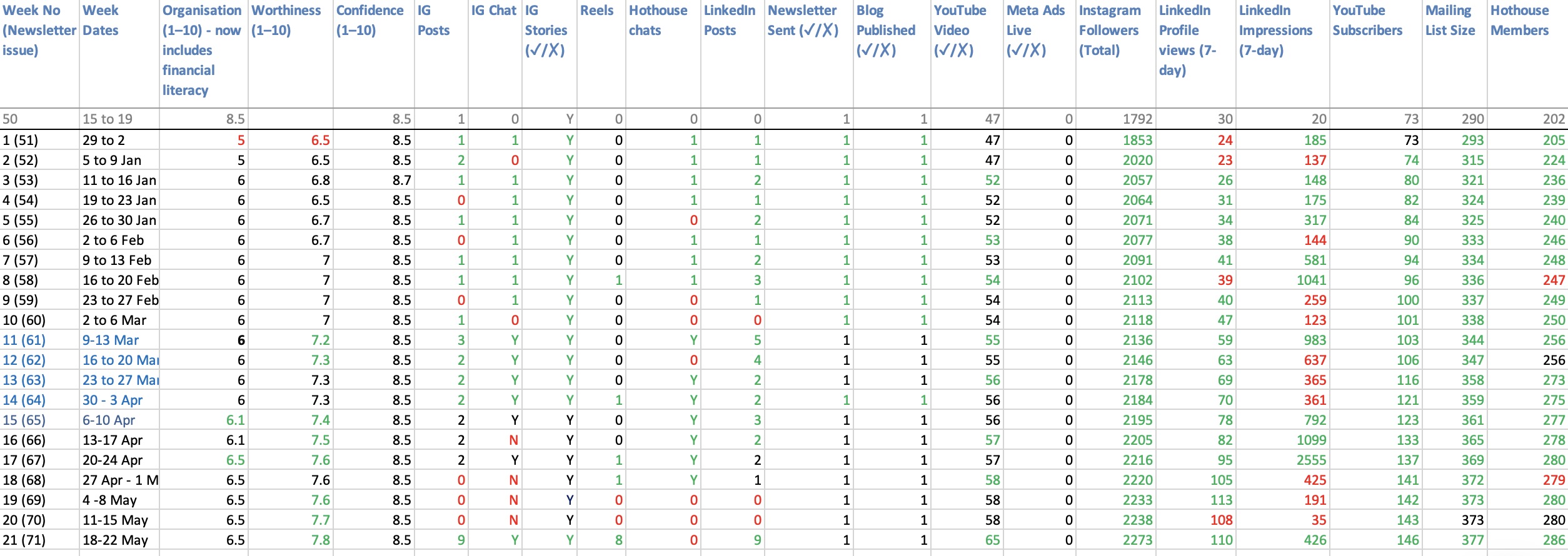
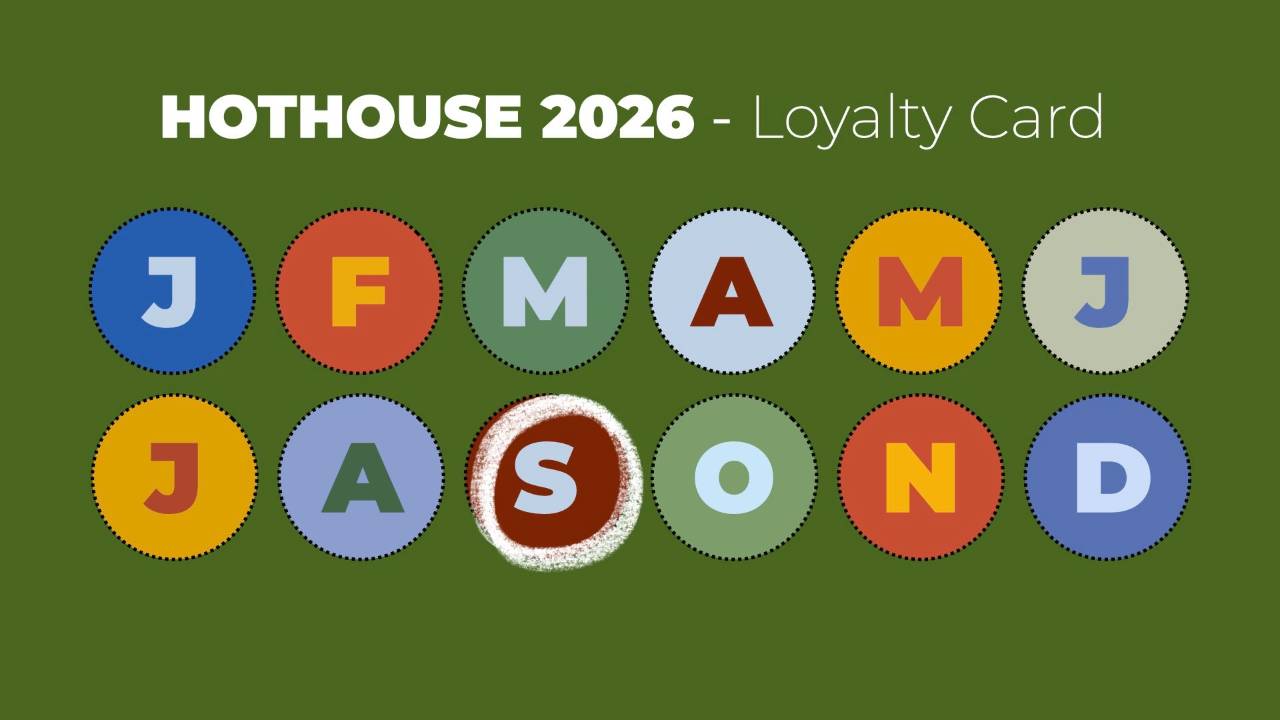
If you are new here: every week I measure my business across key performance indicators aligned to my goals and ambitions for the year. I include intangibles, like confidence and worthiness, because by measuring them I force myself to confront and address them. I believe that consistent performance + delivering a good product = success. Full stop.
Bootcamp wrapped on Thursday, and with it the most intensive five weeks in my working year. I made a deliberate decision at the start of May to park marketing for the duration: Bootcamp demands full presence, and something had to give. The numbers reflect that (note the creeping red across the last five weeks). Since Thursday I have been back on it, and we are green across the board...well, except for the Hothouse chat, which gets my full attention next week.
June is Systems and Processes month, and to be honest, when I scheduled this topic it felt like due diligence. Necessary, worthy, not exactly thrilling. But the deeper I get into it, the more I see systems and processes not as administration but as architecture, a network of interconnected decisions that underpins everything that matters in how a practice runs and how a client experiences it. A structural skeleton of process and documents, with a gossamer network of psychology and client management woven through it. I cannot wait to get into it with you in June.
One more thing from this week: the digital marketing project that has been building quietly in my business has launched, it caught me off guard. Videos I recorded months ago appearing in my feed, posted according to someone else's strategy. After two and a half years of building everything myself and kangarooing along, finding myself in the middle of an alien process is a strange and interesting experience. Now I feel slightly panicked about keeping up the pace. And will everything go red again when it stops? 🫣 Watch this space.
Final Thought
The question I asked about AI at the start - what we get to keep once AI has taken what it can take - needs to be flipped.
Instead, we should focus on what we can do that AI cannot - and whether our businesses are currently organised around demonstrating and delivering that thing, or whether our time is still monopolised by tasks that belong in the AI column.
In the future, successful founder-led practices will double down on delivery of the very best of human capability, and maximise the very best of AI assistance everywhere else.
☀️ Have a wonderful, sunny BH weekend!
Julia
Founder - Hothouse


Responses