
Hello 👋
When I was studying for my PG Cert, one of the most transferrable concepts I learned was about the shape of a ten-week term.
In psychological terms, ten weeks is too long. Without deliberate intervention, morale follows a predictable arc: high at the start, eroding through the middle, recovering only as the end comes into view. Teacher training taught me to subdivide: 10 weeks should be delivered as minimum two blocks. Give each block its own theme, its own deliverables, its own visible finish line. Make sure students are never so deep into a stretch that they can't see either end of it. If you don't take care of this, capable university students will drop out.
A six-month design project presents exactly the same challenge. The clients sitting across from you at the preliminary meeting are not so different from students at the start of a new term: energised, optimistic, projecting their ideal outcome onto a process that hasn't yet made contact with reality. What we know (and they don't) is what's coming: where the fault lines will appear, when motivation will trough, which moments carry the highest risk of losing them...of losing their trust.
We know this from experience. The question this week is what we do with this knowledge - whether it stays in our heads, deployed in an emergency, or gets built into how our practices actually operate.
That is the difference between instinct and infrastructure.
1. This week on the blog
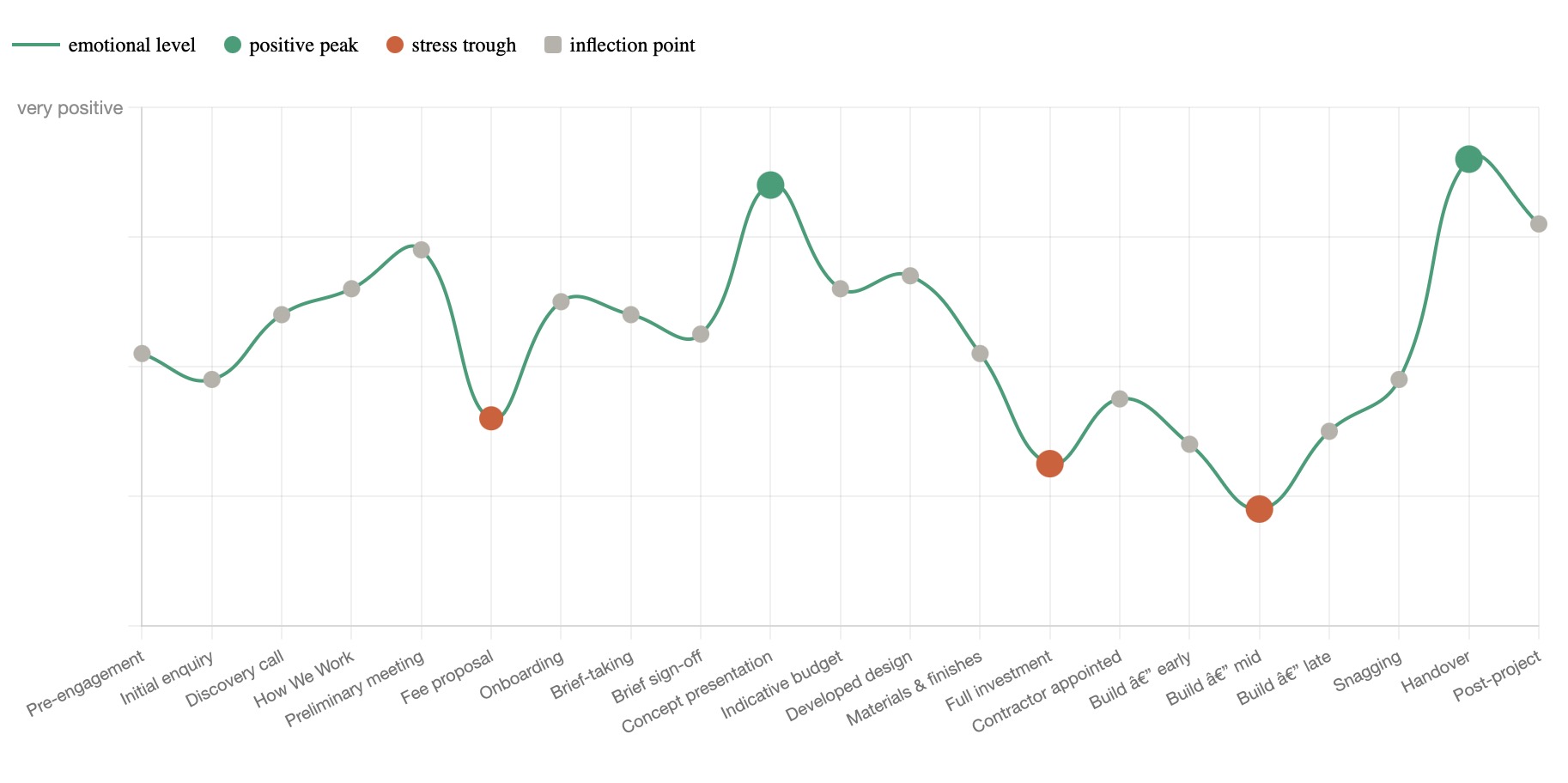
Designers already know, with reasonable predictability, when a client will feel most exposed, most indecisive, and most likely to panic. The question is whether that knowledge is embedded in how your practice operates...or whether it lives only in your head.
Read: You Already Know When Your Client Will Panic. Are You Using That Knowledge?
2. New on YouTube
How Interior Designers Should Structure Their Business Systems | The Design Process Framework
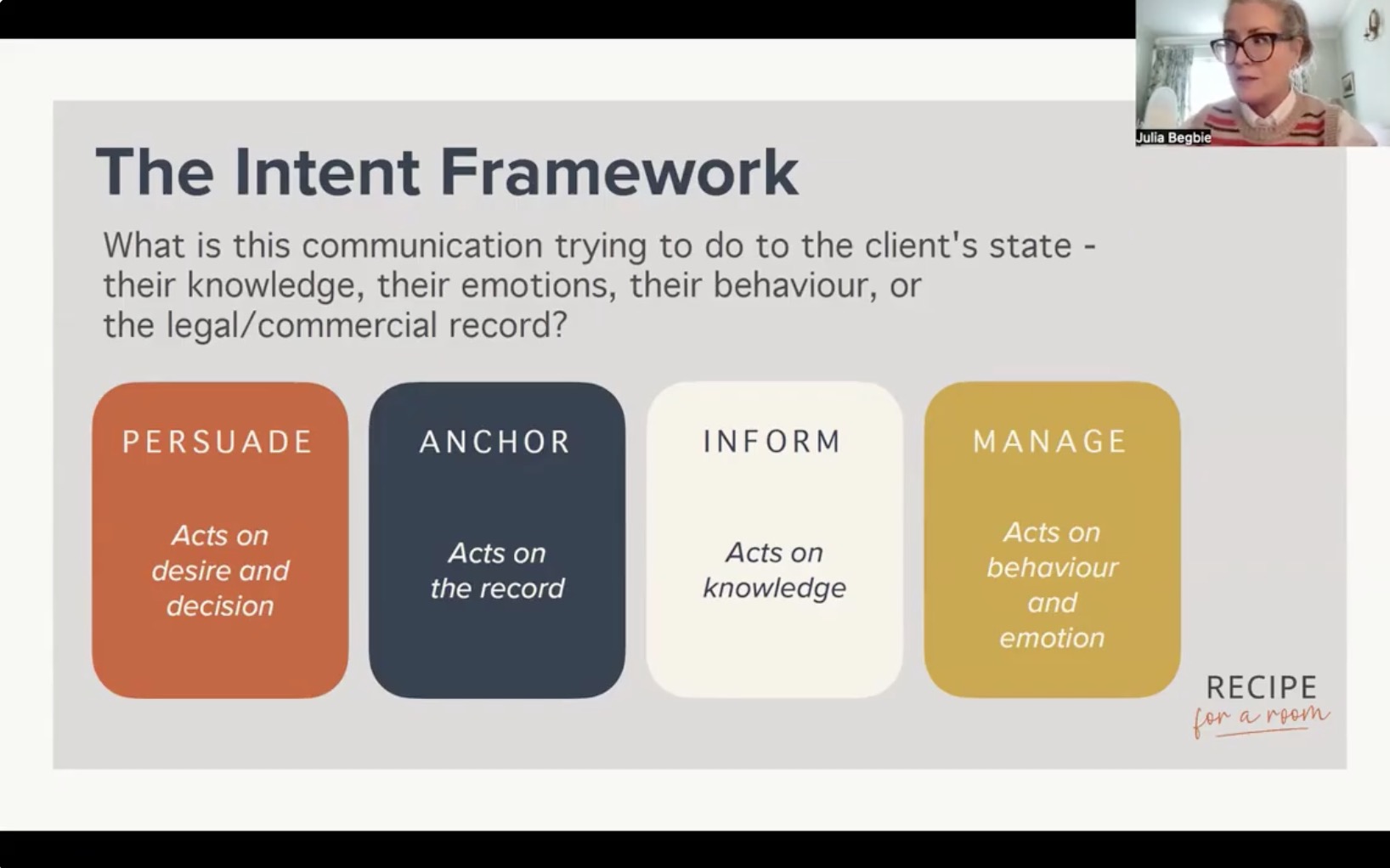
This month's first Systems and Processes webinar is now up on YouTube. If you missed the live session - or want to revisit it - this is the first half of a thorough walkthrough of the client journey from pre-engagement all the way to handover and beyond, stopping to discuss strategic purpose behind every client pack your practice produces. In Part I we paused at the end of Concept Design.
Part II (Developed Design to Handover) will run live on Wednesday 24th June at 10am, and will appear on YouTube shortly afterwards. The link to join the live event is in the Hothouse group on Facebook.
In July, in an extension to the advertised content, we'll take an in-depth look at Procurement, and in a separate webinar, we'll look specifically at the parts of the process where AI makes a massive difference, and how to use it.
3. From the Consulting Room
This week I was asked: Should I charge for the preliminary meeting?
There is no single correct answer - only a correct answer for each situation.
Here are three tests to run before deciding on whether or not to charge.
How did the enquiry arrive?
A warm referral - from an architect, contractor, or past client - means some filtering has already happened. Not charging is not a concession; it reflects the confidence already extended by the referrer. Clients in this channel are unlikely to read a free meeting as weakness. They know what you cost.
A cold enquiry is a different proposition. When you charge, you send a signal that engaging with you is a commercial arrangement from the outset. It separates the genuinely interested from the merely curious...or downright exploitative.
What do you already know about the project?
If the discovery call and enquiry form suggest a project clearly within your target market and budget range, the meeting carries reasonable conversion probability. Free is a justifiable investment in future business.
If the information is thin, or early signals suggest budget misalignment, charging tests commitment before you invest further. A serious client will not baulk at a modest fee. One who does has told you something useful.
How is the market behaving?
In a strong market, with a healthy pipeline, charge consistently. In a quieter period, the calculus shifts. Closing off a promising warm referral over a preliminary fee may cost more than the signal is worth. Be honest with yourself about timing.
In practice
Score your situation against the three factors before each meeting. Warm referral, promising project, quiet market: go open-hearted. Cold enquiry, thin information, healthy pipeline: charge without apology. Most situations fall between these poles; the framework gives you the language to think it through rather than defaulting to habit.
The danger of offering a free preliminary meeting is that clients take their steer on your value from you. This is where your founder presence, and your systems and processes play key roles - it is possible to attend a preliminary meeting as a Very Grand Designer without charging...but much depends on your manner and the authority you exude, how desperate/professional you appear.
Whatever you decide, the preliminary meeting has a cost. Your client should understand that, even when they are not paying for it directly. Name it in your client-facing documentation as a substantive professional consultation - not a sales call. The meeting has value. Make sure that is legible before it takes place.
4. The Fee Proposal Fork
Recently, as part of conversations with a number of designers, I've noticed a deviation from standard practice in fee calculation and presentation, and I took the opportunity to draw attention to this in this week's webinar.
Here are the two different approaches - which you use may depend on the market conditions you are currently operating in.
Approach One
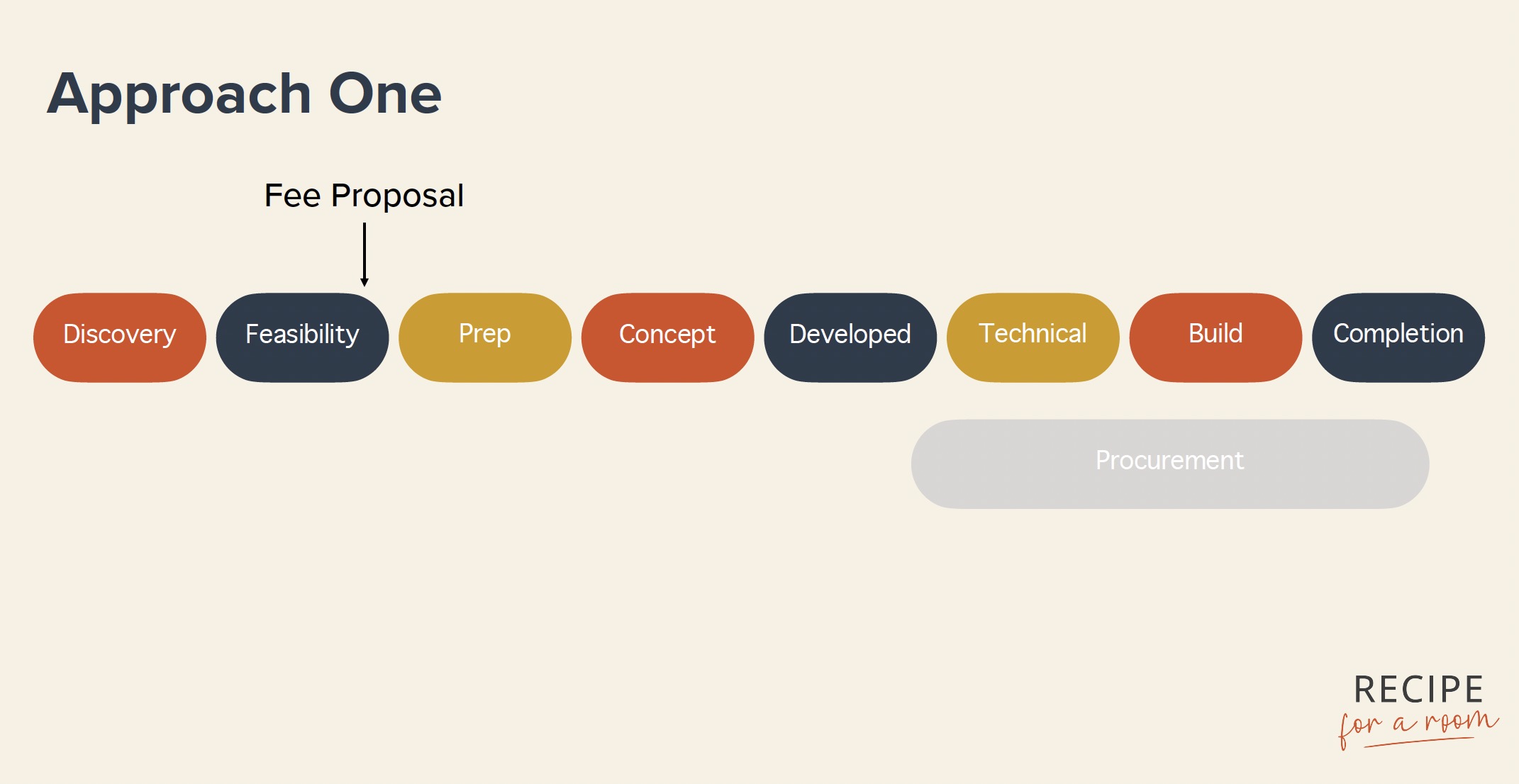
is the traditional model: a single fee proposal, presented at feasibility (after the preliminary meeting), covering all subsequent stages through to technical design, and taking in construction and procurement.
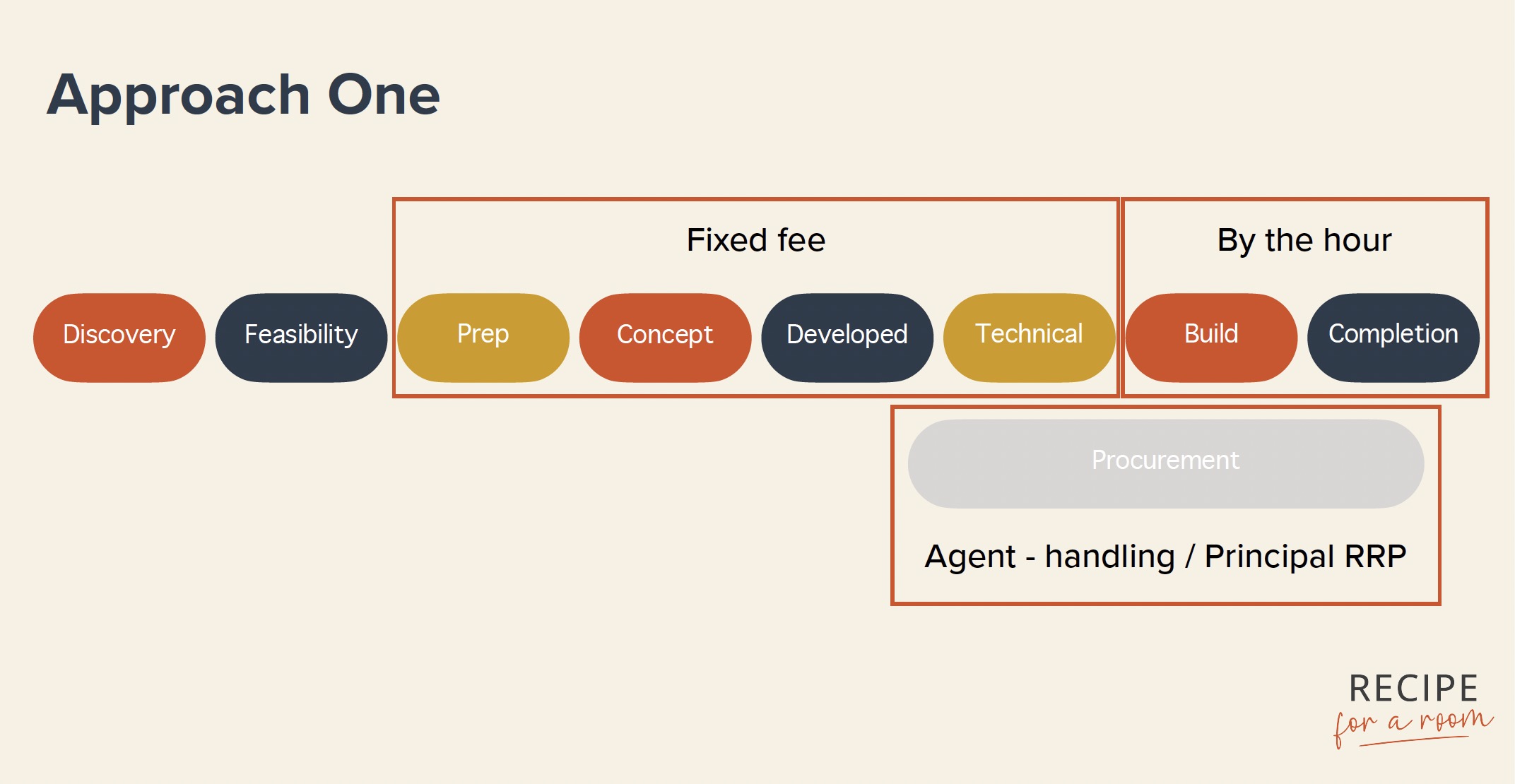
The client knows the full cost from the outset, commits once, and the project proceeds.
Approach Two - I've noticed this gaining traction, particularly in a market that some are finding thin and resistant.
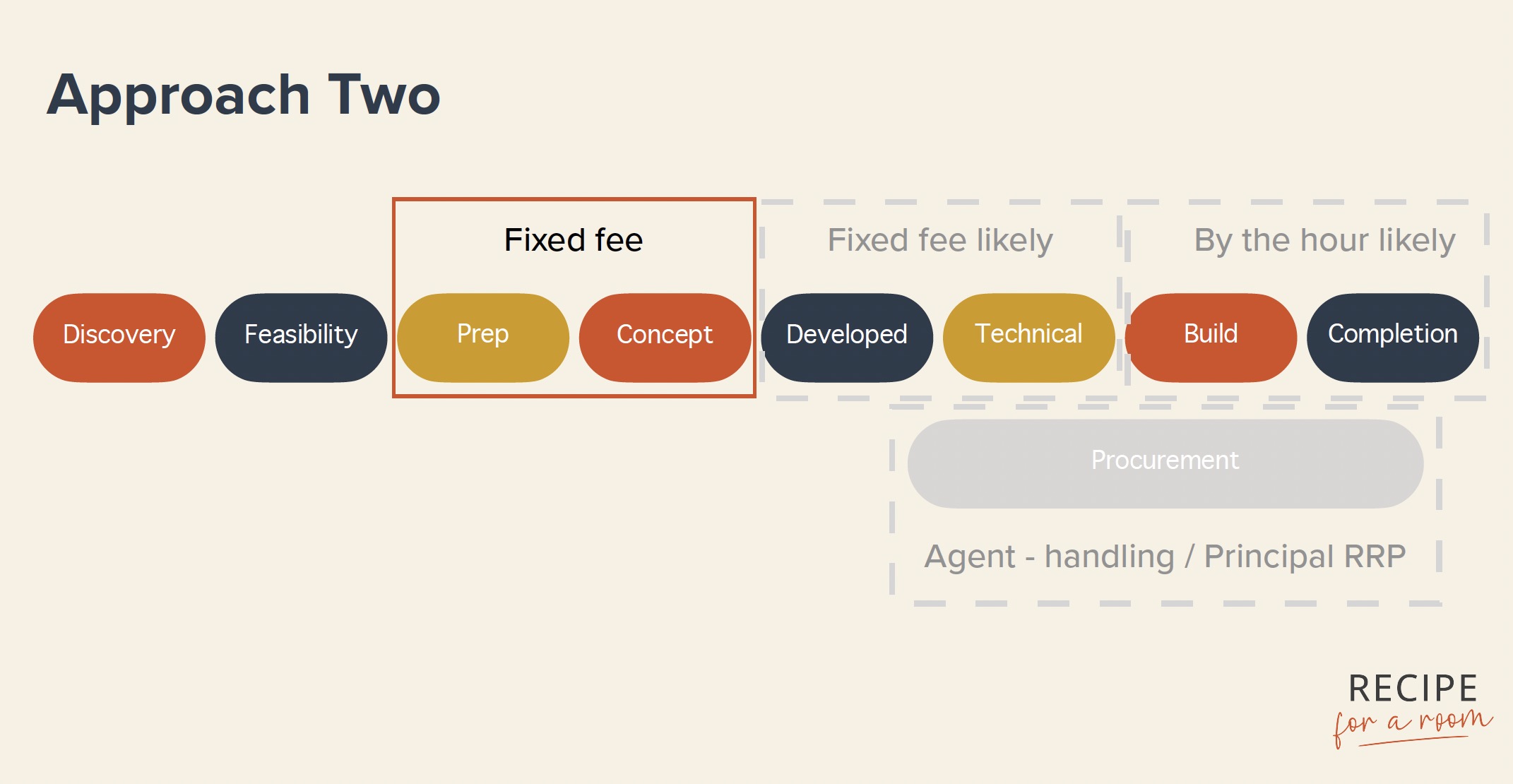
The first fee proposal covers Prep and Concept stages only - here 'Concept' is a well-defined, finite piece of work with clear deliverables: a resolved vision of the project, including colour, style, materials, form and design direction. Fee Proposal One also sketches a possible shape for Fee Proposal Two - reducing ambiguity about where the project is heading financially, but still leaving the designer latitude, later on, to design the professional input that best serves the project.
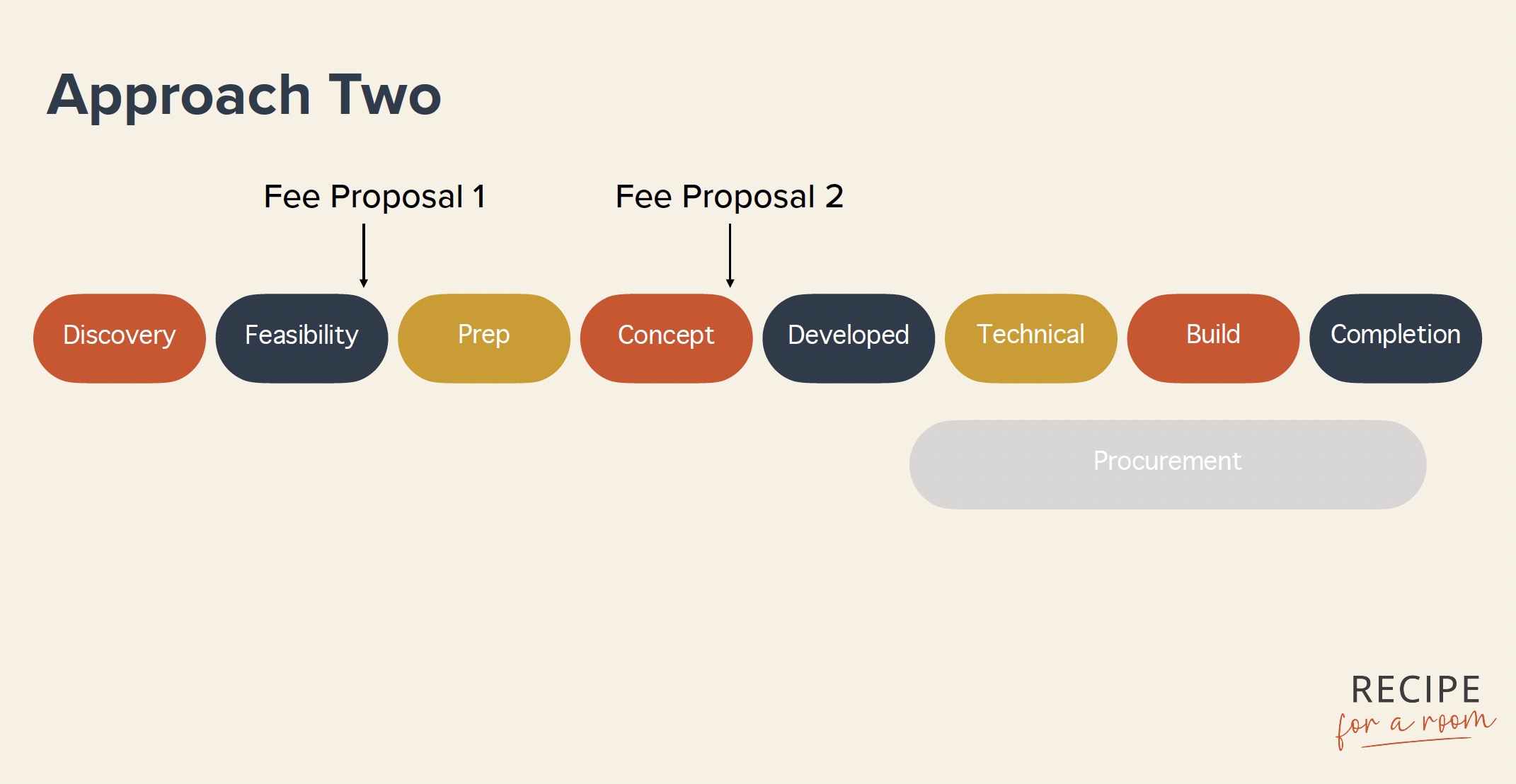
Once the Concept has been delivered, a second fee proposal is calculated and presented for the remainder of the project.
Some designers report that - using approach two - the first, smaller fee proposal is easier to get over the line.
What can happen in practice: clients enter Approach Two thinking they may stop at concept - they'll take it from there. However, by the end of an intensive and creative period of collaboration with the designer, they understand exactly what has been designed and what it would take to deliver it - they have lived the actual value of professional design services. The conversion rate into the second proposal is high, because by then the client cannot imagine executing the vision they have built together with you.
Watch the full explanation in the webinar video, from 46 mins, 30 secs - link here
5. White Label Studio
Everything in this issue points to the same problem: designers who know exactly what good practice looks like, but haven't yet built that knowledge into how their studio operates. The client communication that exists in your head rather than in a document. The process you follow intuitively but couldn't hand to anyone else. The system that is, in truth, just you.
White Label Studio is the answer to that problem.
This self-directed programme takes you through the full design process chronologically, stage by stage, with clear instruction on how to deliver design services at each point - and provides the templates you need to do it.
This includes nine fully brandable, professionally designed client-facing document packs, available in InDesign, Canva, and PowerPoint: How We Work; Fee Proposal; Onboarding Pack; Concept Presentation; Indicative Budget; Developed Design Presentation; Materials & Finishes Presentation; Full Project Investment; and Handover Pack.
It also includes all the key behind-the-scenes documents and templates you need to run a project (e.g. fee proposal, Gantt charts, scheme sheets, estimates, invoices, purchase orders, master spreadsheets, schedules and specifications), along with instructions on how and when to use them.
This is your practice, formalised. Your instincts, made structural. And all based on the Intent Framework - ensuring the document hits at the right emotional and procedural pitch for the moment.
The programme launches in September. Until 30 June, you can secure your place at the founder price of £350 - a saving of £150 on the standard price of £500.
PLEASE NOTE: If you will be one of the max 12 designers enrolling in 12-week, live Business in a Box this autumn, White Label Studio is included in your course fee.
Find out more about White Label Studio.
6. Coming Up in Hothouse
Next week - Thursday 18th June 2026, 10:30-12:00pm - I'm presenting for the BIID: AI in Practice: How Interior Designers Are Integrating AI into Studio Workflows. This session is for designers who are ready to move beyond the basics and put AI to work in their practice. There is a waitlist for this session.
I'll be running similar in Hothouse in July, alongside a further instalments in the Systems and Processes series - Part III will be a dedicated session on Procurement. Details to follow shortly.
Wednesday 24th June, 10:00-11:30am - Systems and Processes Part II. Continuing our journey through the design process by way of set piece meetings and documentation. The link to join this live webinar is in the Hothouse group.
7. My Week in Hothouse
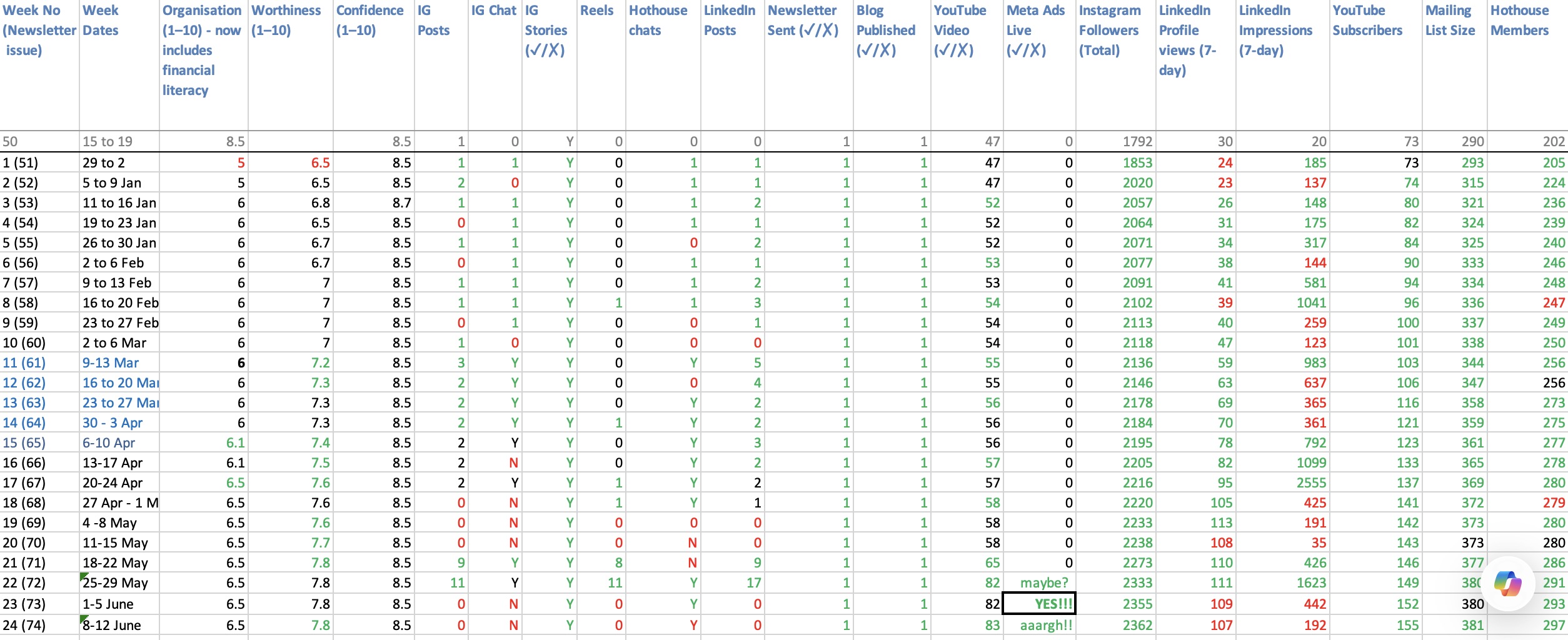
It has been a funny old couple of months. I've been navigating some significant personal turbulence. I'd prefer not to say more than that at the moment, but the last couple of months have required me to make a triage decision about where my energy goes. Marketing went to the bottom of the list. Showing up for clients came first. Always.
Among the good news items is that the frameworks I teach held. The planning cascade (annual plans feed quarterly goals; quarterly goals direct monthly actions; each month instructs its weeks; each week creates a to do list) is what I've been living. And the business is intact, the commitments are intact (among them: a blog and newsletter every week), and I'm still here.
Now I feel a head of steam building. We are in the last month of Q2, I'm planning for Q3, for the second half of 2026 - it is all still to play for. This week I want to set sales targets along with the strategy to make them real, and 🤞 find the energy to get back to the socials.
A quick note on [expletive deleted] Meta ads - my account was suspended last week, pending verification. A temporary hiccup 🤞. They really are not for the faint-hearted.
The numbers will recover. With radical ownership, it's important to be completely honest. With a different set of circumstances, I'd have expected greater growth, but I'm here as a living example of real life getting in the way, and that's OK.
Final Thought
Instinct gets you through. Infrastructure gets you further.
Hothouse's rallying cry: Design, Declare, Deliver isn't a slogan. It's the structure that holds when everything else demands your attention.
This month's theme is Systems and Processes...and ALL of this feeds into the same ambition: building a practice that doesn't depend entirely on you being at your best.
Onwards and upwards 📈
Julia
Founder - Hothouse


Responses