
Hello ☀️
My accountability groups are thinning out temporarily, from here things fragment a little, as they should: summer deadlines and summer holidays rise up the order, and we regroup in September with the back-to-school energy that I like to grab and capitalise on, even thought it’s quite some time since I left school.
Before we scatter, this issue closes a chapter properly. The Systems and Processes series is complete, and the theme running through everything below is the particular stretch of our business that my clients keep returning to: the front end. The path from first contact to signed client is short, measured in weeks, but this week's blog makes the case that an exceptional client experience at this stage of the design process is critical for business success.
Also in this issue: if I may say so myself, this is the most generous issue of the Hothouse newsletter I've yet sent. The complete fee proposal generation engine from the final webinar, source documents and all; my new FF&E Budget Calculator, free to download; and the recording itself, capping the full Systems and Processes playlist. All of it given away, because how I run this is the best evidence of what I teach. Plus an op-ed on what AI is doing to the designer-client relationship, and an update on the September Business in a Box cohort, where places are moving and the early bird price has a deadline.
1. This week’s blog - The Client as Ming Vase

In 1973, two economists gave a name to purchases whose quality the buyer cannot judge even after the fact: credence goods. Surgery. Car repair. Legal advice. Would the car have broken down? You cannot know.
This week's blog argues that interior design sits close to that end of the spectrum, and argues: if a client cannot truly evaluate your work after delivery, they certainly cannot evaluate it before. Which leaves them a key body of evidence they can assess for themselves, and it is not your portfolio.
Read on for the vase and the handling, the three changes that follow, and why this is upper-tier work.
2. Webinar report – creating an AI tool that makes all your fee proposals
In June and July the theme of Hothouse has been Systems & Processes. The fourth and final webinar tackled AI, and specifically the document I regard as its killer app for designers: the fee proposal. Different every time, precise and persuasive at once, it is the hardest thing in the studio to automate, which is exactly why it repays the effort.
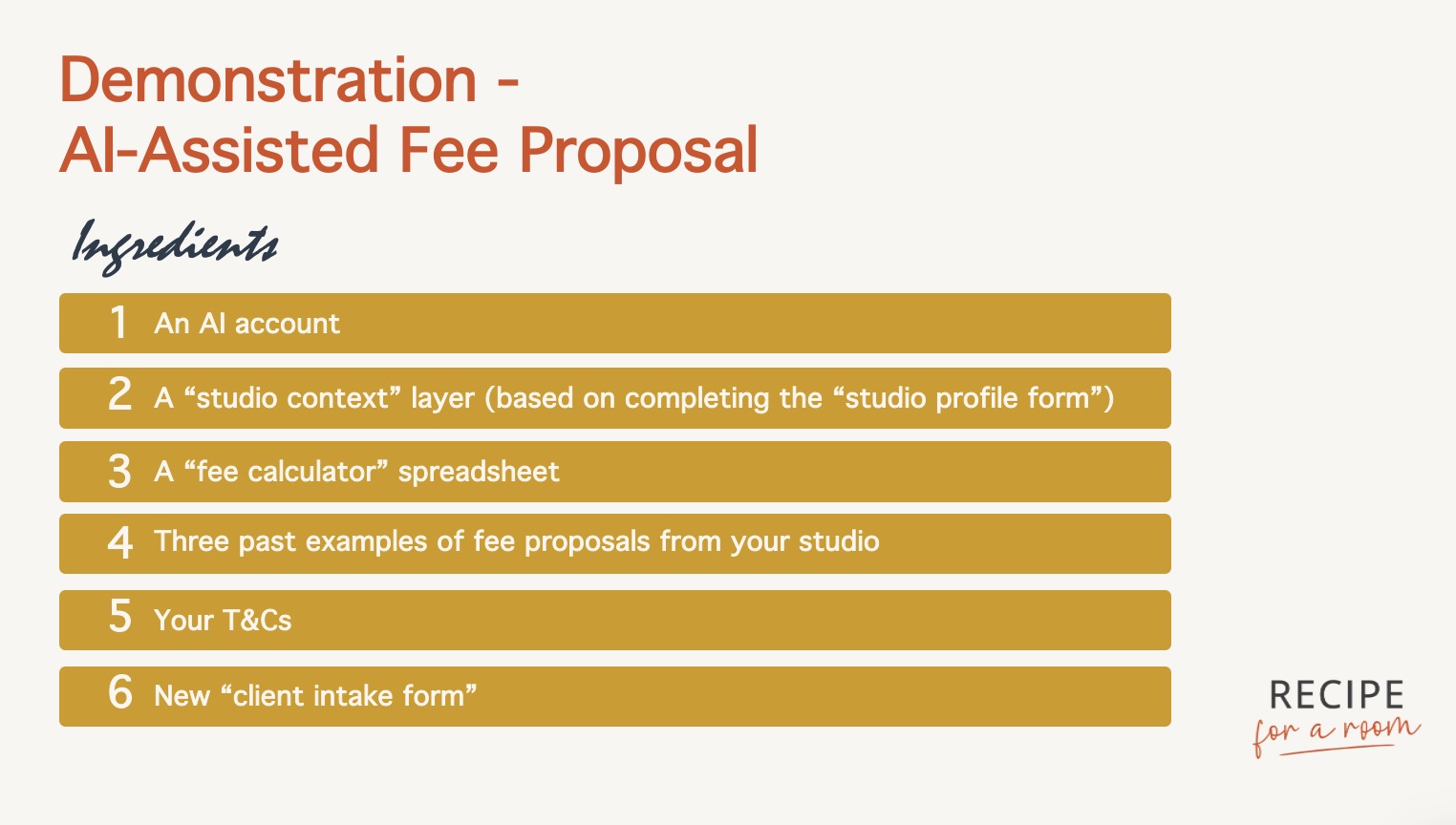
The demo showed a complete fee proposal generation engine: a fixed layer holding your studio's DNA (tone, rates, process, terms), a variable layer fed by a twenty-minute client intake form, along with an Excel calculator that cross-checks the resulting fee three ways, by room, by square metre, and against the project budget.
In goes a form; out comes a data-backed professional draft, leaving you to do the one part that is actually yours: the judgement.
Also covered: using AI as a blunt critic of your website against five competitors you admire, and distilling brand pillars from old testimonials.
The recording is here, and get in touch if you’d like me to send you the source documents (I will also add you to my mailing list - you can unsubscribe at any time).
3. Long Read - The adult in the room
After the AI fee proposal webinar, the conversation didn't end; it got more interesting. What follows are notes on what a room full of practising designers had to say about actually living with AI, rather than theorising about it.
The reports from the frontline are developing common themes.
AI as a "designer" - A designer spends months developing concepts, and the client arrives with an AI-generated alternative that disregards the brief, the budget and the building.
AI as a front - Clients send immaculately drafted technical emails that dissolve on the phone, because the machine wrote the message and the client doesn't understand it.
AI as a gimmick - And because a seductive render now takes five minutes to conjure, clients have started to wonder, sometimes aloud, why the professional version takes so long. The answer, of course, is that the five-minute version cannot be built. It doesn't know where the soil pipe runs, what first fix means, or that the exquisite junction it has drawn between wall and ceiling does not exist in physics.
You are the adult in the room - Someone still has to be the adult in the room, and increasingly that is the designer's job description: injecting reality into imagery that was never troubled by it. Builders have become unlikely allies here; often refusing the impossible in terms the rest of us are too polite to use.
So AI is a blessing and a curse. It has made our studios more efficient. And, it has made our clients more confident than their understanding warrants. Which raises two harder questions the conversation kept circling.
First, how we present our services, and how we charge for them needs to be reviewed. If the machine compresses our hours, the hourly model quietly converts our efficiency into a pay cut. The alternative is charging for judgement and experience rather than time, and that is where the second question bites: asserting value is easiest for those with a body of work behind them. An established designer can say "this is what my experience is worth" and be believed. A newer designer, competing against a client's free five-minute render, has a genuinely harder case to make. Ours isn’t the only industry to be stricken with such asymmetry.
There are practical defences, and ethical obligations, and they belong in your paperwork:
- intellectual property clauses that prohibit clients uploading your drawings and concepts into public AI engines (where they become training data, which is to say, everyone's)
- disclosure of how your own studio uses AI
- terms that set out when and how a client may bring AI into the process at all.
Since nobody reads long contracts, I recommend walking clients through your most contentious or sensitive terms and conditions aloud during the fee proposal presentation.
Which returns us, neatly, to this week's theme: the conversation about boundaries is a front-end conversation, and it is easier to have early on rather than on the day the client whips out their render.
4. Business in a Box - the box is filling up
A brief update for anyone weighing this up. Four of the twelve places on the September cohort are now taken, and the early bird price of £890 ends Friday 31 July - it is £985 from August.
If you missed it: Business in a Box is my twelve-week live programme, led by me, for designers ready to launch, or newly serious about a practice that has so far run on instinct.
Tuesdays 10-11.30am | 21 September to 11 December | capped at twelve.
This run includes the complete White Label Studio system (£500 sold separately) at no extra cost.
Details and enrolment here - or simply reply to me here and let’s talk about how it might suit you. Payment in three installments can be arranged.
5. New resource: the FF&E Budget Calculator
"So, roughly, what will it cost?" Every designer knows the moment, and now you have an answer.
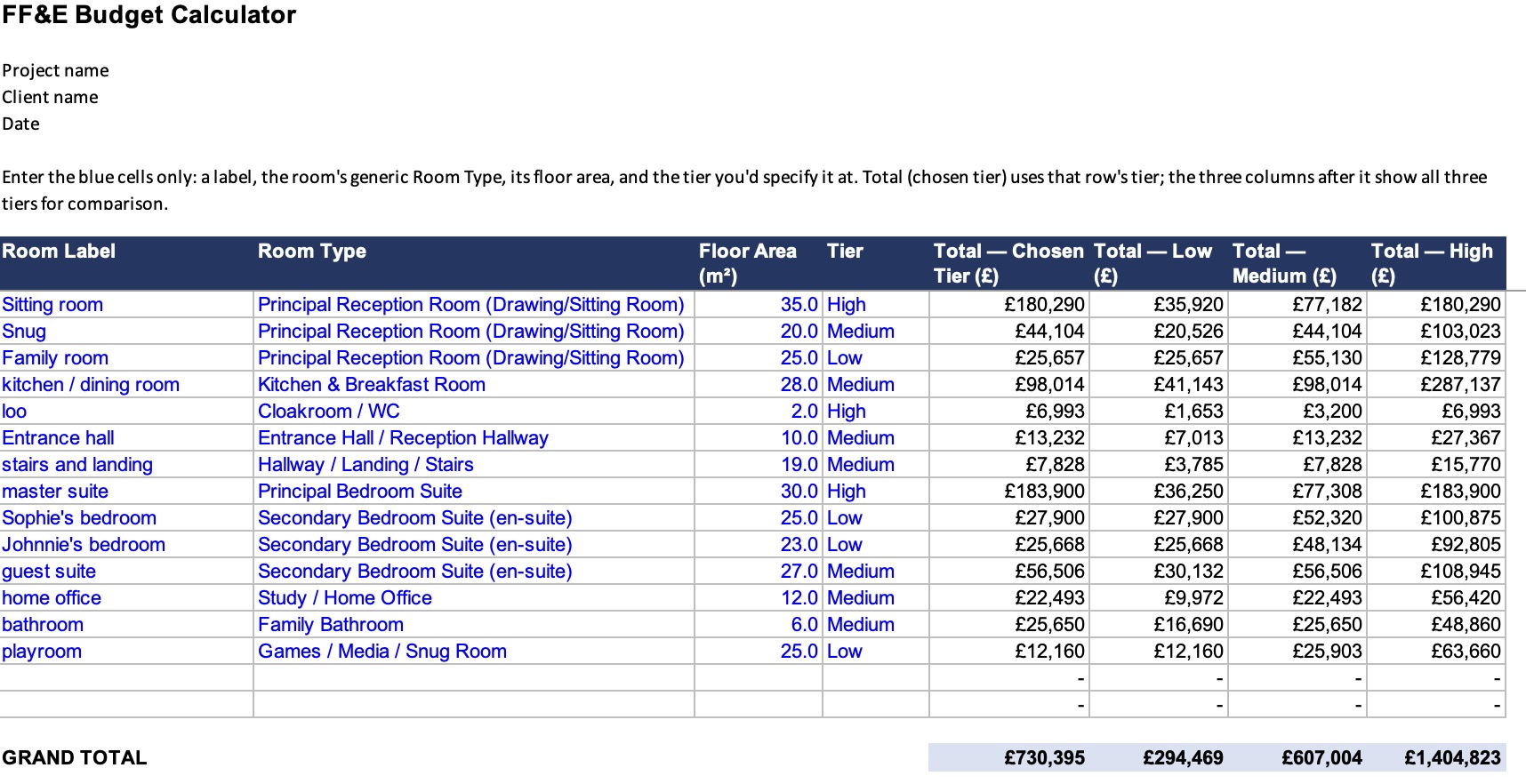
This week I launched a free Excel calculator that turns room sizes and a specification level into a credible indicative furnishing budget in minutes: twelve costed room types, three tiers, and cost models you can recalibrate to your own pricing.
6. My Week in Hothouse
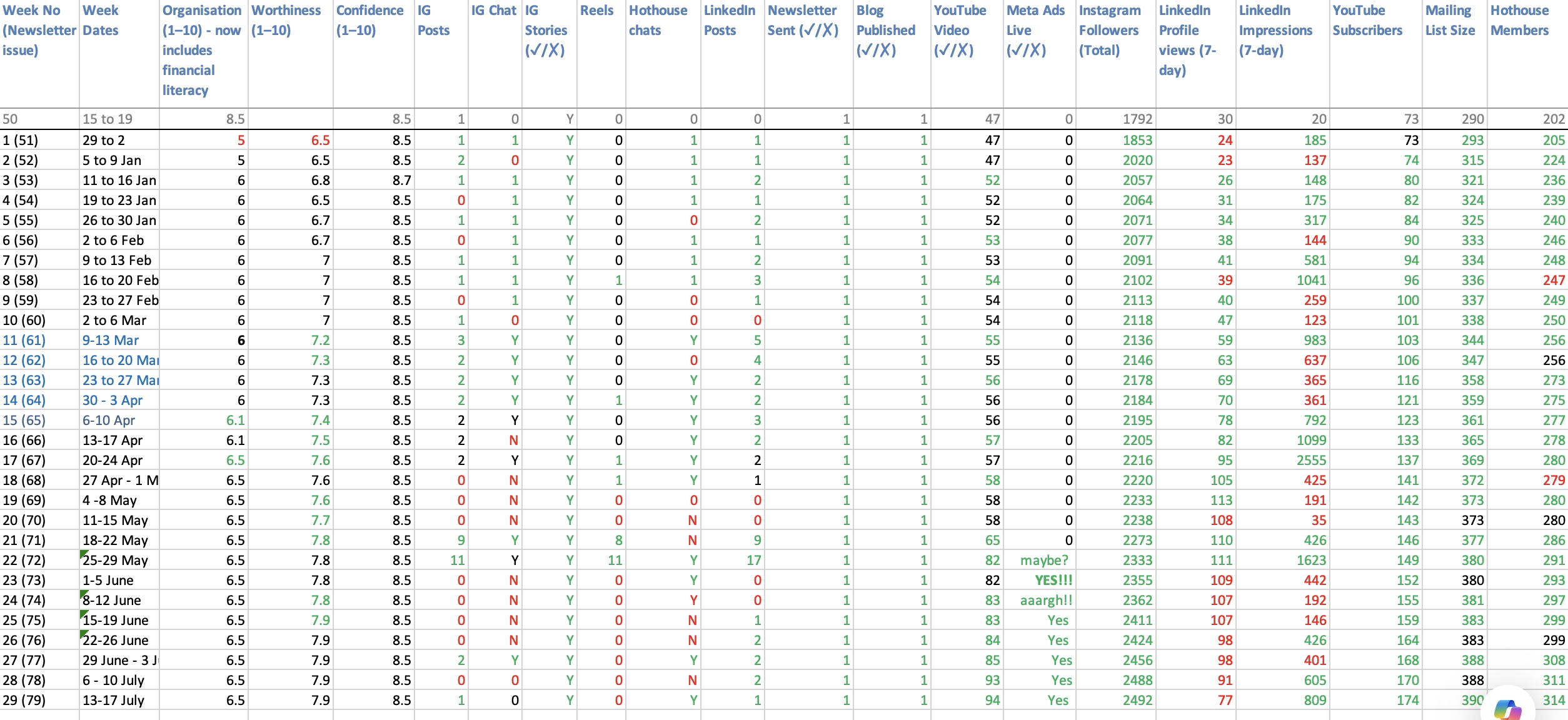
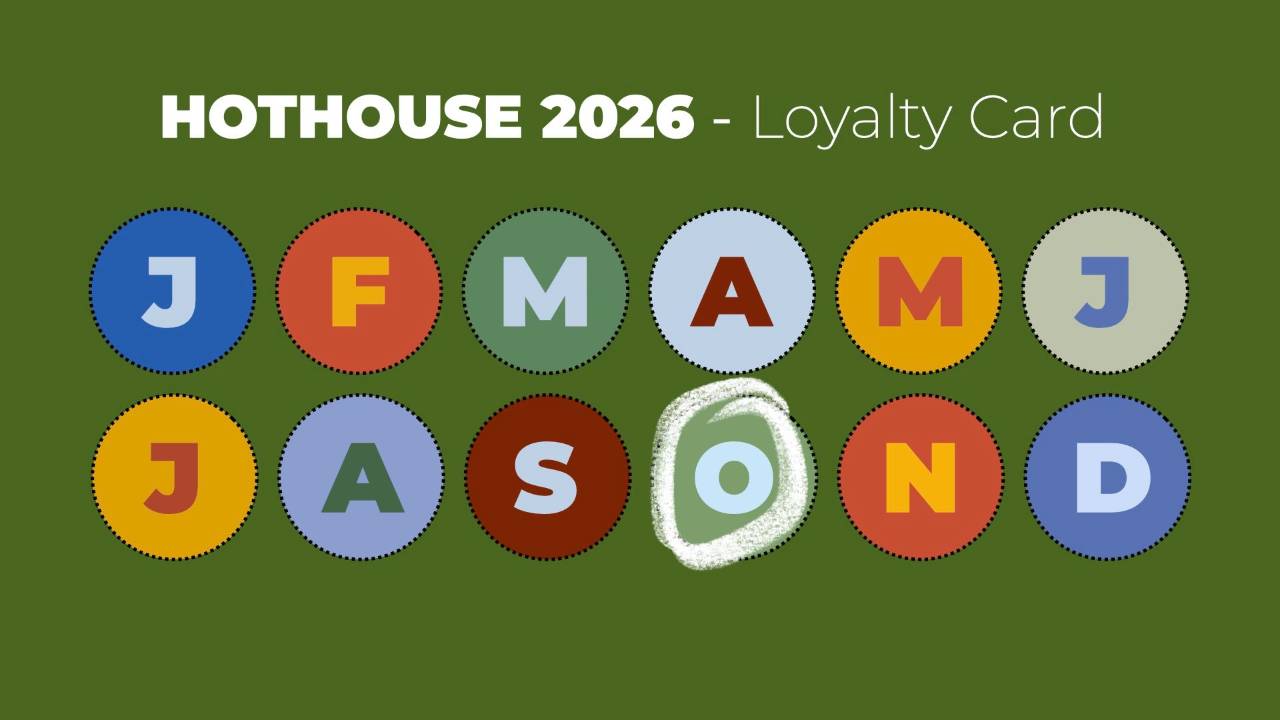
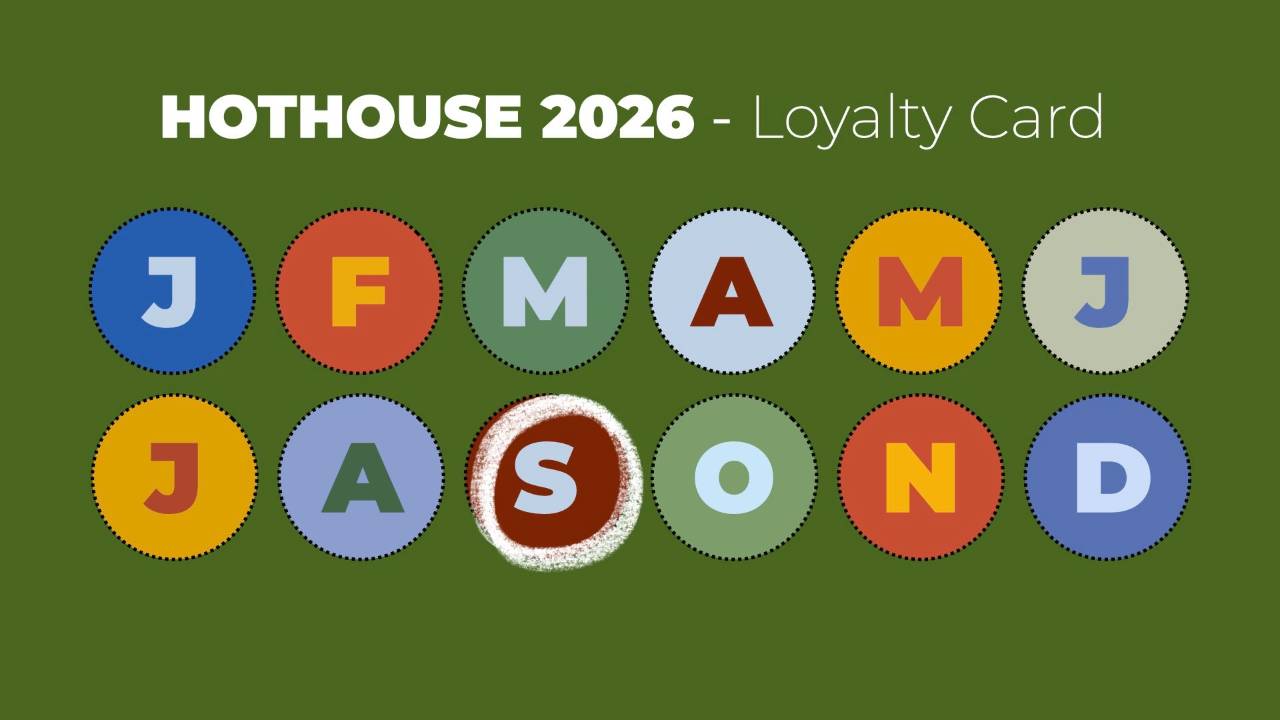
We are in week 29 of 2026, and next week the whole year will no longer fit in the screenshot, last December's data is about to vanish off screen.
I've run the last webinar of the 'summer term', and there's a pause now until we come back refreshed 🫣 after the summer break. I will have my head down, finishing off the White Label Studio which launches in September, but I will also have time for chats in the Hothouse group, so if there's anything industry-related that you'd like to chew over, you will find me there.
Things I'd love to hear: the resources that you most need to support you in your work; what life is like for you on the front line; how the market or industry currently feels; or particular points of practice you'd like to dig into. I'm also personally very interested in how we flex our positioning, our services, our pricing, to thrive alongside AI 🤔.
In the meantime I'm still seeing private clients, and have interesting challenges lined up to collaborate on in August - when things are quieter and designers have time to reflect and plan.
And my year-long, premium, one-to-one coaching programme never lays down its tools, we are about halfway through 2026, and each designer is on track to hit their explicit and bespoke goals and targets for 2026. Contact me if a year of intentional one-to-one focus sounds interesting.
I will be very disappointed in myself if I don't get my face back out on social media in the coming week. Recent personal upheavals have taken the wind out my sales when it comes to impromptu chats on stories, so here I am throwing down my very own gauntlet. I'll see you on Instagram.
Final Thought
The client has to trust in your talent, but how well they are conveyed is knowable, quantifiable. So if the coming weeks bring you a quieter diary, spend a tiny fraction of it with your last five enquiries, and look at the gaps as well as the touch points. This audit may be the most profitable hour of your summer.
My groups may become less consistent for a while, but I won't: I'll see you next Sunday.
Wishing you Godspeed in the mad push to the end of July, and happy holidays if it's that time of year,
Julia
Founder - Hothouse

Responses