
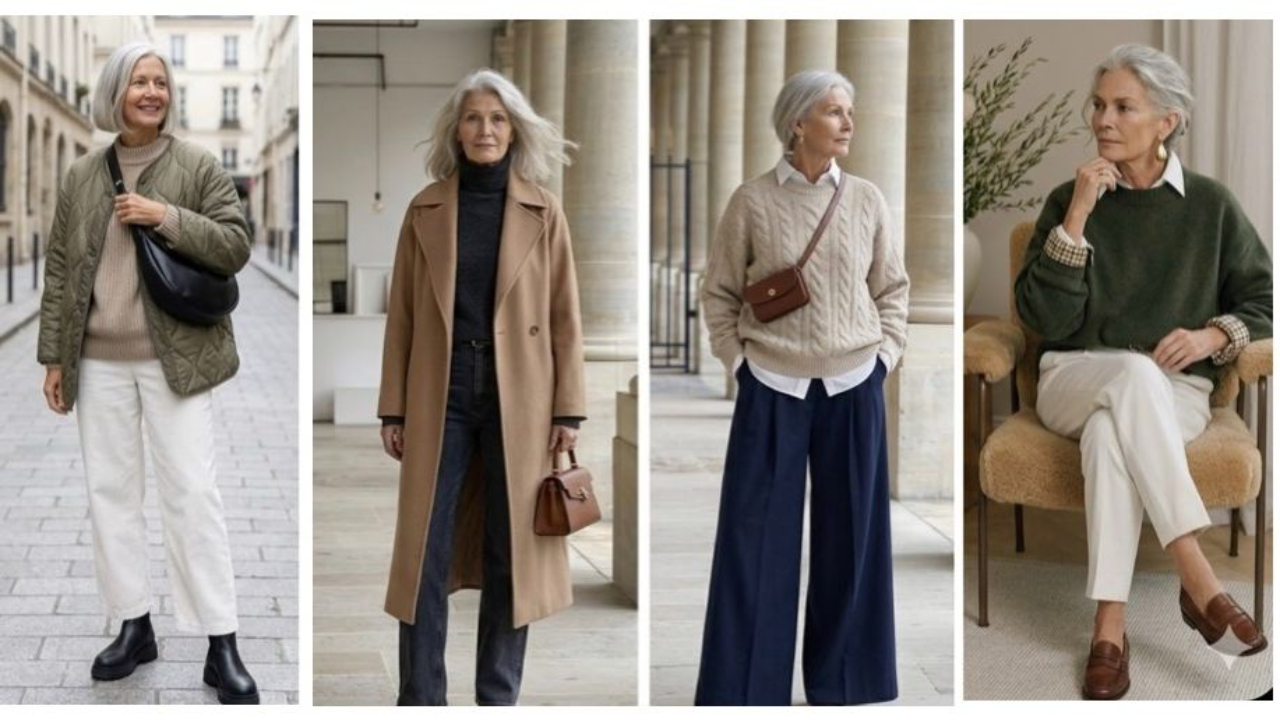
Dress The Person You're Becoming
Mar 20, 2026This week I've mentioned to clients - almost in passing - that I've spent downtime recently using AI to work on my personal style. This sparked enough interest that I said I'd write about it.
Some background
Regular readers know that I've set myself the challenge of becoming more visible. I believe it's necessary for the business to grow, but like any new undertaking, it opens a set of subsidiary questions.
One of them is: what to wear?
Our industry is visual. We are perfectionists. The way we present ourselves carries a message as strong as anything we say out loud, and for those of us stepping in front of a camera more frequently, that message is now on record.
I'm currently reading Hal Hershfield's Your Future Self: How to Make Tomorrow Better Today, and it has me thinking about past versions of myself and the uniforms they wore. I've moved on from those versions, but their clothes are still in my wardrobe, occupying space that belongs to whoever comes next. I have a milestone birthday approaching, and - in order to avoid a catastrophic emotional reckoning when the day actually arrives - I find myself spending indulgent amounts of time thinking about who the 60-year-old version of me is, what she looks like, and how she dresses.
The process
This isn't, it turns out, only a question about clothes. I've been working in parallel on something I'm calling Founder Presence - a written document that defines the aspects of myself and my professional identity that I've chosen to make visible publicly. The exercise forces a set of questions that might otherwise be overlooked: What role does my presence perform for my audience? Where does my authority actually come from? What am I willing to show, and what am I not? What is the emotional contract I hold with the people watching?
Personal style and professional presence turn out to be the same question approached from different directions. Both are about deciding, deliberately, what you want to project, and then making choices consistent with that decision rather than simply habitual ones. Treating them as separate exercises misses the point. The clothes are part of the argument.
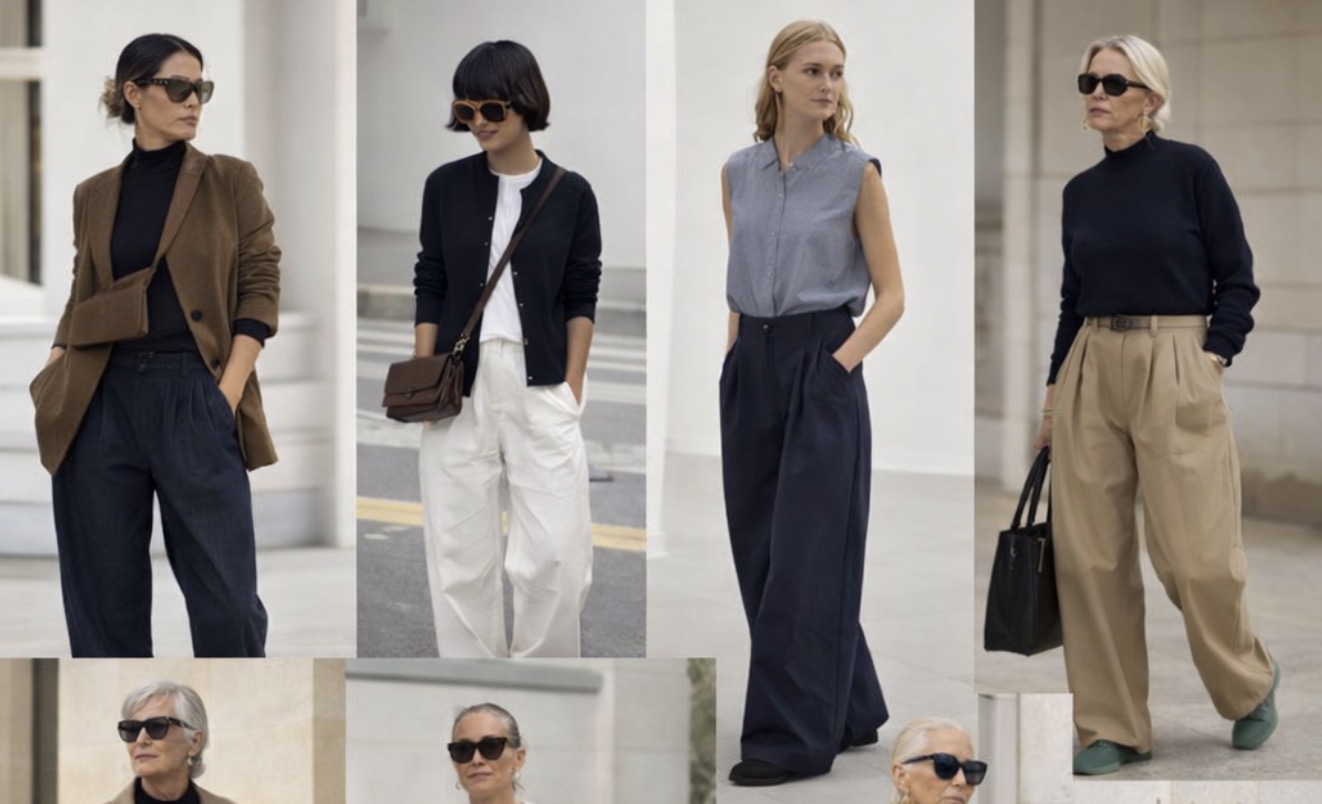
So last Saturday I fed a curated collection of images into Claude (screenshots of people whose style I'd been drawn to over the past month or two, mostly from Instagram, numbered and arranged on PowerPoint slides) and asked it to analyse, define, and synthesise them into a style framework: something that could guide future purchases and inform what is turning out to be a fairly ruthless clear-out.
NB - These are NOT the images I shared with Claude. I don't have permission to use the source images, so, just so I could show you something here, I ran the original content through ChatGPT and asked it to produce a collage of similar images. The following is watered down, and sort of flattened, but I hope it gives you a very rough idea of what was fed in, before I show you what came out.
What it produced, and what it didn't
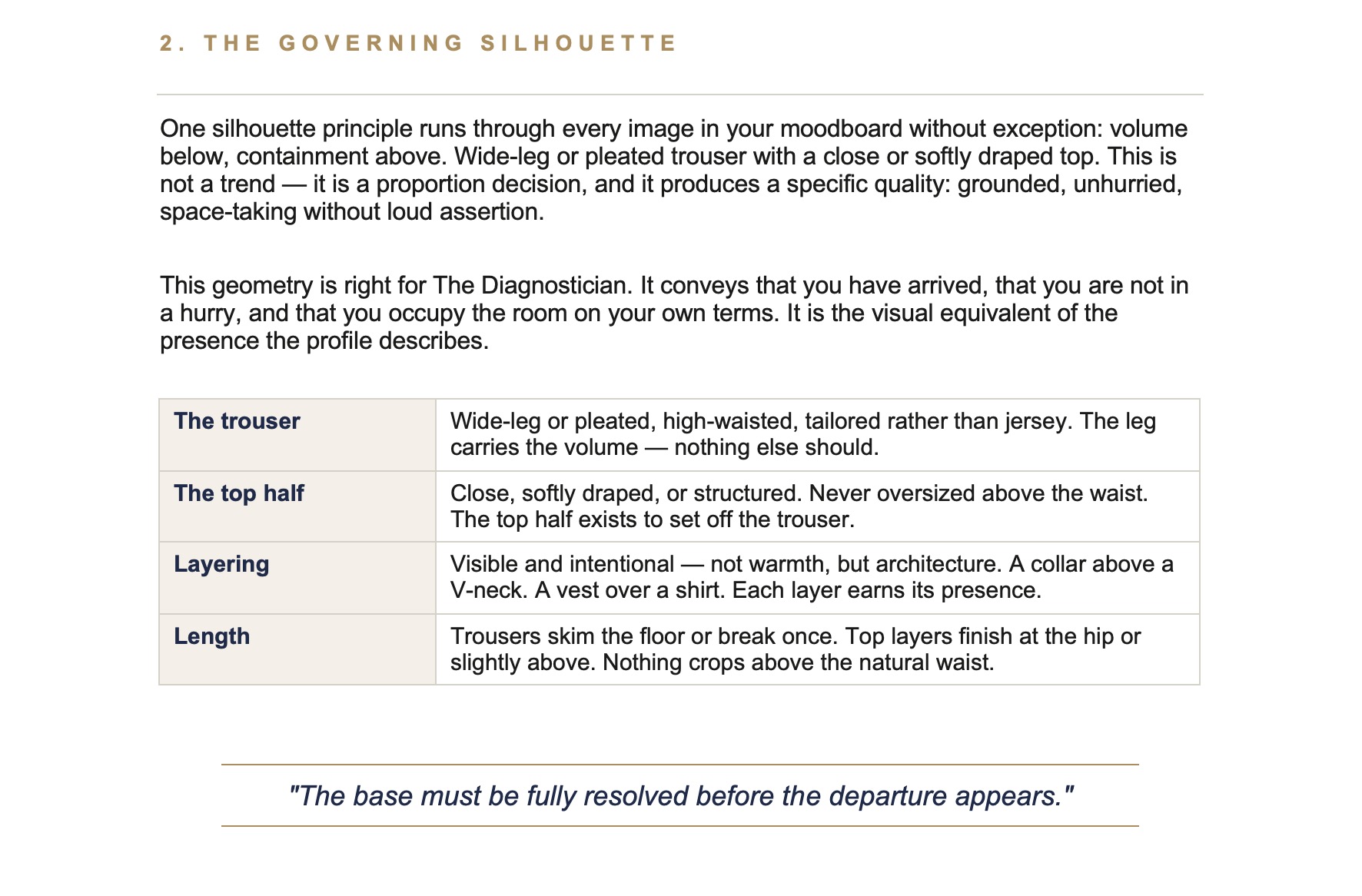
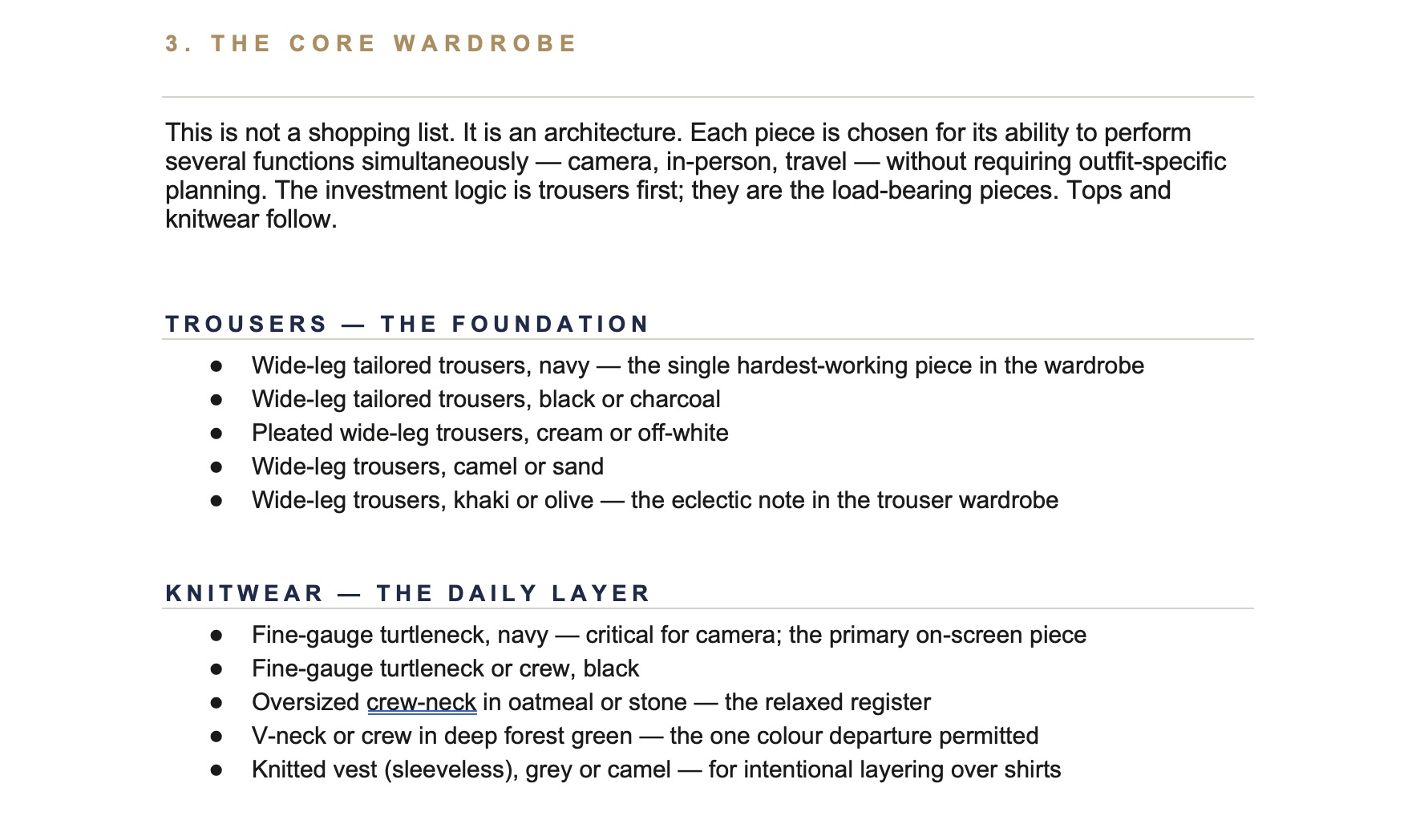
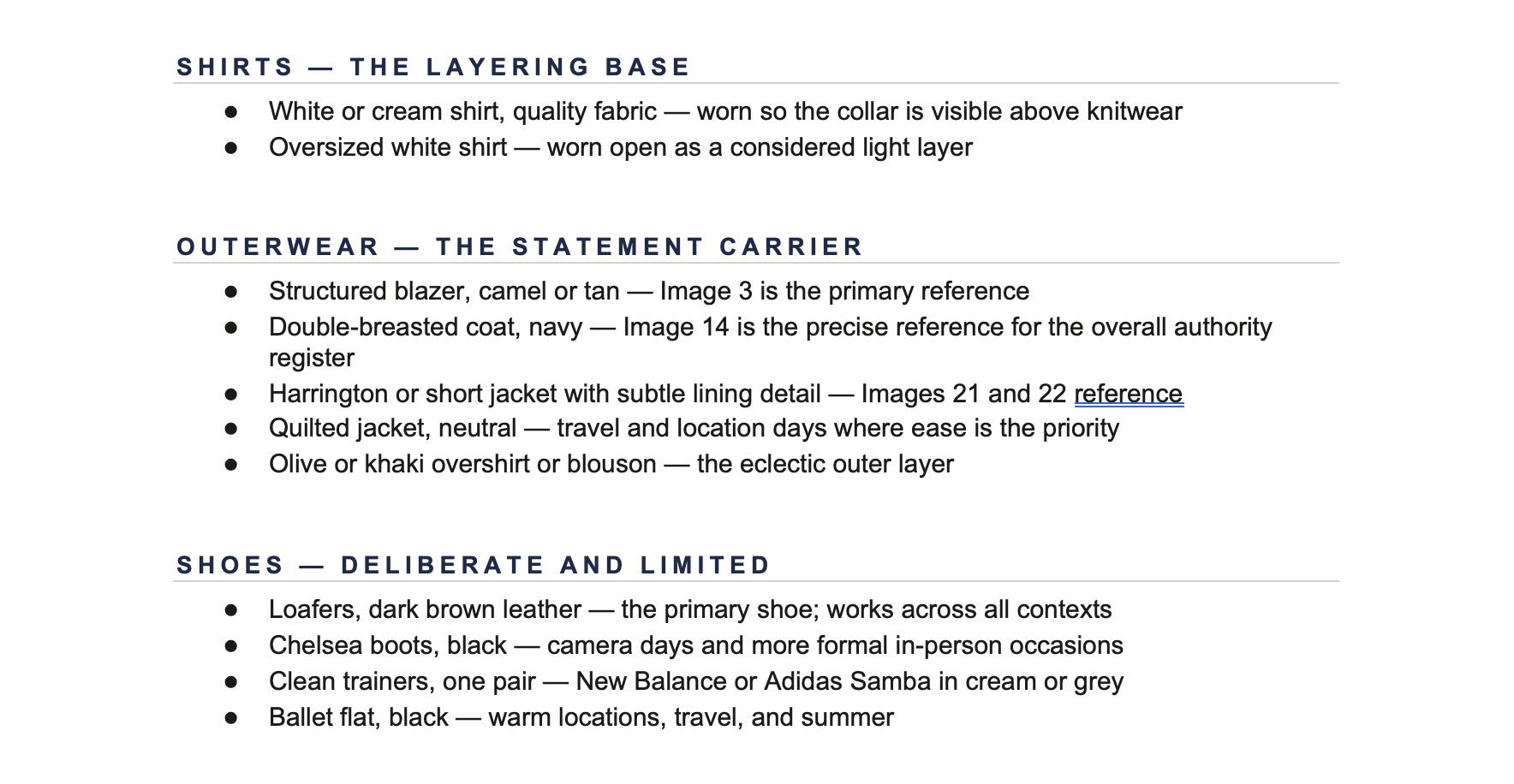
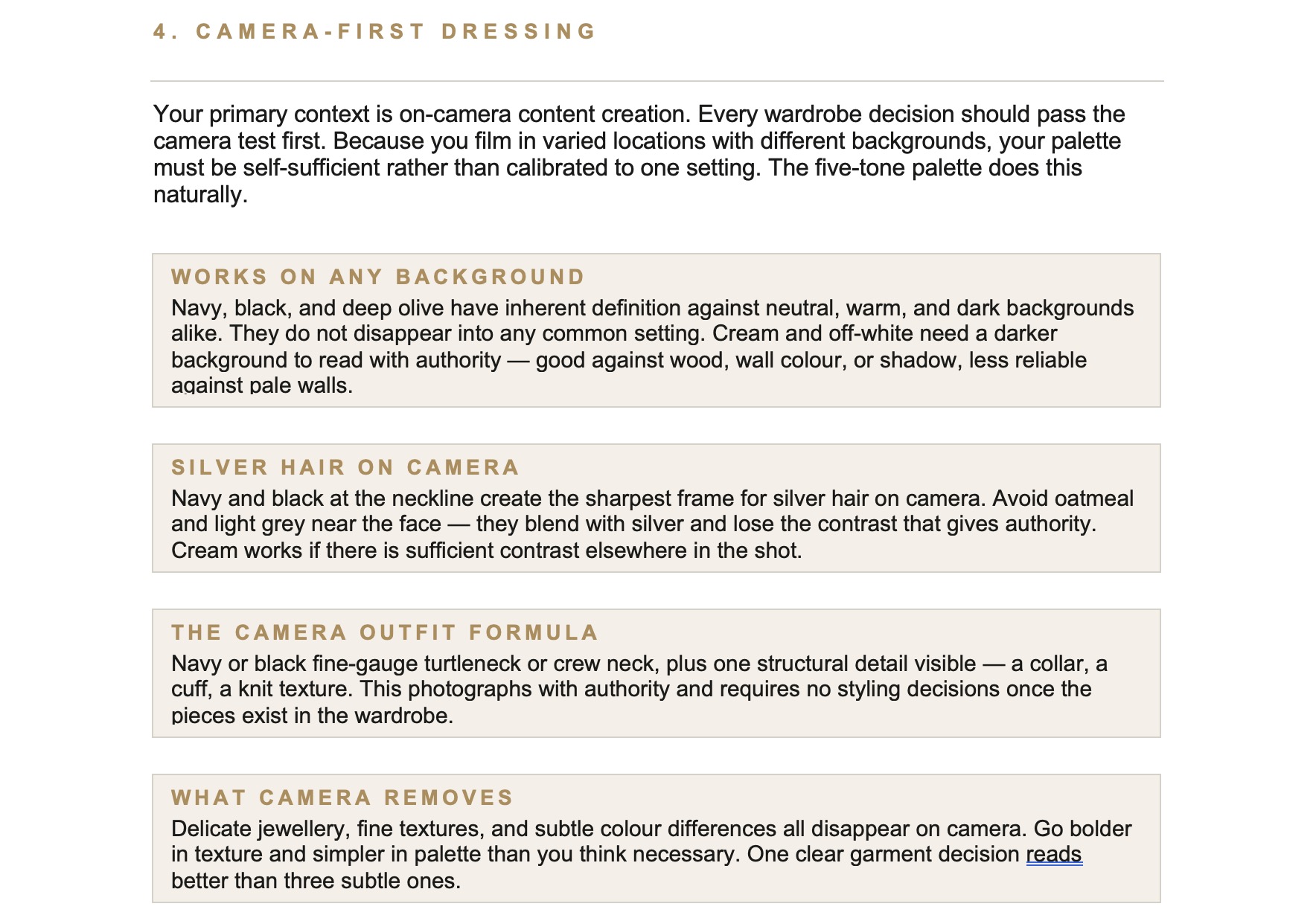
The report was, on balance, impressive. Some of the insights were genuinely sharp - e.g. comments about why a particular shoe was a good choice with the outfit, and, helpfully, there was logic connecting visual choices to the authority register I'm trying to build. It asked some questions about my build, my colouring, and provided personalised advice accordingly.
There was also missing nuance - I'd call it flair. My actual preferences run slightly grungier than the output suggested - I like a little more street, a little more edge, and I had included images that leant this way - the analysis landed somewhere more preppy and old-money than I'd honestly place myself. But I can see that gap, account for it, and adjust. The tool reflected back what I gave it; if the images skewed in one direction, the conclusions will too. I suppose it slotted into a recognised style rut, and disregarded some references, rather than innovating anything new or more creative or eclectic.
The more interesting discovery is this: the process was a far better instrument for elimination than for definition. It was excellent at "that's not right”, clear, confident, sometimes bracingly so. It was less useful at "that's exactly it."
That second phase, the positive articulation of what I actually am rather than what I'm not, remains in progress and will probably require more human judgment than algorithmic analysis.
That asymmetry is worth noting if you're considering doing something similar. Knowing what to remove turns out to be more than half the work.
So, a big win is that I feel galvanised insofar as I trust myself not to buy something that is almost right, in my heart I know exactly what is right and I am determined not to settle.
If you'd like to do parallel work on your own professional presence:
1. There's a Founder Presence Questionnaire in the Hothouse group under Files.
2. I've added a brief to use with AI, to generate a style report of your own, scroll to the end to find this.
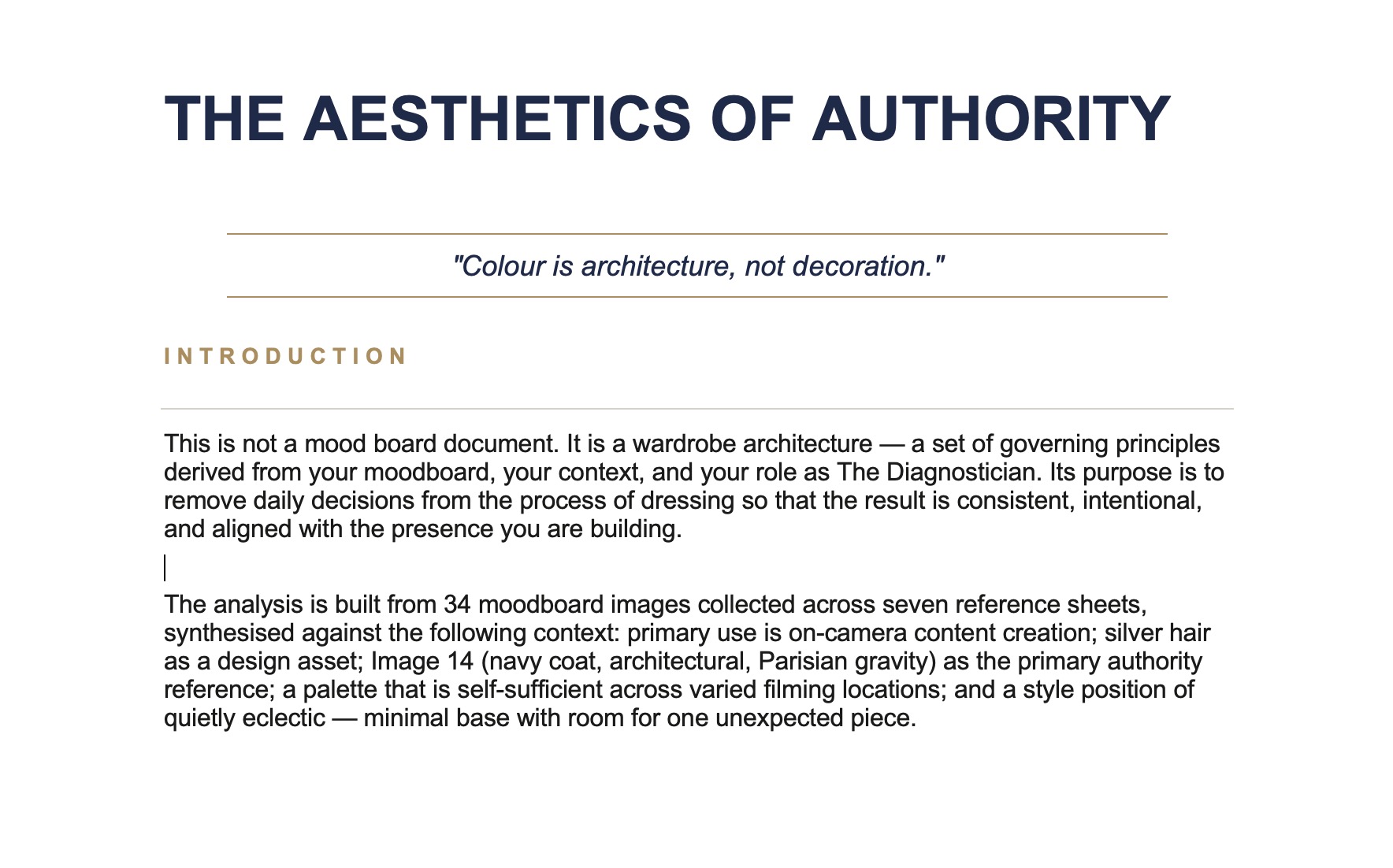
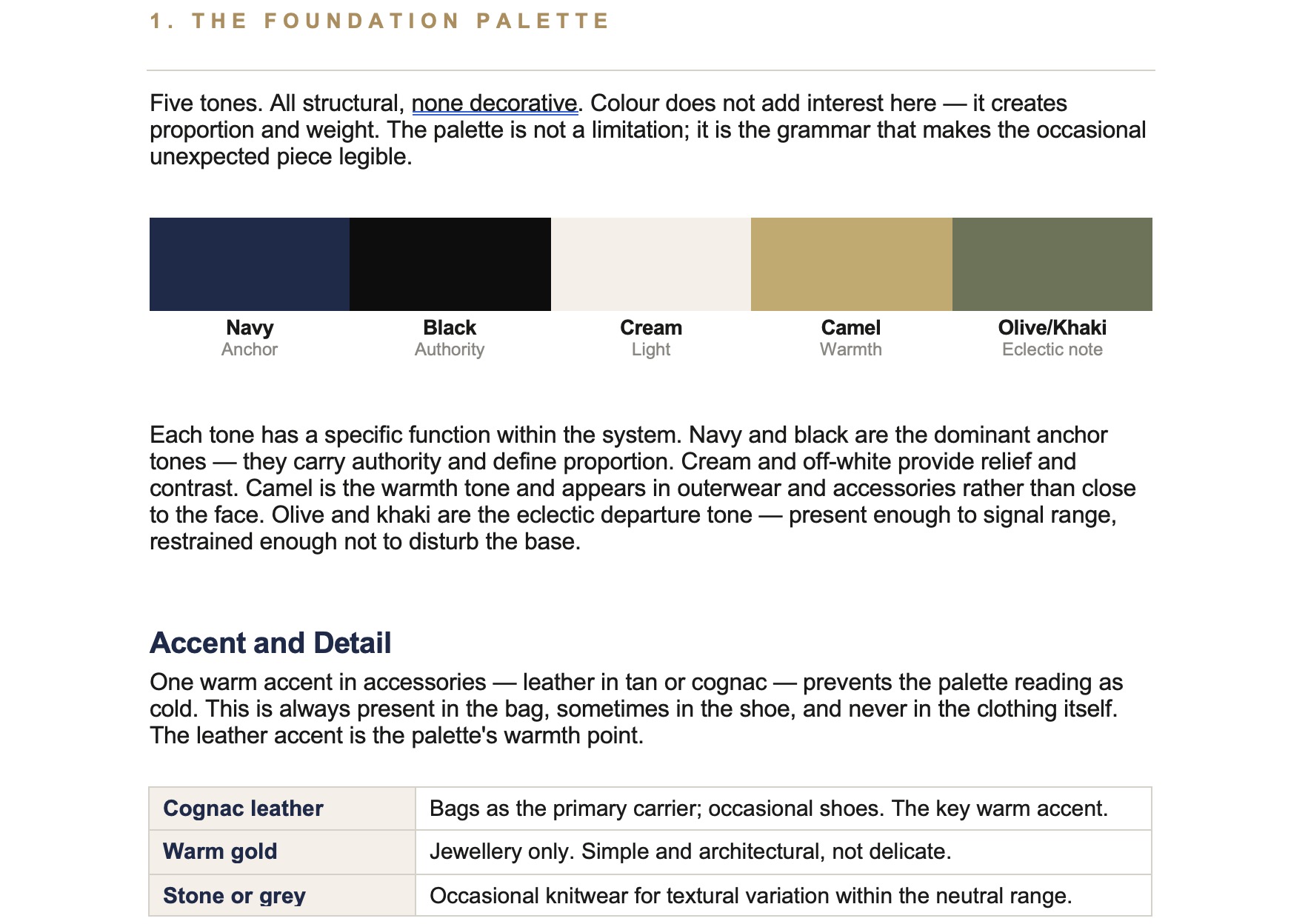
Here are some screenshots of the report that was produced for me by Claude.
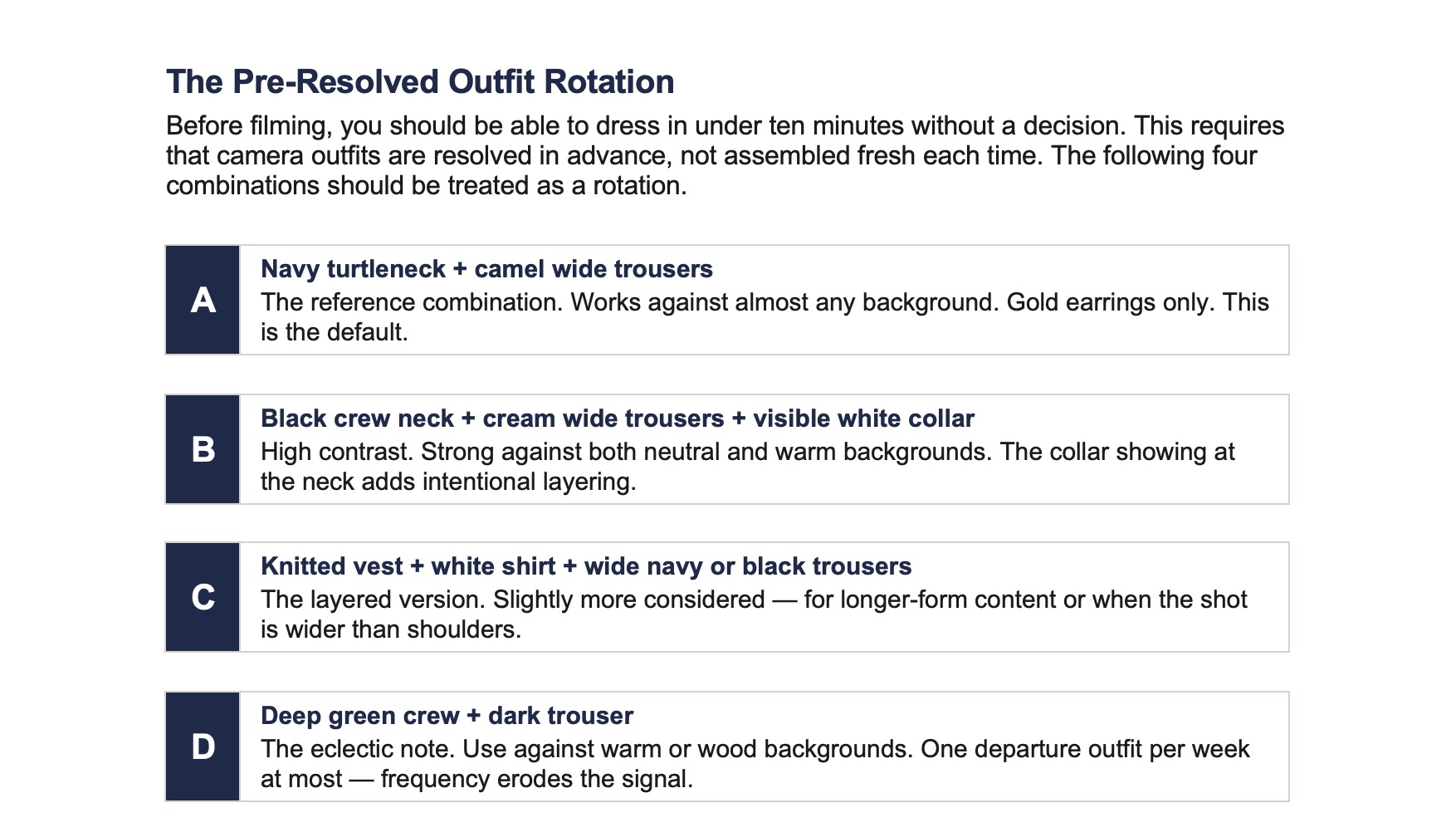
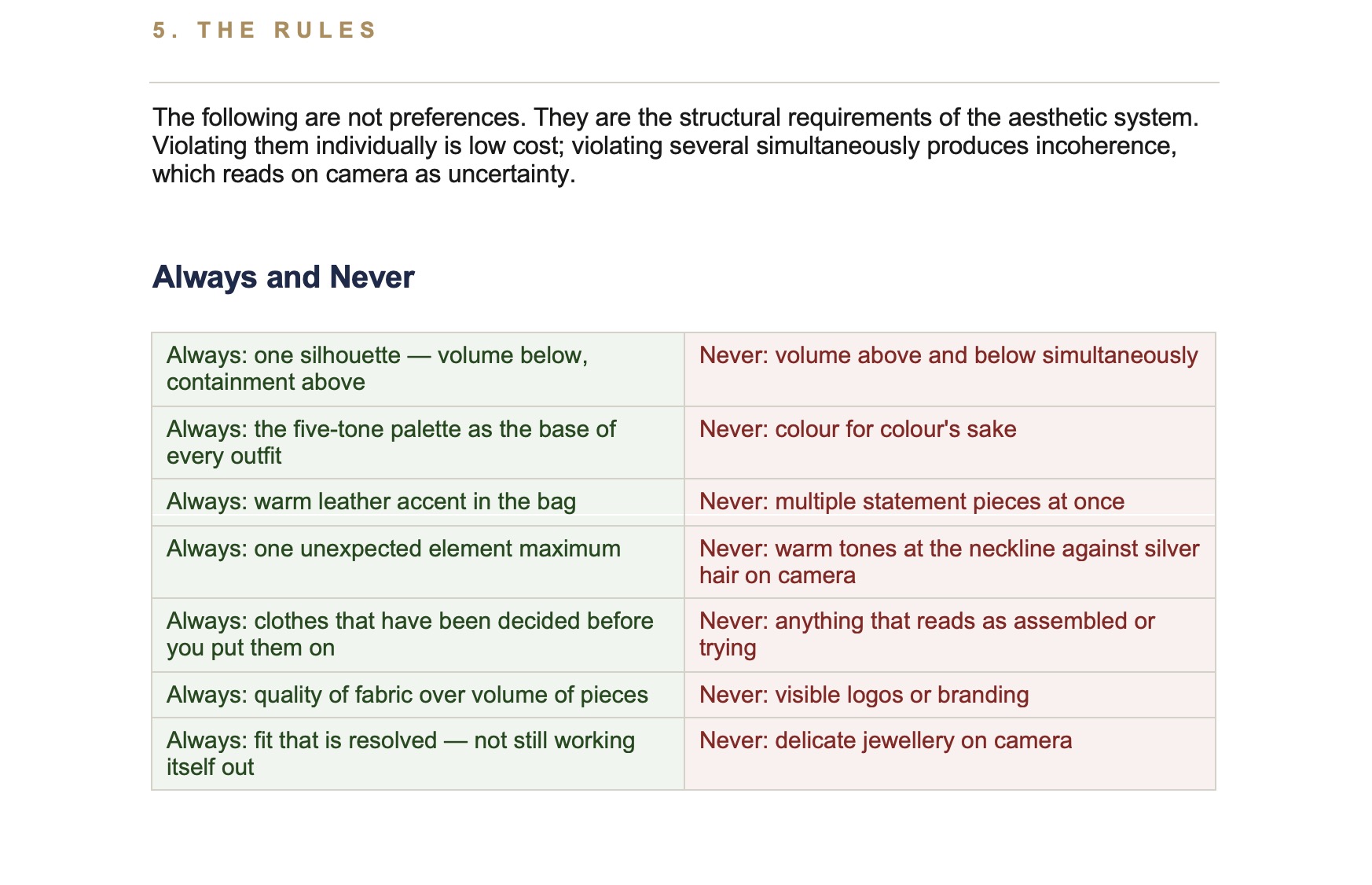
An AI Prompt
Here's a prompt you can copy and paste, to use with AI - I used Claude - when working on your own style direction:
"I am going to share with you a collection of personal style inspiration images. These are images I have curated myself (screenshots, saved posts, or photographs) of outfits, people, or aesthetics that I am drawn to. Please treat them as evidence of an emerging visual instinct rather than a definitive statement of who I am.
I would like you to analyse this collection and produce a Personal Style Framework: a working document I can use to guide future purchases and inform a wardrobe edit.
Please structure the report as follows:
1. Palette analysis What colours recur? What is the dominant palette, and what function does each tone appear to serve: structural, accent, or occasional departure?
2. Silhouette and proportion What shapes, cuts, and proportions appear consistently? What does the collection say about volume, fit, and the relationship between top and bottom half?
3. The governing aesthetic In your own words, describe the aesthetic logic of this collection. What is it actually saying, not in trend language, but in terms of the qualities it conveys: authority, ease, edge, refinement, and so on?
4. Recurring pieces and archetypes Which specific garment types, shoe styles, or accessories appear repeatedly? What does their recurrence tell us?
5. The unexpected or eclectic element Is there a departure note? Something that complicates or enriches the dominant aesthetic? If so, what is it, and how does it function within the whole?
6. What this collection is not Based on the evidence, what aesthetics, pieces, or approaches are clearly excluded? Are there discordant elements in the source materials? This is as important as what is included.
7. The framework in practice Summarise the above into a set of governing principles I can apply when shopping, editing my wardrobe, or getting dressed: what to look for, what to question, and what to eliminate without hesitation.
8. One question back to me Based on what you have seen, ask me the one question that would most sharpen or complete this analysis — the gap between what the images show and what you cannot yet determine from them alone.
Before you begin, please look at all the images together before analysing any of them individually. The pattern across the whole collection matters more than any single image.
Please be direct and specific. Generic observations are not useful. If something is wrong, or missing, or contradictory, say so."
Please note: the quality of the output depends almost entirely on the quality of the curation. Ideally your images will have been collected with genuine discrimination - it's best to work on this over a period of weeks rather than an afternoon - this will produce a framework with real diagnostic value. I have albums in my photo app just to collect style inspiration.
I shared roughly 30 carefully selected images as part of my project. 30 was too many to upload individually, so I pasted 5 at a time into Keynote (PowerPoint) slides, and uploaded jpegs of 6 slides.
Let me know how you get on!
Receive my quick-to-read weekly newsletter...
Sign up for the Hothouse Newsletter: find out what's coming up, and keep up with recent webinars, blogposts, videos, and other events - all focused on excellence in interior design practice.
We hate SPAM. We will never sell your information, for any reason.
