Training for 2026 Like an Elite Athlete - Vision Boards
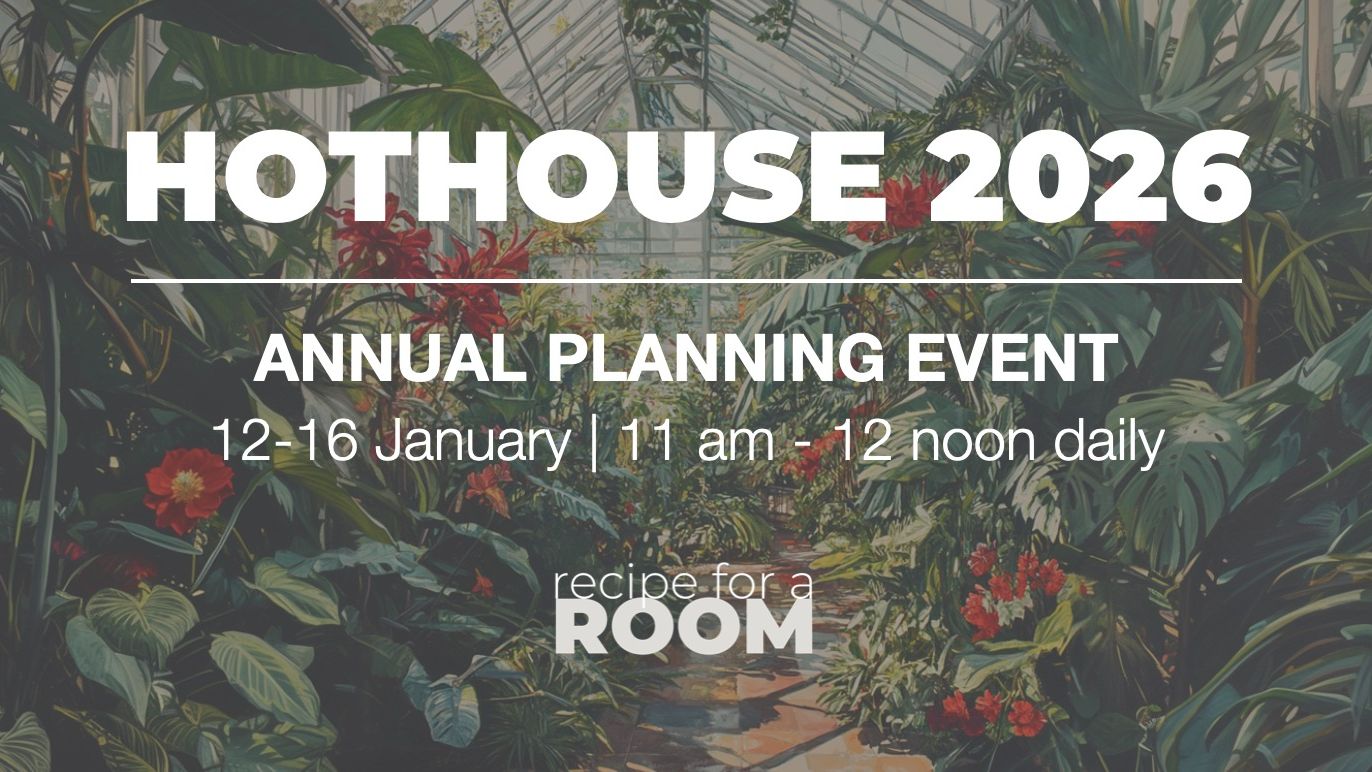
Jan 03, 2026From 12–16 January 2026, I’m running the Hothouse 2026 Planning Event - live online, one hour a day from 11am–12 noon - a focused, five-day process designed to help you create a business plan that genuinely drives growth, we’ll be starting on Day One with vision and values.
It’s fitting, then, to begin by rethinking something that often divides opinion: the vision board. Vision boards tend to get talked about as if they’re a single thing, something you either “believe in” or don’t.
In practice, they’re far more useful when treated as tools. And like any tool, they work best when chosen deliberately, for a specific purpose, at a specific moment.
Why a vision board isn’t just indulgent day-dreaming
A well-constructed vision board is not a substitute for planning or effort. It sits upstream of both. Its purpose is not to predict outcomes, but to prepare the mind and body for change that is already in motion. It works by making anticipated shifts feel familiar rather than threatening, reducing the friction that often appears when ambition outpaces identity or capacity.
In that sense, a vision board functions less like wishful thinking and more like mental rehearsal. Athletes, performers and surgeons all rehearse before stepping into higher-stakes environments, not because rehearsal guarantees success, but because it improves composure, decision-making and confidence when the moment arrives. A vision board does something similar at a personal level: it helps you acclimatise in advance to new roles, responsibilities and ways of living, so that when progress does occur, you are more likely to inhabit it calmly rather than recoil from it.
Seen this way, the value of the exercise isn’t in the images themselves, but in the psychological adaptation they support. It’s a way of quietly narrowing the gap between who you are now and who you will need to be if your plans succeed.
Different strokes for different folks
There isn’t one correct way to make a vision board. There are several distinct types, each designed to support a different psychological task.
Here’s a simple way to think about the main ones, and how to work out which would serve you best right now.
1. The Manifestation Vision Board
Purpose: to expand desire and counter scarcity
This is the version most people recognise.
It often includes imagery and key words suggesting:
- financial abundance
- beautiful homes or travel
- freedom from constraint
- symbols of success or ease
Psychologically, this kind of board is doing something important: it’s giving the mind permission to want.
This can be particularly helpful if you:
- grew up with scarcity or limitation
- tend to minimise your desires
- feel uncomfortable wanting “more”
- need to stretch your sense of what’s possible
In this context, a private jet isn’t really a jet. It’s shorthand for freedom, choice, scale, or unconstrained movement.
A manifestation board is less about realism and more about de-conditioning inherited limits.
⸻
2. The Change-Management Vision Board
Purpose: to prepare for success and reduce self-sabotage
This is the kind of board I’m working with now. In January 2025 I was afraid of failure; in January 2026 I find myself afraid of success.
Instead of focusing on outcomes, it focuses on:
- internal states
- identity shifts
- emotional regulation
- nervous-system readiness
- physical capacity
It asks a different question:
“Who do I need to be, to be able to live well with what’s coming?”
This kind of board is especially useful when:
- momentum is already building
- opportunities are real, not hypothetical
- growth feels exciting and destabilising
- fear of success is more present than fear of failure
It’s not designed to thrill or motivate, but to normalise. To make expansion feel familiar rather than shocking.
⸻
3. The Identity Vision Board
Purpose: to rehearse a new self-concept
Some boards aren’t about what you’ll have or even how you’ll cope, but about who you’re becoming.
These boards often include:
- posture
- energy
- presence
- the way someone inhabits a role
- how they move, work, or relate
They’re particularly powerful during transitions:
- stepping into leadership
- changing careers
- entering a new life stage
- letting go of an outdated self-image
An identity board helps bridge the gap between:
“This doesn’t feel like me”
and
“This is simply how I am now.”
⸻
4. The Values or Direction Board
Purpose: to guide decisions and reduce noise
This type of board isn’t aspirational at all.
It’s anchored in:
- values
- priorities
- non-negotiables
- what you’re saying no to as much as yes
It often includes:
- words rather than images
- reminders of what matters
- signals of pace, quality, or boundaries
This kind of board is useful when:
- life feels busy or noisy
- there are many competing opportunities
- decision fatigue is creeping in
- you want to stay aligned rather than maximise everything
It works less as inspiration and more as a filter.
During the Planning Event we'll focus on this exercise. The most successful designers I work with know their governing values: these values ground them, give them strength in a storm, help them prioritise, attract like-minded clients. They are fundamental to their business success and their mental wellbeing. Every course I teach includes time spent identifying and defining governing values.
⸻
5. The Embodiment or Capacity Board
Purpose: to align the body with intention
This is a newer category for many people, but an important one.
It focuses on:
- strength
- stamina
- suppleness
- posture
- physical confidence
- presence
- the body as an ally rather than an afterthought
This kind of board is useful if:
- your mind has moved faster than your body
- stress shows up physically
- you’re taking on more responsibility or visibility
- you want your body to support authority and ease
It’s not about aesthetics.
It’s about agency and reliability.
⸻
How to choose the right vision board for you
The simplest way is to ask:
- Am I struggling to want more? → Manifestation
- Am I worried about coping if things go really well? → Change management
- Am I shedding an old identity? → Identity
- Am I overwhelmed with choice and uncertain of direction? → Values
- Is my body resisting my rampant ambition? → Embodiment
You may need more than one.
You may move between them over time.
⸻
2026: the year to start treating yourself like an elite athlete
One way I’ve found useful to think about this work is to borrow a metaphor from sport.
Elite athletes don’t rely on hope, mood, or last-minute effort. They assume that performance is the visible tip of a much larger, largely invisible system: training, recovery, mental rehearsal, conditioning, nutrition, and careful load management. None of that is indulgent. It’s what allows excellence to be repeatable rather than accidental.
Approached in this way, a vision board stops looking like day-dreaming and starts looking like training. It’s a way of rehearsing the internal conditions required for higher performance before the stakes increase. Just as an athlete visualises how they will move, respond, and stay composed under pressure, a vision board allows you to familiarise yourself with greater responsibility, visibility, pace, or authority in advance, so your system isn’t overwhelmed when those demands arrive.
Seen through this lens, 2026 becomes less about “wanting more” and more about respecting the level you’re stepping into. If you expect your work, your decisions, and your presence to operate at a higher standard, it makes sense to prepare your mind and body accordingly. Not because you’re chasing perfection, but because you’re no longer leaving performance to chance.
Treating yourself like an elite athlete doesn’t mean intensity all the time. Quite the opposite. It means recognising that sustained excellence depends on preparation, containment, and intelligent pacing: we are training for a marathon.
Receive my quick-to-read weekly newsletter...
Sign up for the Hothouse Newsletter: find out what's coming up, and keep up with recent webinars, blogposts, videos, and other events - all focused on excellence in interior design practice.
We hate SPAM. We will never sell your information, for any reason.
