
Nobody Asks the Chef to Add Orange Zest
Nov 06, 2026This week, talking with a client about the people who hire them, I found myself reaching for an analogy that seemed deeply appropriate in the moment. It has stayed with me since, because I think it shifts our perspective on positioning, and helps us understand why the client who keeps redirecting the design is so often a client who doesn’t feel secure and relaxed.
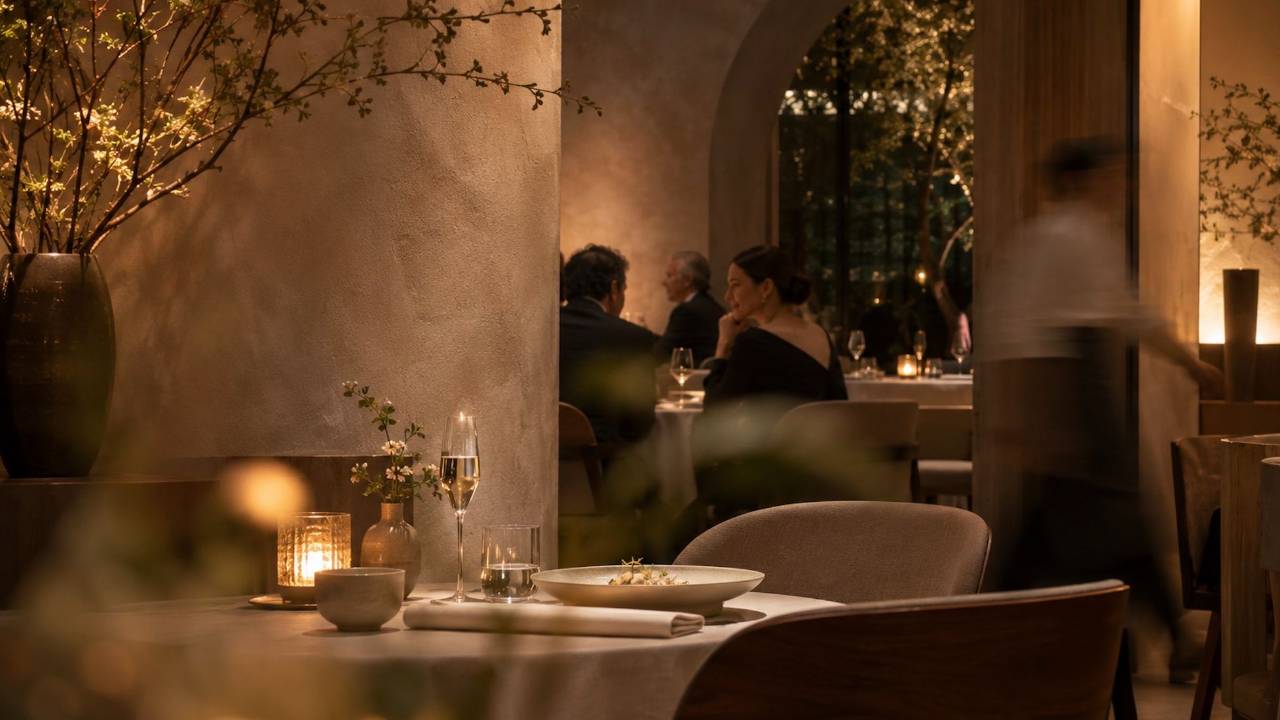
The analogy is the Michelin-starred restaurant.
At the chef's table
Have you ever booked to eat at the restaurant of a chef recognised as one of the best in the country? You probably booked months, maybe even years in advance. You may have spent more on one evening than you would usually spend on a month of eating out. And you did it gladly, because you were not buying dinner. You were buying the pleasure of having something superlative created for you, by someone at the very top of their game.
When the first course arrived, I bet you didn't ask to have it adjusted to your whims, wonder whether it might be improved with a little orange zest? If the thought did occur to you, you would not dream of saying so. That is not timidity, and it is not because you have no opinions about food. It is because the whole pleasure of the experience rests on giving yourself over to someone else's vision. You chose this chef precisely because they know things you don't and can see possibilities you can't. Interfering with the dish would not improve it. It would spoil the very thing you came for.
Nor would you photograph the menu, feed it into AI, and ask the chef to adjust it so it costs less. The value was never in the ingredients. It is in who made it, and how, and for whom.
None of this means the chef ignores you. They will ask about allergies, and they will take the answer seriously. They curate and offer you options. They ask about your needs, not your preferences on the sauce. Their certainty is not a barrier to your enjoyment. It is the source of it. You relax because someone masterful, whose talent you trust and admire, is plainly in charge.
That is what the clients of a top interior designer are buying too. Not only rooms, but the experience of being in expert hands: an acclaimed designer has a vision they could never have reached on their own, it is created for them, by someone who knows exactly what they are doing.
Now sit at your client's table
Earlier this year I met a recently-graduated designer who had been on the other side of this relationship. Twice, he had hired an interior designer for his own home. Both times, the experience wore away his confidence in them. Not because their taste was poor, but because they never quite took the lead. Every suggestion he made was accommodated. Every preference he voiced became the new direction. They bent, and kept bending, and the more they bent, the less he believed they knew best.
He is now a designer himself. Even at the time he understood the craft better than almost any client ever will. And still, what he needed - what he had hoped to find - was not agreement. He needed creative vision, clear direction and firmly-held opinions.
As a designer, this instinct to accommodate can be hard to suppress, because flexibility feels like good service. Saying yes feels generous. Absorbing the client's ideas feels collaborative. But from the client's chair it can read very differently. Every concession suggests the vision was negotiable all along, and a vision that is negotiable is no longer a vision. It is a starting point for the client's own ideas. The moment a client suspects they might know better, they begin to second-guess everything.
Clients who second-guess are rarely difficult people. More often, they have been invited to, or they are simply filling a void.
So try flipping your perspective. The brief belongs to your client, and the work must answer to it: their life, their needs, their budget, the way they want to feel at home. That is the allergies question, and it matters. But the creative response to that brief is yours. Protecting it is not arrogance, and it is not a lapse in service. It is the service. It is precisely what your client is paying for, whether or not they could put it into words.
I'm not for a minute suggesting that you dictate to your clients. But I do hope that the Michelin analogy will help you see how the appreciative clients we'd all like to attract are more likely to turn up if we are known for our vision. Nobody books the chef's table hoping the chef look to you for approval or guidance.
Seeing it clearly
So how do we shift our self-image towards the visionary? Sports psychologists have used visualisation with athletes for decades, but the version that works is not the one most of us imagine. Picturing the podium is pleasant. On its own it does very little, and the psychologist Gabriele Oettingen's research suggests it can even reduce effort, because the mind begins to treat the imagined success as partly achieved.
What works better is what Oettingen calls mental contrasting: holding the future you want alongside an honest view of what currently stands in its way. The athlete does not simply see the medal. They see the race, and the point in the race where they usually fade.
That is also a good description of an honest year-end review. Not a celebration, and not a post-mortem, but a clear-eyed comparison of where you want your business to be and what, right now, is in the way.
For many designers, one of those obstacles will be the one this post is about. The projects that went wrong this year may not have been about taste, budgets or contractors. They may have been the ones where you bent, when you should have led.
Perhaps if your clients show up expecting to lead in the dance, it's because they haven’t been stunned into submission by your credentials and positioning. By your authority. Dare I say, sometimes it's because you charge too little, and therefore can't possibly be that good.
A year of bending is still a direction
I believe wholeheartedly that our businesses move in the direction we set for them, and that includes no direction.
Strategy, applied consistently, is what takes a practice where its founder wants it to go. Its absence takes it somewhere too: towards whichever projects happen to arrive, and whichever clients happen to push hardest.
A year of accommodating is not neutral. It shapes the clients you attract, the fees you can command, and the confidence you carry into the next presentation. If any of that is unsatisfactory, the time to name it is before the new year begins, so we can plan a different trajectory for 2027.
The Year End Review 2026
On Thursday 26 November at 10.30, I am running my Year End Review. Together we will look honestly at what is unsatisfactory in your business, and decide the intentional change you want to drive in the year ahead.
I'm releasing the pre-work on 12th November, a questionnaire that, among other things, asks where did you bend this year, when you should have led?
You chose design because you have a vision worth trusting. Your clients chose you for the same reason.
The questionnaire and the link to the event itself will be in the Hothouse group.
Receive my quick-to-read weekly newsletter...
Sign up for the Hothouse Newsletter: find out what's coming up, and keep up with recent webinars, blogposts, videos, and other events - all focused on excellence in interior design practice.
We hate SPAM. We will never sell your information, for any reason.
