
The Plan You Parked In January Is Still Waiting
Jul 04, 2026Regular readers know that I love to dip into psychology textbooks when writing blogposts. This week our kicking off point is:
The “fresh start effect”
(defined by behavioral researchers Hengchen Dai, Katherine L. Milkman, and Jason Riis in a foundational 2014 study)
People are more likely to act on an intention when it sits just after a date that feels like a fresh start: a birthday, a new week, the first of the month, the first of the year. A landmark in time gives you licence to file the last version of yourself under "before" and begin again with a fresh conscience and a clean slate.
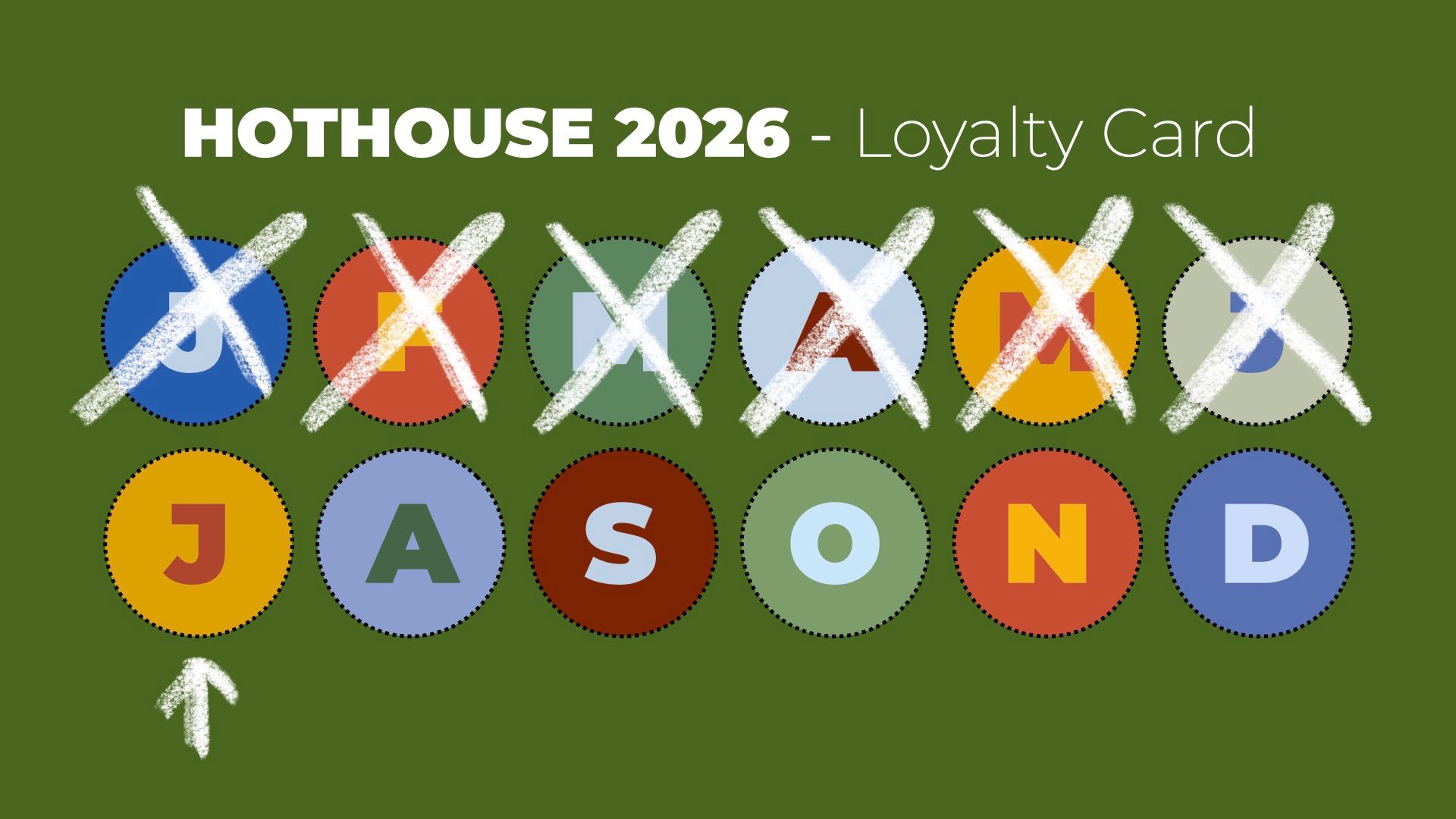
Many of us do this only once a year, January the first arrives with fireworks and a blank page. But here we are now, at the start of July, and perhaps this looks like the point at which the year has already got away from you, half spent. But - catching up with my accountability groups at the halfway mark this year and hearing how much they have achieved in just six months - I’m here to tell you that it’s all still to play for.
The start of July is not the midpoint of a failure - it's a “fresh start” landmark exactly like the first of January, structurally identical and psychologically available to be used the same way, just with lower profile.
Two readers, one problem
If you spent a day in January doing the work, setting an annual goal, thinking properly about strategy, you're one kind of reader. Here’s your audit point: half the year has run its course against the plan you made, your plan still has six months to run, now is the moment to sense-check that plan. To review, reflect, and confirm that you are still headed in the optimal direction. Maybe there is new data to feed into the plan, and it would be even better to adjust course.
If January passed without any of that, you're a different kind of reader, and you may have assumed the moment for planning has been and gone, that a proper plan needs twelve months ahead of it to mean anything, that starting now would be starting behind.
That's a reasonable-sounding belief and it's also not true.
A year is often too large a unit to hold in the mind as anything other than an abstraction, which is one reason annual plans fail before they've properly begun: the goal is real in principle and imaginary in practice, because December is too far away to feel like a deadline that you have any stake in.
Six months feels very different. I argue it's close enough to stay concrete - the summer holidays lie just ahead, by the time you’re back it’ll nearly be Q4 with the big push to year end. You are not behind. You are, if anything, arriving at the point where the goal was always going to become real for the annual planners too.
Both readers, by different routes, arrive at the same place this week.
Where the plan actually breaks
Most plans fail for the same structural reason: the plan gets made, and then it gets parked. It sits somewhere sensible, a notebook, a slide, a note on the phone, fully formed and entirely theoretical, while the actual week gets run on whatever shouts loudest that morning.
Nobody decided to abandon the plan. Nobody had to. A plan that never crosses into the calendar doesn't need to be abandoned; it was never operational in the first place.
This is not a discipline problem, and framing it as one makes us feel bad: we tried and failed, we’re no good at planning.
It’s a translation problem.
The Cascade
Strategic intent and calendar reality are different languages, and most businesses never build the mechanism that converts one into the other.
What I use, and what I teach inside all my courses is a structure I call the Cascade: the connective tissue that carries a decision made in the abstract all the way down into a Tuesday afternoon. It is not a philosophy. It is closer to plumbing.
The Cascade isn’t perfect metaphor - It runs downward, but it isn't only a downward flow. At every level, before new instruction is issued, the level in question is required to check its own premise: did the work actually get done, and does the level above still hold up given what's happened since? There is intelligence in the lower levels too.
A cascade that only flows one direction is a waterfall, elegant and rigid, and it breaks the first time reality disagrees with the plan. This one loops upwards to check each time, it corrects itself on the way down.
The five movements
The Cascade has five levels, at the strategic end it allows generous thinking time; at the business end is quick and easy to act upon.
ANNUALLY
The Annual level gets a full day set aside deliberately, for business review, strategic thinking, and the setting of goals and targets for the year. That day's output isn't a wish list; it's a set of responsibilities, divided across four quarters, each quarter is recruited to do a specific part of the job of hitting the annual goal. (Put it in your diary now).
QUARTERLY
The Quarterly level gets half a day, four times a year. This is where the real discipline lives, because before any new work is planned, the session opens by interrogating the quarter just finished: was the work completed, is there overrun, and, critically, does the annual plan still hold up as the right one given what's actually happened? That last question is the one most planning systems don’t ask. Once the previous quarter has been accounted for, the responsibilities the quarter has inherited from the annual goal are quantified and distributed across its three months.
This join, annual into quarterly, is where we stand this week.
For the reader who planned in January, the start of July is a Quarterly session that happens to double as a full audit of the annual plan itself, here at the halfway point of the year, we run a heavier version of a session that would be running every three months regardless. Halfway through the plan is an important point - enough time has elapsed for real progress to be read; enough time remains to deserve a meaningful review/rewrite of the plan.
For the reader who didn't plan at all, the start of July is an entry point into the Annual level, compressed to two quarters instead of four, with exactly the same architecture underneath it once the plan exists. You are not late by the calendar's reckoning. You are only late if lateness is measured against January, and January was never the only door in.
MONTHLY
Beneath the quarter, the system keeps dividing into smaller, more accessible increments. The Monthly level, with an hour or two devoted to it, takes its one third share of the quarter’s responsibilities and allocates these evenly across four or five weeks, checking that the sum of the month actually equals what was promised to it.
WEEKLY
The Weekly level, 30 minutes, usually first thing Monday or last thing Sunday, turns the month's instalment into the coming week's actual workload, alongside whatever the desk has produced in the meantime, because (no, I haven’t forgotten) business development shares you with client work.
DAILY
And the Daily level, 10-15 minutes, is where the week finally becomes sets of hours with distinct titles and instructions. This is the level that proves the whole system honest. A strategy that never reaches the fifteen-minute daily review was never a strategy. It was a sentiment with good production values.
If time-management is your nemesis, here's the first in a series of four short videos I produced to help.
The discipline of seeing one thing
Whether you are reviewing the progress of a plan that kicked off in January, or starting lean and fresh with six months left to run, the temptation at this point is the same.
Faced with a genuine reset, most people reach for a list. Ten priorities, fifteen goals, a page of good intentions. A list of fifteen goals is a way of spreading risk so thinly that no single failure costs you anything, which means no single success will either. You’re hedging your bets, being wishy-washy. It is the opposite of what the Quarterly session actually asks, which is a single, uncomfortable question: does the plan still serve the business as optimal, and if not, what is the one thing that would change that.
Not the fifteen things you could plausibly work on. The one thing that is currently your biggest block to business. Maybe it’s marketing, or systems, maybe it’s sales conversion, or pricing, maybe it’s confidence and presentation. In my business it’s mailing list growth.
HONESTY, DETERMINATION, AND COURAGE
Finding it requires honesty, determination and courage. Honesty to look at your business critically without making excuses; determination to fight all the way to the bottom of a wicked problem; and courage to commit to a single test that grades only as pass/fail. Your big roadblock usually isn't hidden. It's the thing you already know and have been quietly working around for months. If you do have a list, it’s the thing at the top of the list, or the thing that holds up everything else.
Declaration
Once you know what it is, the next move is critical: say what you’re going to do about it, publicly, to people who will notice if it doesn't happen. A goal that lives privately is still, structurally, an opinion. You can revise an opinion at any point without cost, which is exactly why so many private goals evaporate somewhere around week six with nobody, including their owner, quite noticing.
Declaration converts the goal into something with consequences attached, and it's worth distinguishing this from its weaker imitation. Declaring a goal so that people will approve of you is not the same mechanism as declaring it so that people will hold you to it, and only one of those actually changes behaviour.
How it works for me
My one thing is my mailing list. I set up Hothouse to grow it. I monitor the key performance indicators in my business that force its growth, and I launched my newsletter as a public accountability device to declare the progress of the project weekly.
It seems that growing my mailing list is my nemesis. It requires the attitudes and activities that are most against my nature. I have flogged that task through seventy-six weekly issues of the newsletter, for glacial progress. It is me battling myself.
However, the activity this has forced has grown my business. It has grown healthily and now provides for me. Even while the mailing list data remains pitiful. But...watch this space.
I believe the forces I have now corralled against my mailing list are so mighty that it must succumb. My own next six-month plan should see what will have been a two-year slog finally yield and start growing meaningfully.
What comes next
None of this requires you to have got January right, or to have got it at all. It requires you to treat the start of July as what it structurally is: a fresh start, available on the same terms as the one you already know how to use.
- Find the one thing.
- Say it out loud.
- Let the Cascade carry it down into the calendar, week by week, until it shows up as fifteen minutes on a Tuesday with your name on it.
This is the thinking that sits behind all the work I do. In my courses, in my accountability groups, on YouTube in my videos, in Hothouse - my Facebook-based resource hub for interior designers - where I share free resources to help others join the fight.
And if a six-month unit still feels too long to hold onto, there's a shorter one coming. The Hothouse focus for October, The Big Push, runs the same logic across a single quarter, a small, distinct goal with the year's end in clear sight. It isn't a separate idea. It's the next scheduled point in the same system.
Receive my quick-to-read weekly newsletter...
Sign up for the Hothouse Newsletter: find out what's coming up, and keep up with recent webinars, blogposts, videos, and other events - all focused on excellence in interior design practice.
We hate SPAM. We will never sell your information, for any reason.
