

The Comfortable Advice That Keeps Designers Stuck
Oct 17, 2026When I chat to designers about their greatest business frustrations, I regularly hear the same two complaints. “I want better clients.” “I want to charge higher fees.” They both spring from the same underlying issue, the sense that your clients don't value your input. They aren't convinced by your ideas, and they don't really want to pay much for them.
More appreciative clients and fairer pay are reasonable things to want. After years of experience and late nights over fee proposals, drawings, specifications, estimates and orders, wanting to be paid properly by people who value you is not greed. It is a sign that you take your work seriously.
The really interesting question is this: in a world where good clients exist, why do the suboptimal ones keep showing up at your door? Is there an underlying cause? It matters, because the cause you choose determines everything you do next, and whether that makes any difference at all.
Two diagnoses for the same symptom
There are, broadly, two ways to explain why a studio attracts the wrong clients and struggles to raise its fees.
External locus of control: the belief that results are mainly shaped by other people, luck or circumstances.
The first explanation places the problem outside you. The clients are difficult. They don’t understand design. They shop on price because that is what clients do. The remedy, on this view, is to be firmer: charge more, screen harder, and wait for better people to arrive.
Internal locus of control: the belief that your own actions and choices largely determine your results.
The second explanation places the problem with you, and I want to be careful here, because I mean it kindly. If a prospective client cannot see what makes your studio different, they will compare you on the only measure left to them, which is price. Usually they can't see the difference because you haven’t shown it. Your website says what many other websites say. Your Instagram looks similar to many others. You describe your work as timeless, considered and personal, which is true, and which plenty of your competitors also claim.
In that situation the client isn’t being unreasonable. They are being rational. You have given them absolutely nothing else to go on.
Why the comfortable answer keeps you stuck
The first diagnosis is comfortable, and sometimes we all need a bit of comfort. From time to time we need people to agree that a client behaved badly. That's human: our resilience has peaks and troughs.
The trouble starts when comfort becomes the treatment. If the problem is the client, there is nothing for you to change except your price list, and a higher fee attached to an identikit offer rarely tempts clients off the fence. You raise your rates, the enquiries thin, and the conclusion seems obvious: clients really are the problem. The belief confirms itself.
I think of this as a salve. It soothes the symptom for a while, but the underlying condition carries on untouched. Worse, it leaves you dependent. A designer who believes their circumstances are caused by other people has handed away the one thing they most need: the power to change the outcome.
The harder answer is the more respectful one
Telling someone the problem is within their control sounds less kind, but hear me out as to why the opposite is true.
When I hold up a mirror to a designer and say, look, your messaging is identical to your competitors’, I am not criticising them. I am telling them that the solution is theirs. They don't need to wait for better clients to appear, or for the market to come round. They can change how they position their studio, what they say about it, and who they say it to. That is a fundamentally optimistic diagnosis, because it assumes the designer has agency.
It also asks something of them. Repositioning a studio takes nerve. It means saying no to work that doesn’t fit, publishing opinions some people will disagree with, and tolerating a stretch when the old enquiries dry up before the new ones arrive. It is uncomfortable. But it is the discomfort of building something, not the discomfort of being stuck.
Strong, not fast
None of this is a race. I am wary of anyone who promises transformation by next quarter, because positioning that holds up is built slowly and tested repeatedly.
It takes 6-12 months for marketing to start to deliver.
What it needs is not speed but strength. Think of walking into a headwind: some days, simply holding your ground is progress. The designers I see thrive are the resilient ones, who keep pushing. They try something, it half works, they adjust and try again. They treat the whole thing as an obstacle course rather than a sprint, with goals and targets and plenty of falling over along the way.
If you are newer to practice, this is good news. You do not need to get it right first time. You just need to get it moving, and keep it moving. Most people at the top are simply the ones who didn't give up along the way.
When it goes wrong
You will make mistakes. A pitch will misfire, a client will turn out to be wrong for you, a fee will be set too low or too high. The question is what you do next.
My answer is the blameless post-mortem. Look directly at what happened, without self-flagellation and without hunting for someone else to blame. What did you say, what did they hear, and where did the gap open? Then decide what you will do differently, and do it. A little wallowing is permitted, briefly. Then brush yourself off and get back on course.
There are exceptions, of course. If the client’s house falls down, it’s game over. Short of that, almost everything is recoverable, and almost everything is instructive.
Where to start
If you take one thing from this, take the question rather than the answer. Next time you catch yourself saying “I want better clients”, ask what, specifically, you have done to show those clients why they should choose you.
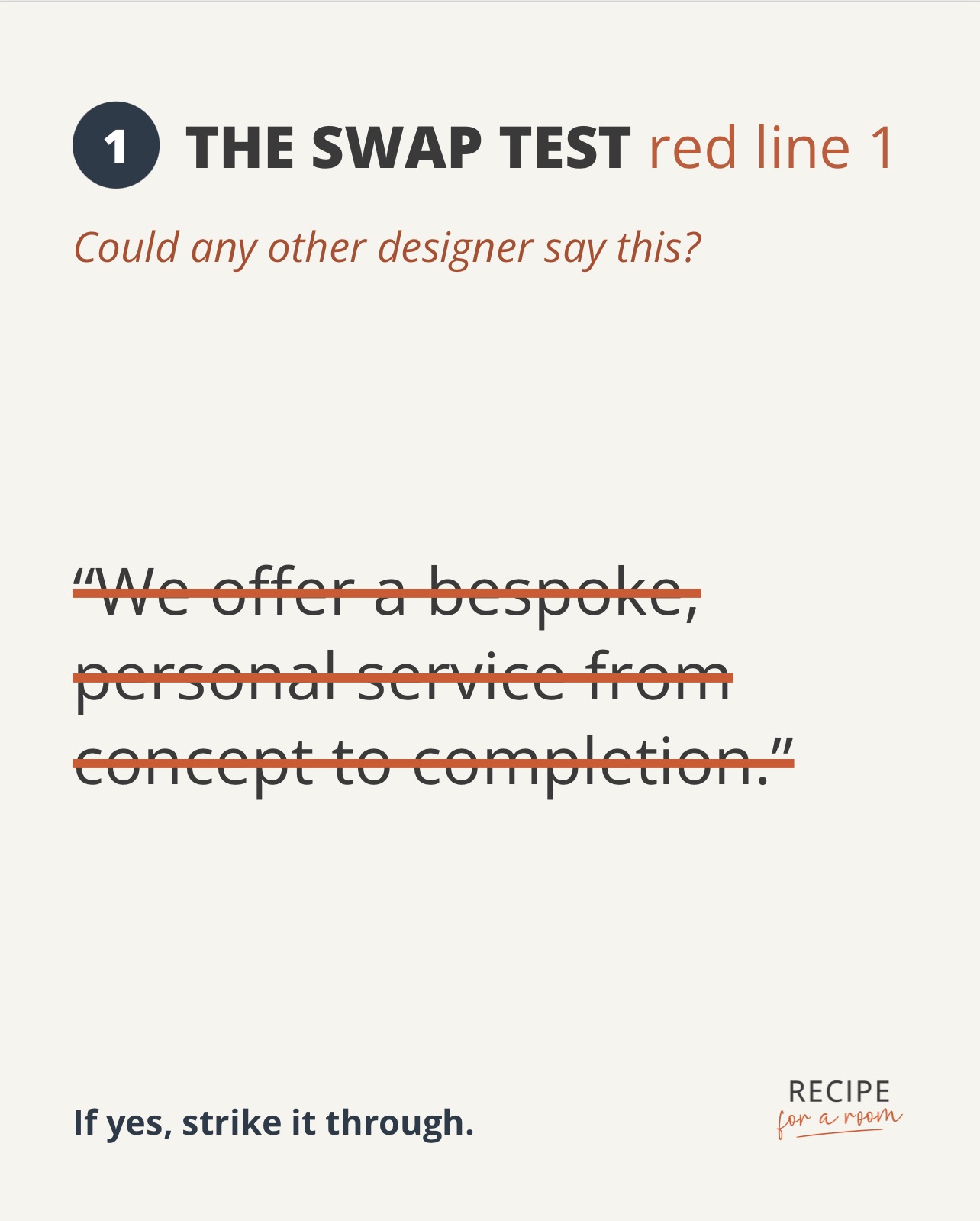
Then try this. Write down the three things you say most often about your studio. Cross out anything a competitor down the road could also claim. What survives is where your positioning begins. If nothing survives, you have just found the most useful piece of work on your desk.
It is within your power to fix this. It will take bravery, and some resilience. But that is far better news than being told it was never up to you.
Receive my quick-to-read weekly newsletter...
Sign up for the Hothouse Newsletter: find out what's coming up, and keep up with recent webinars, blogposts, videos, and other events - all focused on excellence in interior design practice.
We hate SPAM. We will never sell your information, for any reason.
