
The Designer Said We Needed It
Jul 11, 2026Some years ago, early enough in my career that I still believed a brief was a set of instructions, a couple sat across from me and told me, at length and with feeling, what they did not want.
Nothing showy. Nothing wasteful. Nothing that looked as though it was trying too hard. They used the word modest more than once. Describing homes they had visited that overflowed with conspicuous consumption, they were emphatic that they were "not those people". A showy outcome would mean our project had failed. This project was to be about moral positioning as much as it was about aesthetics.
I should say now, before we go further, that this piece is about a particular kind of wealthy client, because there is more than one. I have also worked with clients untroubled by anything that follows, who chased the extravagant with a clear conscience and considerable lust, and I mean no criticism of them either; theirs is a different psychology and a different post. The clients I'm describing today are often liberal. Socially minded, usually. Frequently the parents of grown or growing children whose good opinion they court, and whose politics sit somewhat to the left of the family bank balance. If you serve professional wealth in Britain, you will know them.
I took this all at face value, but thanks to them I was about to learn that the brief a client gives you is the brief they can say out loud.
The brief a client gives you is the brief they can say out loud
So we set out to design restraint. It was to be careful, quiet, well made and entirely defensible. This all sat very comfortably with my preferred style, and I felt well equipped to deliver.
I still remember presenting early-stage concept work, because I learned so much from this experience. The preliminary materials we sourced were bang on brief, and yet they didn't land. The clients were disappointed and it was clear we weren't meeting expectations. They were frustrated: there was something they were saying that we weren't hearing.
It took us a little while to understand what had happened here. They had meant every word of the brief. They genuinely did not want to appear showy, wasteful or boastful; the anxiety was real, not performed. And at the same time, unsaid (and probably unsayable), they did want the finished house to tell the people who mattered to them that they had made it. But in ways you couldn't quite put your finger on. Subtle clues that only the intended audience would spot. Plausible deniability.
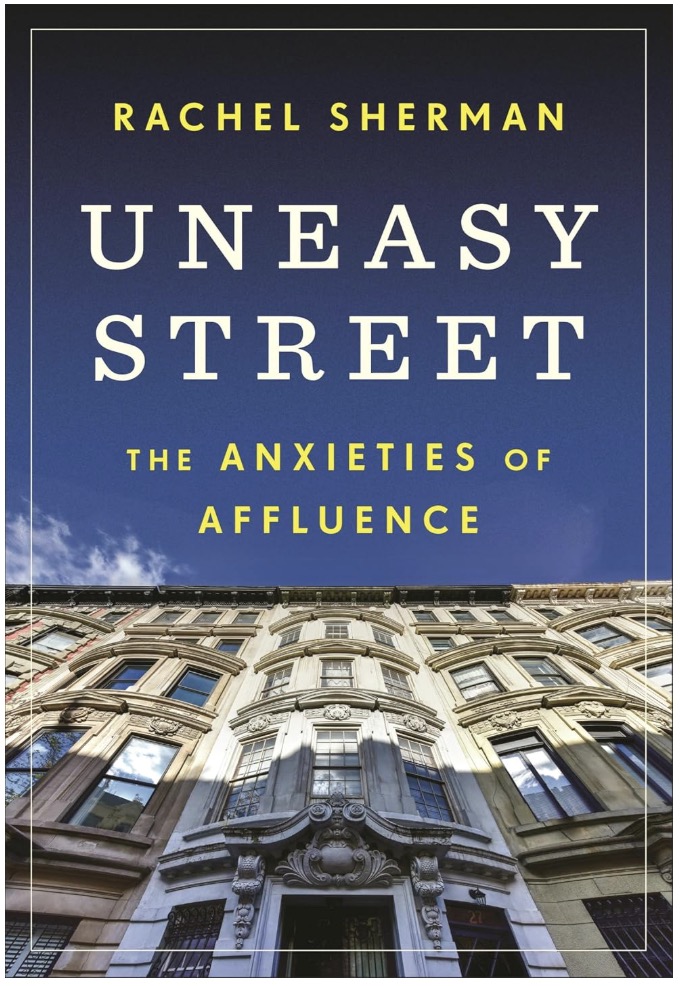
I didn't have a name for any of this until much later, when I read the sociologist Rachel Sherman's Uneasy Street, a study of wealthy New Yorkers, many of them interviewed in the middle of home renovations. Sherman found that her subjects almost never described anything they bought as a luxury. Everything was needed, sensible, good value, an investment. She describes people removing the price tags from their groceries so the housekeeper would not see them, and agonising over kitchens not on aesthetic grounds but on moral ones.
Her argument, made with great care, is that wealth arrives with a job attached: the constant work of feeling, and appearing, legitimate. Wealthy clients are not simply deciding what to buy; they are continuously persuading themselves, and the people around them, that what they have and what they spend is reasonable. And nowhere is that work more exposed than in the home, because the home is where wealth becomes visible, permanent and open to judgement.
The other half of the puzzle is explained by Han, Nunes and Drèze, researchers studying luxury consumption. They have documented what most designers know in their bones: that beyond a certain point, the truly confident signal of wealth is a quiet one, obvious to those in the know and invisible to everyone else. Understatement is not the opposite of display.
Understatement is display, done deniably, for a chosen audience.
My clients' two desires were never in tension. Restraint was not competing with the wish to signal success; restraint was the signalling strategy. What they needed from me was a home that whispered to their own circle and said nothing at all to their conscience.
In teaching, the learning from this episode would be called a threshold concept: something hard to grasp, but once grasped, it permanently changes how you see things.
Thanks to these clients I stopped expecting the brief to contain the whole truth. The most interesting part of any brief is the part the client cannot say out loud, and for some wealthy clients, the unsayable part is almost always about legitimacy. They are asking two questions of every scheme, every fixture, every fee:
Will this achieve what I want? And am I allowed to want it?
Am I allowed to want it?
That second question can change how we practise, because the answer is built into how you work, not into what you say. You cannot ask this type of client whether they want to impress people; the question shames the desire it names, and you will be told no. But you can ask who comes to the house, and what the house should feel like to them. That question lets clients name their audience without confessing anything, and I have never once had it refused.
The best example I know of this craft belongs to the designer Matthew Williamson, whose twenty questions for new clients I cite in almost every presentation I give on taking the brief. You will find them in his book Living Bright.
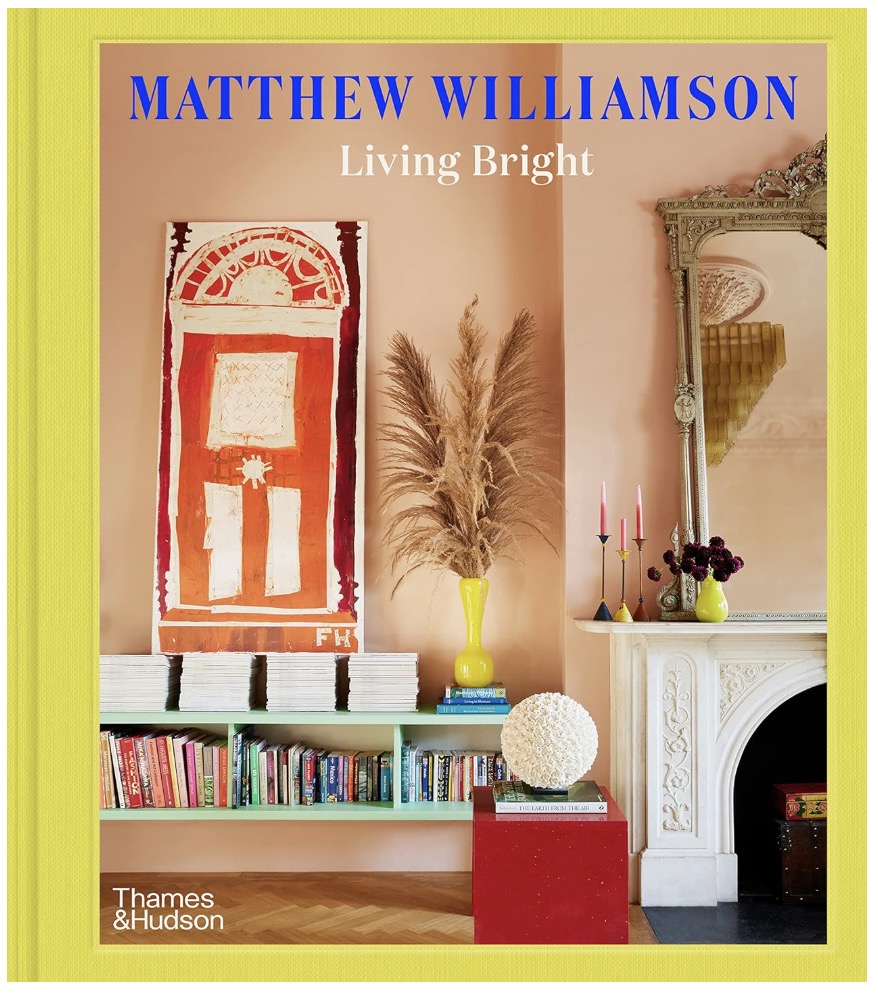
What's your favourite city? Your favourite colour, flower, fragrance, decade? On the surface, they are building a mood board. I particularly like these questions because they lure the client into storytelling with themselves as hero, this can reveal so much about how a client wishes to be percieved. Look again at the questions, and you will notice what they never do: not one of them asks the client to justify anything. There is no budget in them, no audience, no ledger. They gather everything a designer needs to know about desire without once asking the client to account for it.
And then there is the man himself. Williamson's talent, his understanding, his evident delight in the whole business of making rooms beautiful, do their own quiet work. Permission radiates off him. If a man this good takes this much joy in colour, pattern and pleasure, then wanting those things must be allowed. Some designers grant permission through their process and their paperwork. Some grant it simply by being so obviously, unashamedly in love with the work. It is the same service, delivered through personality rather than process.
What this means for practice
This brief-taking experience changed how I present. The words that allow a conflicted client to say yes are longevity, craft, provenance, support, and practicality. Using these terms is not manipulation but translation. The client who cannot approve an indulgence can approve a thing made properly, by someone skilled, that will outlast them. These are frequently the same object. Supporting a small business, a gifted artisan. Our job is to present it in language that gives them permission.
It changed my paperwork. I learned to put my professional recommendation in writing, not to protect myself, though it does that too, but because a written recommendation is a permission slip. It is the thing the client quotes at the dinner table, to the sceptical parent, to their own hesitation. When a client says "the designer said we needed it," they are not passing the buck. They are borrowing your authority to make their own desire legitimate.
Carrying the moral burden is part of the service we provide to our wealthy clients.
And it changed how I read resistance. Clients who query the visible item and wave through the invisible one at twice the price are not being irrational about money; they are being entirely rational about exposure. The flinch at a fee or a fabric is often not affordability at all. It is a moral flinch, a moment when the need to feel legitimate and the design itself have come into conflict, and it is resolved not with a discount but with a reason. I learned to name the reasonable choice at the decision points where I knew the flinch would come, and to have the reason ready before it was needed.
All of this calls to mind the work that Soane does promoting their support of threatened British crafts. The honour of the endeavour offsets misgivings about the ambition of the price tag.
None of this is written to mock the clients concerned, then or since. Discomfort about wealth is not hardship, and I am not suggesting the worries of the fortunate matter more than the needs of anyone else. But the discomfort is real, it walks into our studios every week, and awareness of it helps us serve our clients better. The kindest thing a designer can do for these clients, and the smartest thing commercially, turn out to be the same thing: recognise the weight they are carrying, and build a process that quietly takes it from them.
I misread that couple, and learned so much from the misreading. The brief is not the instruction set. The brief is the opening position of someone who is also negotiating with themselves, and the designer who understands that stops selling schemes and starts granting permission. It never appears on the fee proposal, but it might be the most valuable thing we provide.
Receive my quick-to-read weekly newsletter...
Sign up for the Hothouse Newsletter: find out what's coming up, and keep up with recent webinars, blogposts, videos, and other events - all focused on excellence in interior design practice.
We hate SPAM. We will never sell your information, for any reason.
