
A Home That Completes You: Beyond Aesthetics, Beyond Trends
Jun 27, 2026I've had a change of circumstances recently that sees me, aged 58¾, confronted with establishing home again. I'm feeling wistful.
We moved a lot when I was a child; I attended 13 different schools and lived in 20-plus houses. One was outstanding. I keep thinking about it. My family bought it from a BBC broadcaster who wrote a book about setting out the garden; a copy sits on my mother's bookshelf, right at eye level.
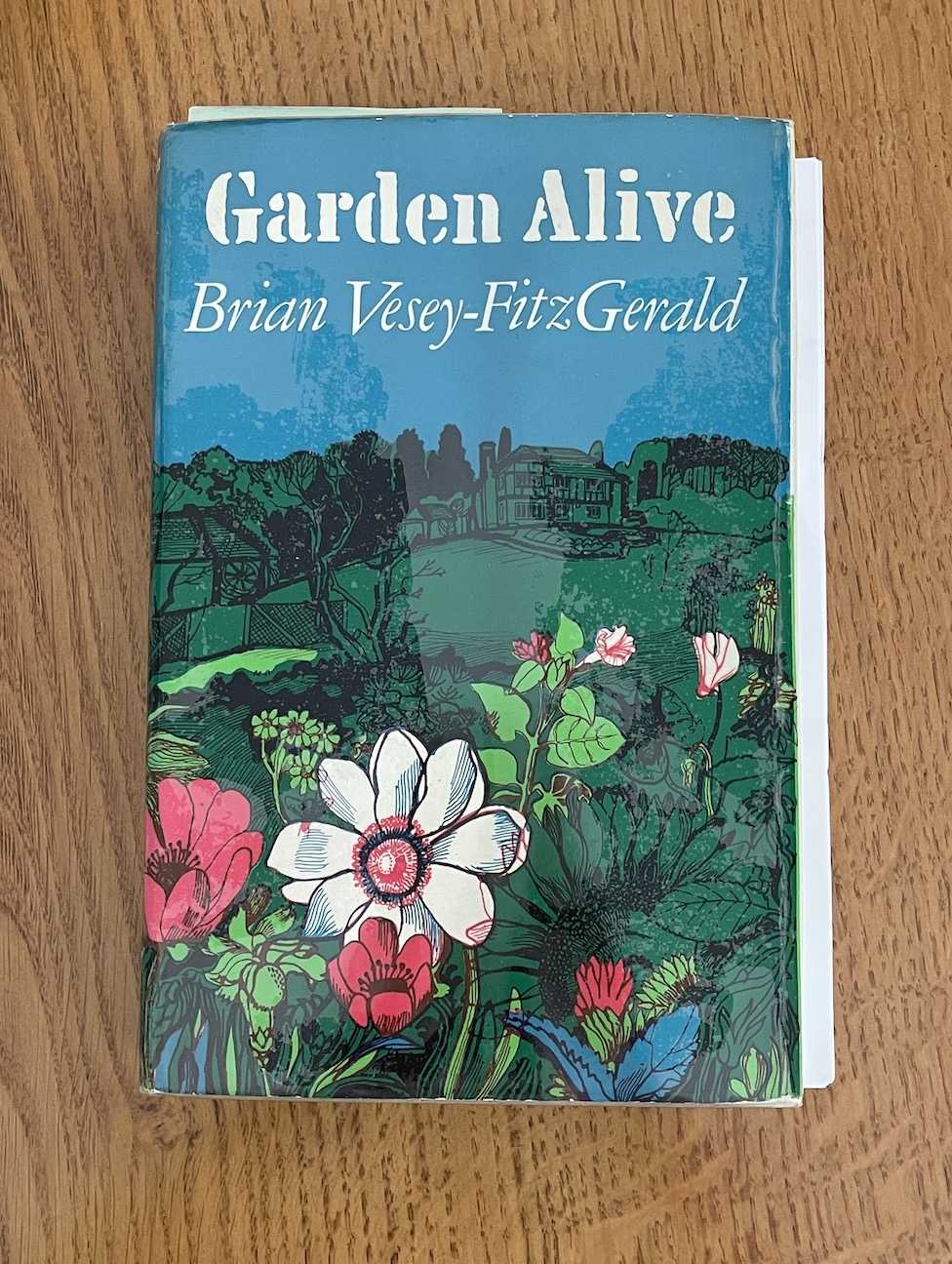
The book about our family home, photographed on the dining table my dad made there.
It wouldn't be a huge exaggeration to say that I yearn for that house. But I have lived in other houses since that provided a similar experience, and now that I'm questioning where and how I should spend my sixties, I've been trying to quantify exactly what it was about that home that made life lived in it feel so very good.
I love interior design - I always have. My first experiments were in this fondly-remembered house: I decorated my bedroom (green, white and pink) and had a say in the rest of the house too. Today we have access to so much visual inspiration, professional guidance, and material choice. I scroll Instagram consuming endless interior images perfectly pitched to my preferences. Pinterest serves billions of images of beautiful rooms. Everyone is an amateur interior designer, and we all know what a home should look like.
And yet so much of it has all the charm of a plastic plant: looks great in a photo, but does it really deliver "plant"?
I've found myself thinking about the difference between a home that performs and one that sustains.
The performing home is aspirational, of its moment. It photographs well. It communicates taste and intention to everyone who enters it. Contemporary design culture has become extraordinarily skilled at producing and celebrating this kind of home, and equally skilled at making us feel that this is what we should want.
The sustaining home is a different object entirely. It is not trying to tell anyone anything. It doesn't compete, doesn't date, doesn't ask you to maintain a performance of taste on its behalf. What it does instead is support the life you want to lead - without fanfare, and without a care for fashion.
The house I keep returning to was a sustaining home. Working out why has required me to set aside aesthetics and ask a more basic set of questions: what did it face, what did it make easy, what was it made of, and how did it nudge the use of time spent inside it?
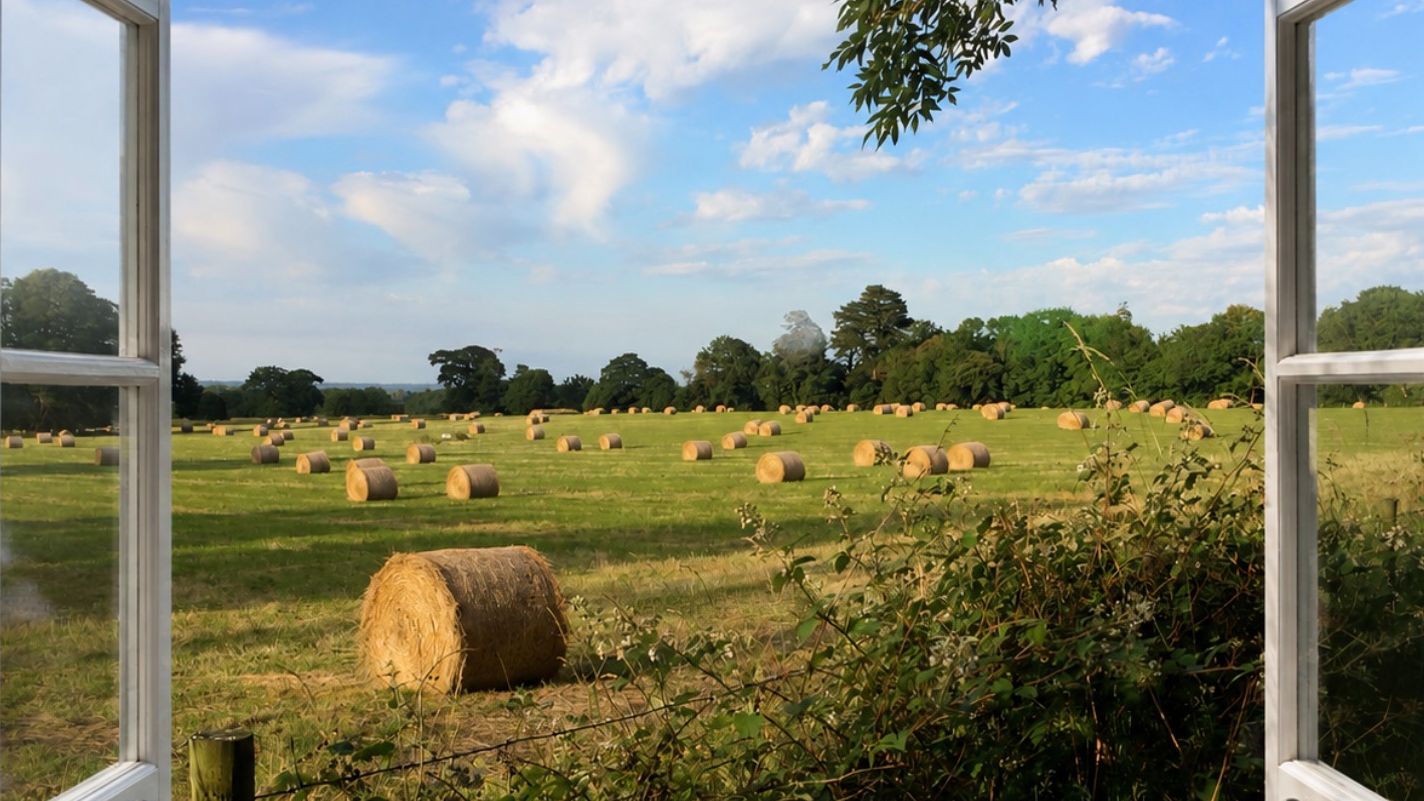
It faced something living. The kitchen - the heart of the home - looked out onto a bird table. There was a bird book to hand. Beyond the table was green space, and tall trees caught the wind at canopy level. It was a building connected to the living world, so that the most ordinary daily activities - making tea, washing up, eating breakfast - happened in dialogue with the natural world. There was a constant visual orientation towards the seasons.
What the house gave you visually, it also gave you acoustically. Wind in the canopy, birdsong, rain on windows. We have an entire vocabulary for what a property looks out onto - aspect, outlook, orientation - and almost nothing for what it sounds like from inside. The outlook matters; as I age, the outhear matters equally.
It existed in time. The house registered every season, not as decoration but as lived experience. Fragrant, warm breezes through open windows, a log-burner for the shorter days, a place for a Christmas tree, a bonfire spot, spring bulbs in their established places, a kitchen garden that produced things which were then preserved. The food on the table had a history you'd witnessed through the window. The log store held wood that had been felled, seasoned, and would be burned: a cycle you could follow from beginning to end. This kind of temporal depth can't be faked. It requires permanence, rootedness, a productive relationship with the land around the building, and enough years in one place to accumulate seasonal knowledge of it. We kept this home for ten years, a family record. It was the opposite of the home as a stylistic moment; it simply persists and remains constant.
It structured the conditions for making things. Utility areas for mess. Materials to hand. A table to sew on, a workbench, a kitchen used for preserving. Store cupboards. And crucially, no over-stimulation competing for attention. The analogue constraints of the 1980s and 90s was, in retrospect, one of its greatest strengths. Life could be so boring; there was nothing else to do, so you cooked, sewed, drew, gardened, maintained, and felt better for it. Perhaps this wistfulness is as much about time as it is about architecture and environment.
Mihaly Csikszentmihalyi's research on flow - the state of complete absorption in a self-directed activity - shows that it needs an environment that doesn't interrupt it. Houses designed at a time when things had to be home-made, are actually set up for making things.
Each generation of labour-saving device promised to free us, and did, in the narrow sense. But each one also quietly removed a category of making from daily life. The larder gave way to the fridge, the pantry to the supermarket, the utility room to the tumble dryer or the home office conversion. We didn't notice what we were jettisoning because what we gained was so obviously convenient.
What we lost I'm now starting to feel: the daily absorption in processes that had a beginning, middle and end; the competence that comes from doing things by hand; the particular satisfaction of eating something you grew, preserved, cooked from scratch. We traded flow for efficiency, and deleted certain spaces from the vocabulary of contemporary architecture.
It asked nothing of you competitively. The house was handsome but not showy, not fragile, not trying to impress. It was solidly built of honest materials (timber, brick, tile) that showed their own history and aged slowly but attractively. The waney-edge oak bar my father built in a cosy corner - thick slab top, inset reclaimed brick panels, wall-mounted optics - was built by hand from salvaged materials that showed where they had come from. The investment was time rather than money. And because of this, there was none of the low-grade social anxiety that a more fashionable home requires: the need to maintain a performance of taste, to refresh, to keep up. It just was what it was, solidly, without apology.
You could be bored in it, which meant you could be yourself in it. Boredom is an underrated design condition, it is the precursor to imagination. How I would have loved an iPad then; would I send one back to my younger self? No.
None of this is about aesthetics. It is about orientation: where the building faces, what it looks and listens towards. It is about programme: what activities it makes easy, what it puts within reach, the activities it draws you into as you maintain it. It is about materiality: not in the sense of which finish is fashionable, but whether what something is made of is long-lasting and appropriate. And it is about time: whether a home has accumulated meaning - be patient, it takes time - or whether it is essentially a stylistic present tense, with nothing before it and nothing anticipated after.
These are questions that get crowded out when clients arrive at a design project with a Pinterest board and a mood for "stylish and sophisticated" or "contemporary country", because the visual grammar of contemporary design culture makes it very easy to mistake appearance for substance, and very hard to articulate what is actually missing when a beautiful room fails to complete you.
There is a backlash gathering against fast-fashion interiors, a growing suspicion of the algorithmic and the slick. But when it expresses itself aesthetically (reclaimed timber, dried flowers, vintage linen, a sourdough starter on the shelf) it assembles its solutions from the same visual culture it seeks respite from.
The deeper argument, the one I think this cultural moment is groping towards without quite naming, is structural. Not I want my home to look like the past but I want my home to work the way homes worked in the past.
- To face something living.
- To exist in time.
- To make room for boredom and making and the quiet accumulation of a life, rather than for the performance of one.
That is a home worth building a brief around. The aesthetics can follow.
Recommendation:
If you are interested in reading about the emotional resonance of home, Kate Kitchen of Reverie Interior Design writes with particular insight about the felt and sensory experience - the way a room holds the body, the emotional work that light, material and atmosphere do on the nervous system. I very much enjoy her essays, and the other media she assembles around them.
Receive my quick-to-read weekly newsletter...
Sign up for the Hothouse Newsletter: find out what's coming up, and keep up with recent webinars, blogposts, videos, and other events - all focused on excellence in interior design practice.
We hate SPAM. We will never sell your information, for any reason.
