
What Nobody Tells the New Interior Designer
Oct 24, 2026The design bit is not the hard bit of setting up a new interior design practice. The hard bit is the mountain of business and marketing planning and administration.
New interior design businesses rarely fail because the designer lacks taste. They fail because the designer was never taught how to protect the business that sells the taste.
At design school we learn about space, light, proportion, materials and drawing. It is a rare course that delves deeply into cash flow, liability, consumer law or the management of a client who has just discovered that their sofa will take sixteen weeks. Those are the things that keep you awake at night in your first five years, and most of us learn them the hard way.
My Business in a Box course for new designers is currently in session, and what follows are the top tips I give to every new designer I work with. Some of it is commercial common sense, some of it is law, and some of it is simply the accumulated scar tissue of a profession. I have grouped it into four areas: how you structure the business, how you write your terms, how you run projects, and how you choose the work and the clients in the first place.
This bit isn't glamorous, but it's what keeps you operational so you can do the glamorous work.
Part one: structure the business so that one bad project cannot sink it
Operate as an agent, not a principal
When you buy furniture, fixtures and equipment (FF&E) in your own name and sell them on to the client, you become a retailer. Their money sits in your account, the supplier's invoice is addressed to you, and if anything goes wrong in that chain, you are the party in the middle holding the liability.
The most dangerous version of this is third-party insolvency. If a supplier or workroom goes into administration after you have paid them, the loss is yours, and you still owe the client either the goods or their money back. Suppliers in this industry do fail, and they rarely give warning.
Operating as an agent means the client contracts with, and pays, the supplier directly, while you specify, coordinate and manage. Your fee is for your expertise, for a procurement service provided, not a margin earned by carrying someone else's risk. If a supplier collapses, it is a painful problem for the client and a project management headache for you, but it is not a hole in your balance sheet.
Take full payment in advance
Never work on credit. Design fees should be paid before each stage of work begins, and any purchases should be fully funded by the client before an order is placed.
The reason is simple: once work has been delivered, your leverage has gone. A client who has received your scheme has everything they need from you, and chasing money from a dissatisfied or simply disorganised client is miserable, slow and often uneconomic. Payment in advance also filters out clients who cannot really afford the project, which is information you want early rather than late.
Get insurance, and the right kind
At a minimum you need professional indemnity insurance, which covers you if a client claims that your advice or design was negligent and caused them loss. Public liability cover matters too, because you will be on site, in clients' homes and handling their possessions. If you employ anyone, employers' liability insurance is a legal requirement.
Read the policy wording rather than the summary. Many PI policies are written around a defined scope of activity, and if you drift into project management or procurement without telling your insurer, you may discover at the worst possible moment that you are not covered for what you were actually doing.
Separate your money and know your numbers
Open a business bank account from the first day, even if you are a sole trader. Mixing personal and business money makes it impossible to see whether the business is profitable, and it makes your tax return a forensic exercise.
Record your hours on every project, including fixed-fee work. Without time records you cannot tell which projects made money and which quietly cost you, and you will go on underpricing the very jobs that drain you. Set aside tax as each payment arrives rather than when the bill falls due.
Keep an eye on the VAT registration threshold, currently £90,000 of taxable turnover in any rolling twelve-month period. Designers who pass it without noticing can find themselves owing VAT on fees they never charged it on, which can erase a year's profit at a stroke.
Part two: let your terms do the arguing for you
Sell in stages, with break clauses
Do not sell a whole project in one commitment. Sell it in stages, typically concept, developed design, technical detailing and implementation, with a fee and a deliverable for each, and a clear point at which either party may stop.
This protects both sides. The client is not locked into a long relationship before they know what it is like to work with you, and you are not locked into a client who has turned out to be difficult, indecisive or unable to fund the next phase. A break clause turns a potential dispute into an orderly exit.
Understand the cooling-off rules
If you contract with a consumer away from your business premises, which includes contracts concluded online, by email or at the client's kitchen table, the Consumer Contracts Regulations 2013 give them fourteen days to cancel. You must tell them about this right in the prescribed way.
The sting is in the detail. If you fail to provide the cancellation information, the cancellation period can extend by up to twelve months, and a client who cancels may owe you nothing for work already done. If a client wants you to start within the fourteen days, obtain their express request in writing, and make sure your terms explain what they will pay if they then cancel.
Keep ownership of your designs
Your terms should state that copyright in your drawings, specifications and schemes remains with you, and that the client receives a licence to use them for that project, conditional on payment in full.
Without this, a client can take your scheme to a cheaper contractor or a cheaper designer halfway through and finish it without you, and you will have very little recourse. Making the licence conditional on payment also gives you a lever if fees go unpaid.
Secure photography and publicity rights at the start
Write into the contract your right to photograph the finished project for your portfolio, website and press, along with reasonable access to do so after completion. Agree how the client's privacy will be protected, such as no address, no family photographs and no identifying details.
Asking afterwards puts you at the mercy of a client who may by then be indifferent, aggrieved or simply busy. Your portfolio is your principal marketing asset, and you should not leave it to goodwill. This doesn't guarantee a photo shoot, but addressing it early can make it more likely.
Don't promise dates you don't control
Lead times, deliveries and contractors' programmes belong to other people. Give estimates, not guarantees, and include a clause that removes your liability for delays caused by suppliers, contractors, carriers or events beyond your control.
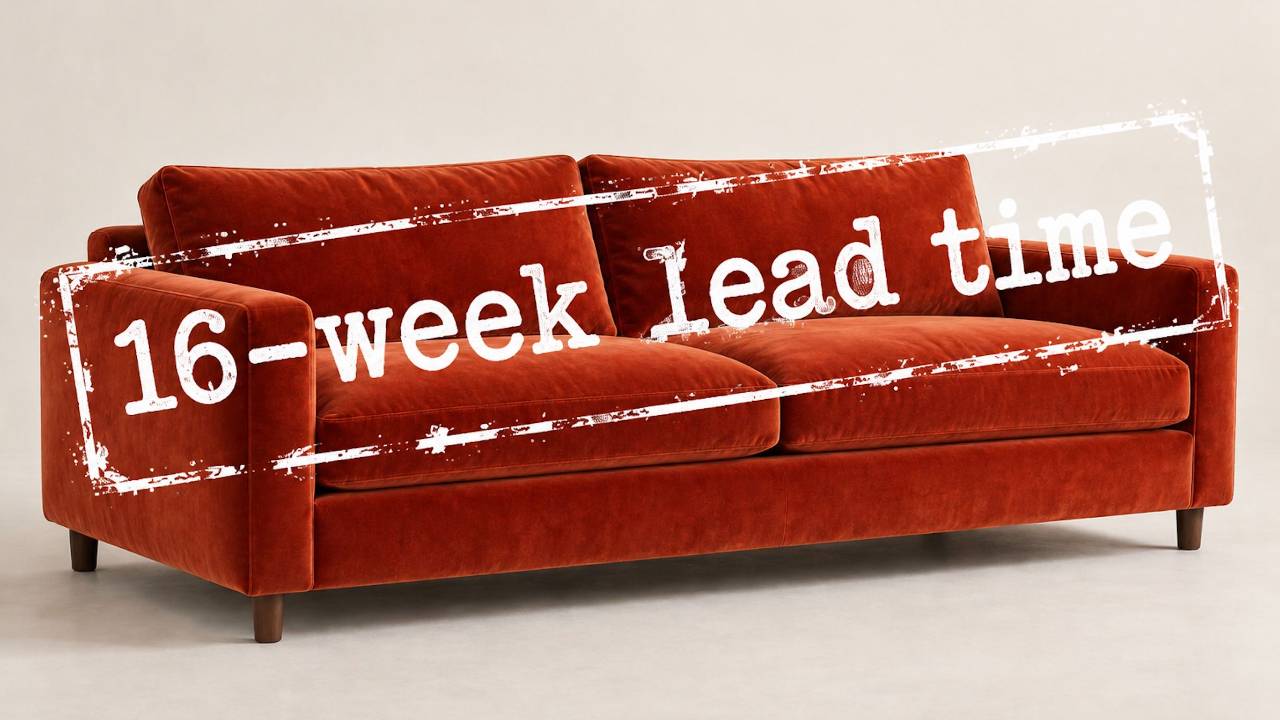
Then manage expectations relentlessly in conversation, because a contract clause will protect you legally but not reputationally. A client told in week one that the sofa will take sixteen weeks is mildly disappointed; a client who discovers it in week twelve is furious.
Disclose your trade discounts and mark-ups
If you act as the client's agent, as I recommend above, you owe them fiduciary duties, including the duty not to make a secret profit. An undisclosed trade discount kept by the designer can amount to a secret commission, which is a legal problem as well as an ethical and reputational one.
Decide your policy, whether that is passing discounts on in full, sharing them, or charging a transparent procurement fee, and state it plainly in your terms. Clients rarely object to a designer being paid fairly; what they object to is discovering that they were not told.
A practical note. Most of what appears in this article has to be built into documents before it protects you: staged proposals, sign-off forms, variation notices, client welcome packs. If you would rather not draft them from a blank page, The Interior Design Practice System gives you the documents and client packs for every stage of a project. More on that at the end.
Part three: run projects as though every decision will be disputed
Never let anything proceed without a written sign-off
Every selection, revision and variation should be confirmed in writing before it is ordered or built. An email saying "please confirm you are happy for me to order the Kravet linen in Oatmeal, 14 metres, at £86 per metre" and a reply saying "yes" is enough.
This matters most for bespoke and made-to-order items, which are almost always non-returnable. When a client later says "I never agreed to that", and some will, the designer with a paper trail has a short conversation. The designer without one pays for the reorder.
Price changes before you make them
Scope creep is the commonest way new designers lose money, and it tends to leak in almost imperceptibly as "while you're here", "just one more room" and "could you have a quick look at the garden". Once one concession has been made, it gets harder and harder to contain.
A variation clause in your contract is useless unless you actually use it. Issue a short written variation with a price for each additional request, and wait for approval before doing the work. If you absorb the extra once, the client will quite reasonably assume it was included, and you will have taught them that your fee is negotiable after the fact.
Decide whether you are a designer or a project manager
The law expects anyone who takes on design or management responsibilities to be competent to do so, which means having the skills, knowledge and experience the work demands. Once you start instructing trades, checking their workmanship, chasing their programme or approving their payments, you may be assuming responsibility for their failures. A client whose plasterer did poor work will look to whoever appeared to be in charge, and that may be you.
Decide in advance whether you are a designer who visits site, or someone who manages the build. Both are legitimate, but they carry different risks, they need different fees, and they need different insurance. Legislation requires that you are qualified and experienced appropriately for your level of operation. Make sure your contract, your PI cover, your qualifications, and your actual behaviour on site all reflect intentional and chosen positioning.
Be careful how you recommend contractors
A personal recommendation can be treated as something the client relied on. If you introduce a single builder and the builder disappoints, you may find yourself drawn into the dispute.
Where possible, introduce two or three contractors, encourage the client to obtain quotes and references, and have the client contract with them directly. Confirm in writing that the choice of contractor and the contract with them are the client's own.
Know your duties under CDM 2015
The Construction (Design and Management) Regulations 2015 apply to domestic projects as well as commercial ones. Anyone who prepares designs that a contractor will build from is a designer under the Regulations, whether or not they think of themselves as one.
Designers have duties to eliminate, reduce or control foreseeable risks to those who will build, maintain and use what they design, and to pass on information about risks they cannot design out. On projects with more than one contractor, a principal designer must be appointed, and on domestic projects that role can fall to the designer in control of the pre-construction phase by default. This is the area of the law that new interior designers most often have never heard of, and it is the area in which ignorance is least defensible.
Part four: choose your work and your clients with care
Don't take on work you aren't qualified or experienced to do
The temptation in the early years is to say yes to everything, and it is understandable. But a kitchen extension, a listed building, a commercial fit-out or anything involving structural change carries technical and regulatory demands that a residential decorating scheme does not.
Taking on work beyond your competence exposes the client to a poor outcome, exposes you to a negligence claim, and may well fall outside your insurance. It also damages the reputation you are trying to build, because the client will remember the problems rather than the reason for them. When a project is beyond you, either decline it or bring in a properly qualified collaborator and be honest with the client about who is doing what.
Vet clients as carefully as they vet you
The single most consequential decision on any project is the choice of client, and it is made before a line is drawn. A difficult client can turn a well-paid project into a loss-making ordeal, and no contract will fully protect you from that.
Have the budget conversation early and specifically, and be wary of anyone who will not discuss money candidly. Listen to how prospective clients speak about the designers, architects and builders they have used before. A client who has fallen out with everyone previously is high risk.
Declining work is a skill. New designers tend to need it most at precisely the moment they feel least able to afford it, which is why it is worth deciding your red lines before the enquiry arrives rather than during it.
Charge for the first substantive meeting
A short introductory call (or coffee) to establish fit can be free. The first meeting at which you visit the property, listen to the brief and start offering ideas should not be.
Free consultations attract browsers and train clients to value your thinking at nothing. A paid initial consultation or feasibility stage tests whether a client is serious, gives them a genuine taste of your expertise. It can be credited against the full fee if they proceed.
If you must work for friends, give them the full client experience
Working for friends and family is where many designers begin, and it is where many of the worst experiences happen. Informality is the problem: no contract, no stages, no sign-offs, and an assumption on both sides that goodwill will cover any gaps. It rarely does.
Friends often expect to get more and pay less.
If you take on a friend's project, give them exactly the experience a paying stranger would receive. That means a signed contract, your standard terms, staged fees paid in advance, written sign-offs, and your normal operating hours. A friend who texts you about cushions at ten o'clock on a Sunday evening is not being thoughtless; they simply have not been told that they are a client. Telling them, kindly and at the outset, is what preserves the friendship.
The three that catch people out
Most of this advice is a matter of discipline: you know you should take sign-offs and price variations, and the challenge is doing it every time, including when the client is charming and the request is small.
Three items are different, because new designers walk into them without realising they exist. The first is the secret-commission point, because many designers assume trade discounts are simply theirs to keep. The second is the cooling-off rules, because a missing cancellation notice can unpick a contract months later. The third is CDM 2015, because the duties attach to you as a designer whether or not you have heard of them.
If you take nothing else from this, take those three to a solicitor or your professional body and make sure your terms and your practice address them. A business built on sound foundations can survive a difficult client, a collapsed supplier or a disappointing year. A business built on talent alone usually cannot.
Putting it into practice
Knowing all of this is one thing. Having it embedded in the way you actually run every project, without reinventing the paperwork each time, is quite another, and it is the gap I see most often in the designers I coach.
That is why I created The Interior Design Practice System. It takes you through fourteen modules, from pre-discovery to installation, and each module holds the documents and client packs you need for that stage. Rather than a theory course, it is a working library you log into and use on live projects, so that your process is consistent, your clients know what to expect, and the protections described above are built into the way you work rather than left to memory.
If you are setting up a practice, or you suspect your current one runs more on goodwill than on systems, you can find out more here: The Interior Design Practice System.
This article is general guidance, not legal or financial advice. Have your terms of business reviewed by a solicitor, and check current thresholds and regulations, which change from time to time.
Receive my quick-to-read weekly newsletter...
Sign up for the Hothouse Newsletter: find out what's coming up, and keep up with recent webinars, blogposts, videos, and other events - all focused on excellence in interior design practice.
We hate SPAM. We will never sell your information, for any reason.
