
Why Comfort, Not Cost, Is What Clients Read in Designers
Jul 25, 2026A designer asked me recently whether a first meeting with a prospective client was the moment to bring out a Very Good Bag she had owned for some time but rarely used. My answer was immediate and emphatic: yes, get the bag out. It was only afterwards, watching a video from Paul Russell, the consumer behaviour psychologist and co-founder of Luxury Academy, that I realised my advice had been half right, and missing the more important half. Yes to the bag. But not yet, and not like that.
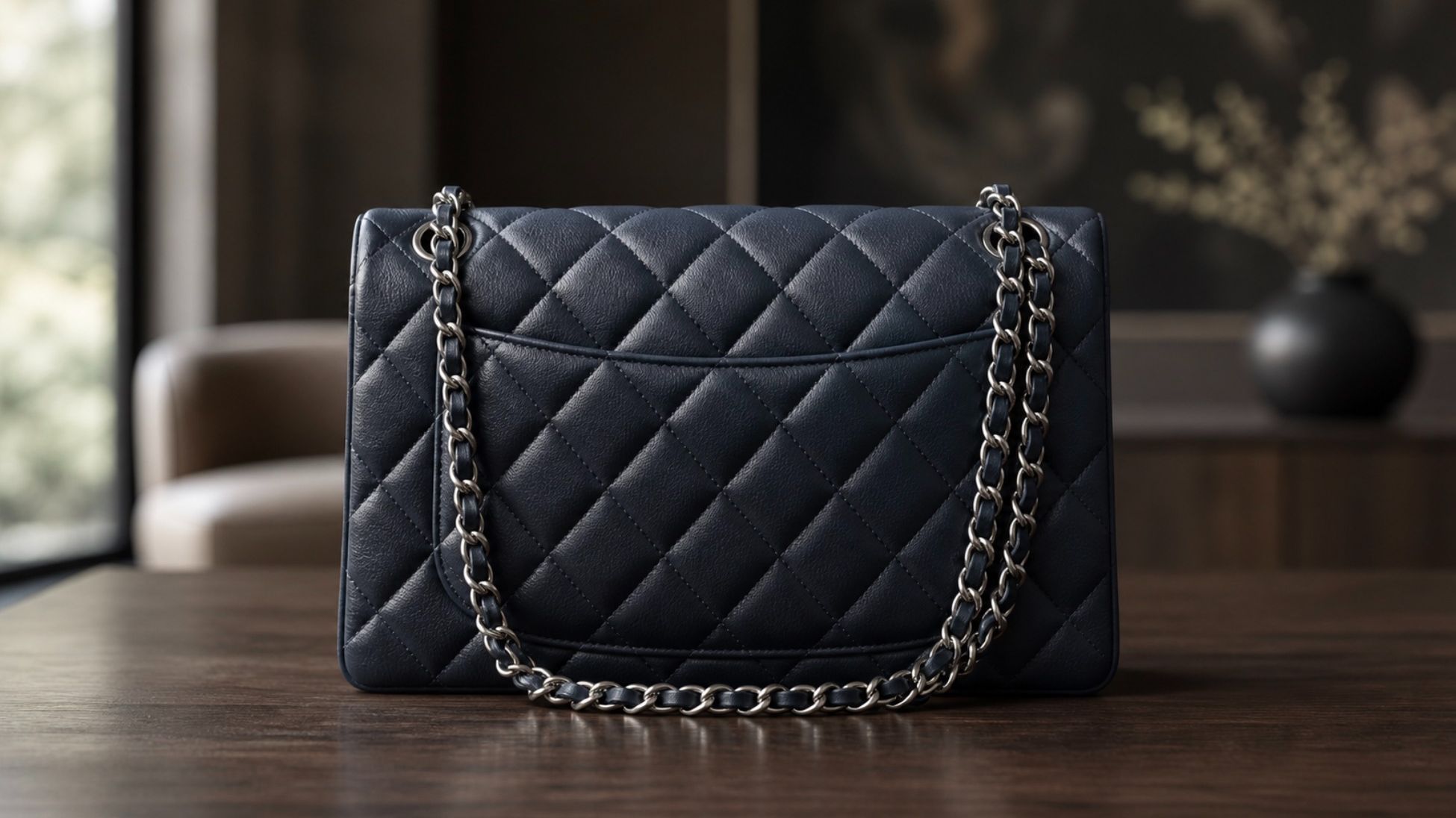
The fuller answer is this. If the bag is a meaningful element of the founder presence she has designed for herself* , it should absolutely work for its living. But not as an occasion piece. Carry it to the supermarket first. Carry it to site. Let it spend a month being the thing that holds the keys and the snagging list. Then, when she walks into that meeting, she will not be conscious of it at all, and that is precisely the point at which it starts doing its job.
This post is the reasoning behind that revision. I recommend Russell's video in full: his territory is luxury service environments, but almost everything he says transfers directly to our profession, where we are routinely assessed, at speed, by people deciding whether to trust us with their homes and considerable sums of their money.
*this blog has previously chatted about designing your founder presence intentionally
You are read before you speak
The uncomfortable premise first. Clients form a judgement about you in the opening moments of a meeting, well before you have said anything about your process, your track record, or your fee structure. Psychologists call this thin slicing: the brain's habit of reaching conclusions from very small fragments of expressive behaviour, posture, grooming, fit, movement, and then filtering everything that follows through that initial verdict.
This is one of the better-evidenced findings in social psychology. Nalini Ambady and Robert Rosenthal's 1992 meta-analysis showed that judgements formed from brief observations predict outcomes to a degree that should be unsettling, and their 1993 study famously found that students shown a few seconds of silent video of a lecturer produced ratings that closely matched evaluations from students who had sat through the entire term. Unlike much of the social psychology canon, this work has held up well. You are being read in seconds, the opinion becomes fixed, and there is little you can do to change it.
What you can influence is what gets read.
What is actually being read
Here is where most advice goes wrong, because the instinctive response is to reach for expense: better labels, more visible quality. But the signal being processed is not cost. It is consistency. Russell uses the psychological term congruence: clothes, posture, pace and context all telling the same story. When the elements align, the observer's brain settles, places you, and moves on. When one element jars (and the point here is that it might be you self-consciously drawing attention to this one element) attention snags on the mismatch, and the mismatch becomes the story.
The strongest signals, counterintuitively, are often the quietest. Economists call this counter-signalling: when someone's position is secure, the absence of effort becomes the signal, because only the secure can afford it.
That caveat is not a footnote. It is the argument of this post.
The costume changes the wearer
So far this is about how others read us. The more interesting claim is that what we wear changes how we behave. The flagship study here is Hajo Adam and Adam Galinsky's 2012 lab coat experiment: participants wearing a white coat described as a doctor's coat made fewer attention errors than those wearing their own clothes, or those told the identical coat belonged to a painter. They named the phenomenon enclothed cognition, and it has been quoted at dinner parties ever since.
An honesty note, in 2019 a replication attempt failed to reproduce the lab coat effect, and Adam and Galinsky, to their credit, acknowledged that the result should now be held in doubt. However the broader idea, that symbolically loaded clothing shifts self-perception and behaviour, has support from other studies.
The mechanism that does stand up robustly is that discomfort leaks
I wonder if you recognise this, because I certainly do: studies have shown repeatedly that when people fear they do not belong, their self-regulation deteriorates. They withdraw, or they overcompensate, and either way they become self-monitoring: adjusting the jacket, thinking about their hands, checking themselves. And self-monitoring is visible. Russell describes a brilliant consultant who could never get past a first meeting with certain clients because he looked as though he was asking permission to be in the room. Nothing was wrong with his clothes. The mismatch was between how he looked, how he felt, and how he consequently behaved, and that small dissonance was what clients locked onto.
Now the inverse. I have friends for whom a Chanel boutique is a playground of delights. They are entirely unselfconscious in that environment, interested only in immersing themselves and enjoying every opportunity it presents, exactly as the rest of us behave in our local supermarket. It would be easy to read this as confidence, some enviable fixed trait. It is not. It is fluency. They simply have supermarket-level familiarity with that room, acquired the way all fluency is acquired: through exposure. Which means comfort is not something you either have or lack. It is something you can build, deliberately.
Brief yourself as you would a client
And building it deliberately is design work, which is where our profession holds an unfair advantage, because we spend our working lives doing precisely this for other people. We design for who a client actually is, rather than for show. We talk them out of the pieces bought to impress - fleeting but inauthentic passions. We edit rooms into one coherent story, and we know that a well-designed room eventually stops feeling designed and starts feeling inevitable.
But how often do we apply that competence to ourselves? Treat ourselves as the client. Write the brief: which rooms does your working life actually put you in, the client's kitchen table, the boardroom, the site cabin, the showroom, and what does each expect?
Design one coherent and consistent answer for each, congruent with who you are rather than who you think the room wants. Then edit with the discipline you would bring to a scheme: anything that announces itself, that pulls your attention back to yourself when you sit, stand or reach for a drawing, fails snagging and goes back.
If certain design flourishes are part-and parcel of who you want to be, who you ought to be, adopt them consistently until they cease to distract you.
The point of doing this as a system is that it removes the daily re-decision. You are not asking each morning whether today is the day for the [insert striking personal flourish here]. That question was settled at the briefing stage. What remains is adoption - consistent manifestation - which is the step that cannot be avoided if you want to appear congruent.
The signal that cannot be faked quickly
Adopt the design wholesale, in low-stakes settings first, until the elements stop being props and become furniture. A prop demands monitoring. Furniture is simply there. This is what I meant with the bag: deployed cold at a client meeting it would have been a prop, and some fraction of attention would have stood guard over it. Domesticated first, it becomes a vessel for phone and keys, and your attention is free to do its actual job, which is listening to the client.
One more story, with a caveat attached. My friend's brother started with nothing and decided to build a property empire. He attended high-stakes financing meetings in tracksuit bottoms and was accepted immediately: surely only the most established could afford such nonchalance. On paper this should have failed, an unknown breaking dress codes with nothing to back it. But what the room was reading was never the wealth, which did not yet exist. It was the comfort, which did. His ease was real, and he could not have manufactured it for the occasion. The caveat: the identical outfit worn with visible self-consciousness would have confirmed every prejudice in the room. The trousers were never the signal. The nonchalance was.
Which is the whole argument. Comfort is the one signal that cannot be faked at speed, but also just happens to be one that can be built in advance! Thin slicing means you will be read regardless. Congruence determines what is read. And congruence, in the end, is not achieved by spending more but by designing intentionally and then wearing the design until it's just you.
This is not vanity, and it is not performance. It is the same discipline you already apply to rooms, turned, for once, on yourself. You would never let a client live in a show home. Don’t dress yourself like you are a show flat: become your founder presence and live it every day.
With thanks to Paul Russell of Luxury Academy, whose video on appearance and authority prompted this piece.
Receive my quick-to-read weekly newsletter...
Sign up for the Hothouse Newsletter: find out what's coming up, and keep up with recent webinars, blogposts, videos, and other events - all focused on excellence in interior design practice.
We hate SPAM. We will never sell your information, for any reason.
